
Porcelain Chess Through the Volkstedt Set
During September 2026, the World Chess Hall of Fame & Galleries (WCHOF) is highlighting a donation to the museum’s collection—a Volkstedt porcelain chess set from 1930s Germany, donated by Margaret Applegate. Part of the WCHOF’s Featured Chess Set project, it is on view outside the museum’s third-floor gallery next to a display of the plaques for the World Chess Hall of Fame and United States Chess Hall of Fame 2025 inductees.
The WCHOF’s Featured Set program features beautiful, offbeat, and unique chess sets from the museum’s collection. It also offers visitors from the Saint Louis area the opportunity to display special sets from their own collections for a month, highlighting collectors and the stories of how chess has played a role in their lives.
Featured Chess
News
Published on: August 27, 2026
Explore the September 2026 Featured Chess Set—a 1930s Volkstedt porcelain set donated by Margaret Applegate, showcasing Thuringian craftsmanship and Eastern-inspired motifs.
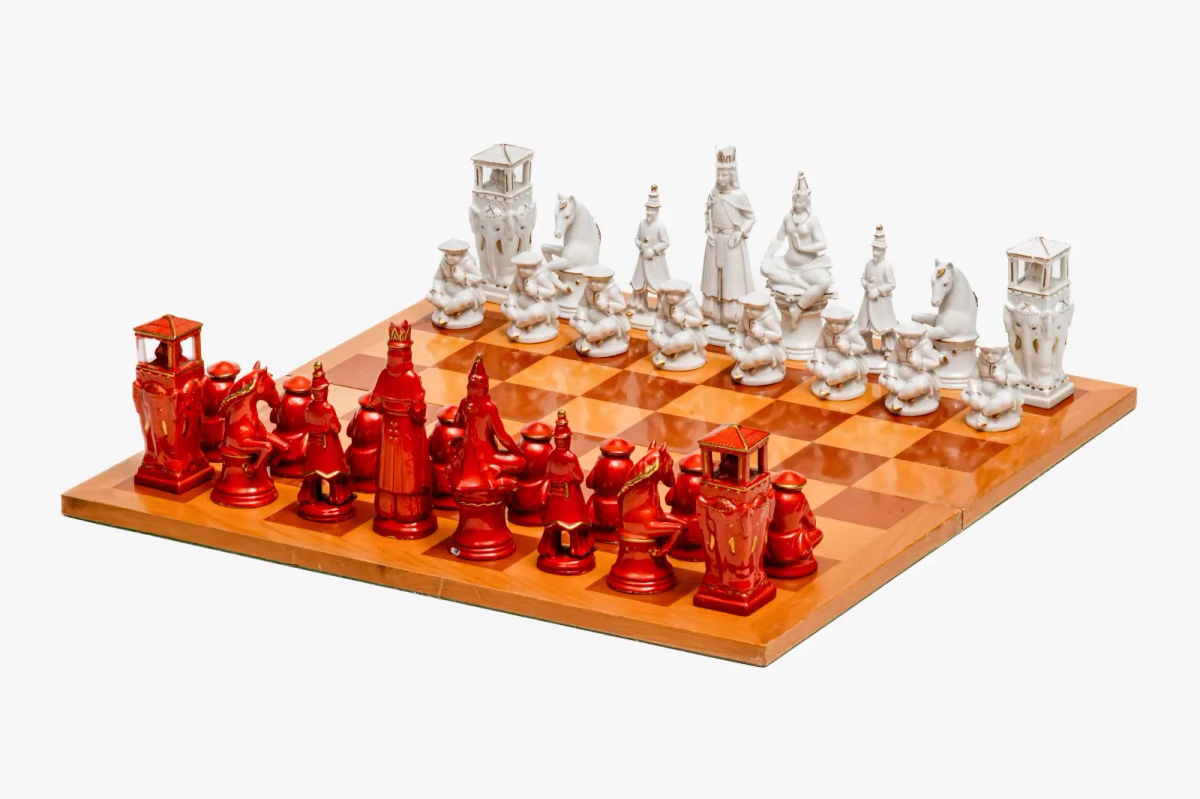
1930s German Porcelain Chess Set
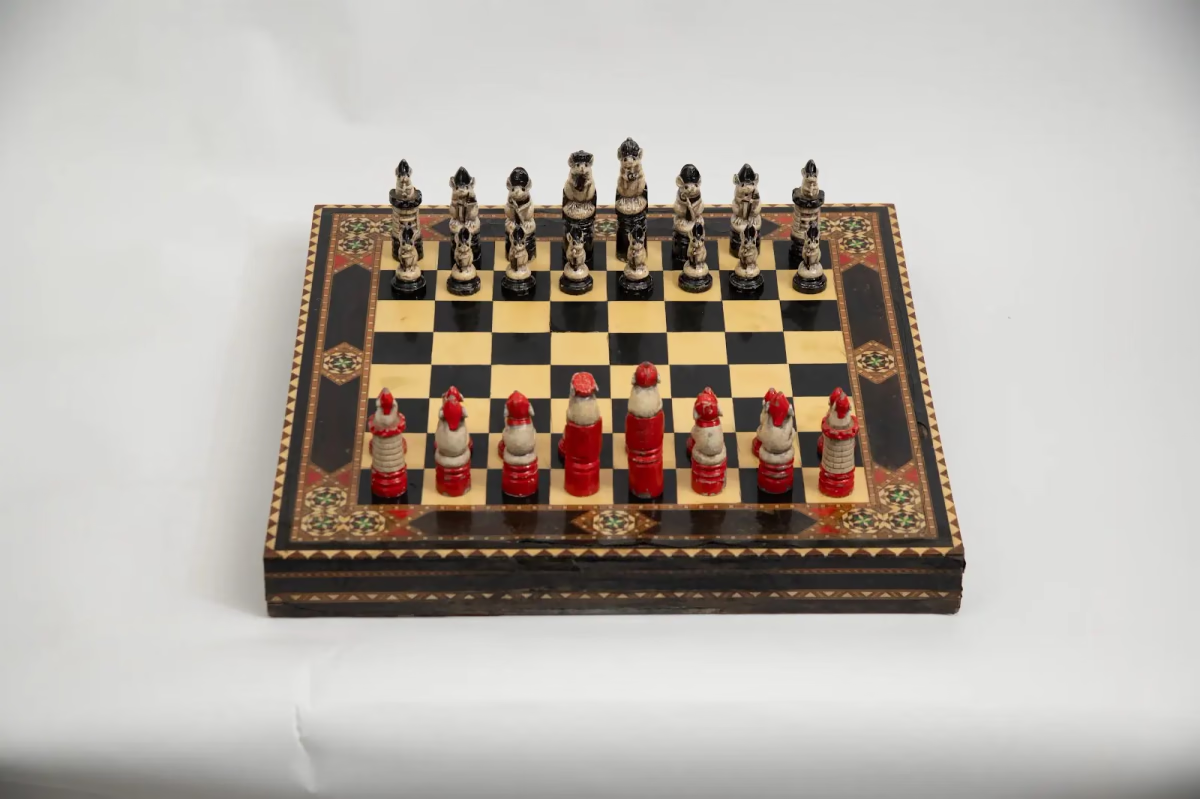
This chess set may look like it comes from somewhere in Asia, but it was made in Germany in the 1930s. The Eastern-inspired chess set was produced in Thuringia, Germany, at the Volkstedt Porcelain Manufactory.
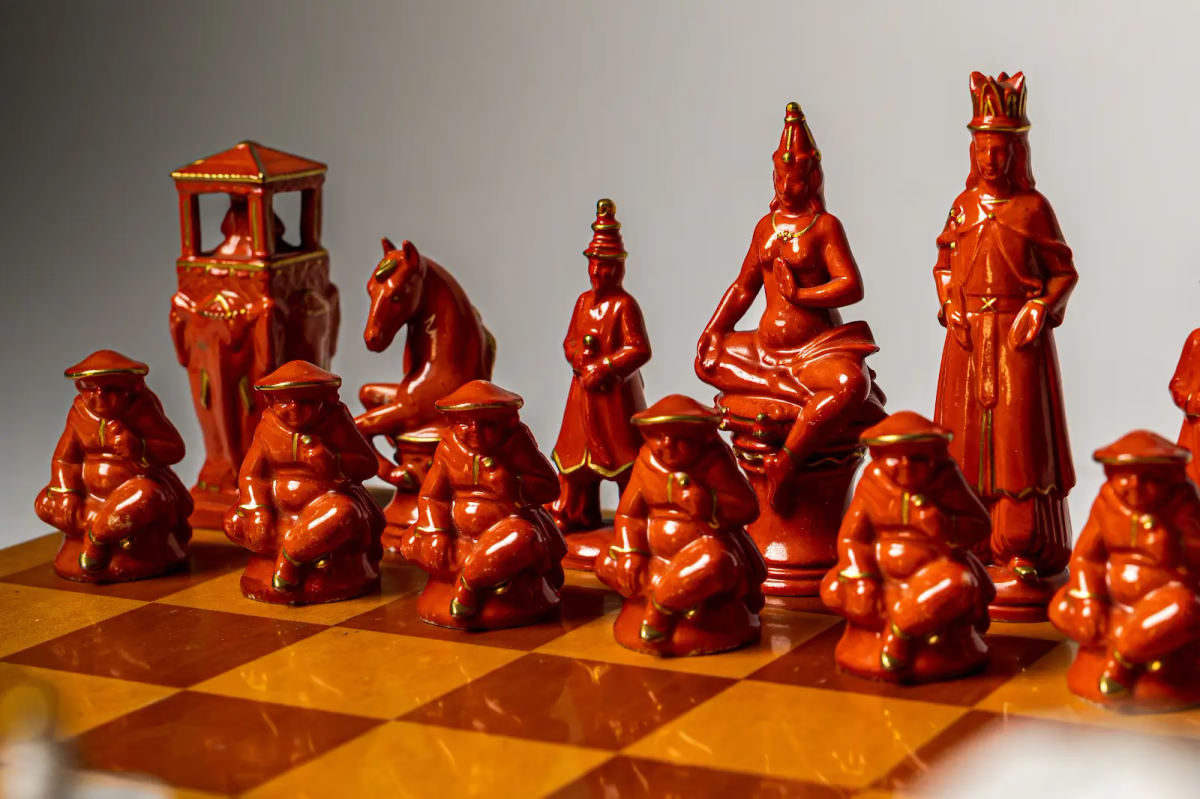
The two sides of the chess set are white and orange, with gold detailing. The pieces feature Asian motifs. The chess pieces make up a smorgasbord of early 20th-century European ideas of traditional Asian cultures. The queen and rooks look Indian in appearance and culture, while the bishops are Persian, given their governmental standing as viziers.
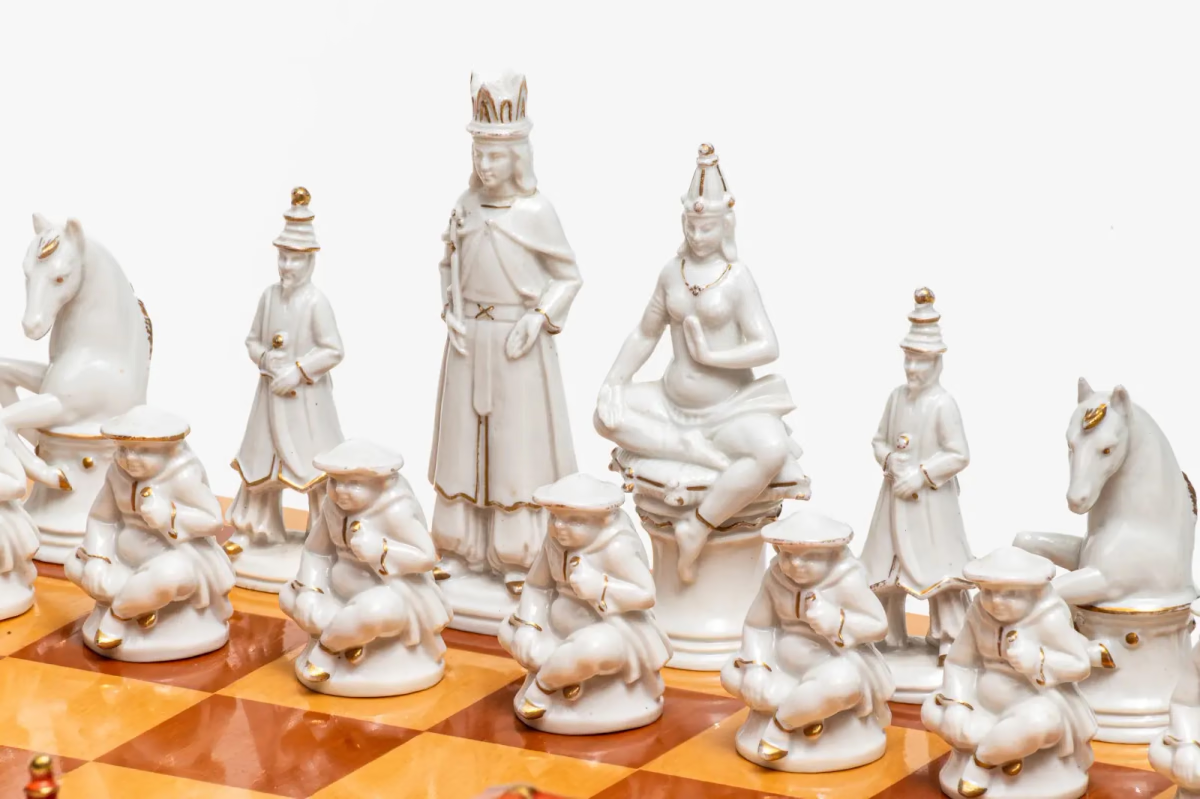
A lot of the pieces illustrate royalty; the king pieces represent rulers, wearing crowns and holding scepters. The queen pieces portray real queens sitting on a raised base in lotus position, wearing what looks like traditional Indonesian or Indian dress. The bishops are viziers, or counselors, sporting wispy beards and holding curved scimitars, while the knights are rearing horses on a raised base. Rooks are elephants with howdahs (a carriage positioned on an elephant’s back) holding mahouts, or elephant riders. Each pawn is a man sitting and wearing an Asian conical hat.
The Metropolitan Museum of Art in New York City houses a chess set visually identical to this one. Its makers are attributed to H. Meisel and H. Sörgel, produced by the Volkstedt factory in Thuringia, Germany. The chess set at the Met was gifted to the museum by renowned chess set collector Gustavus A. Pfeiffer in 1953.
Volkstedt Porcelain
Volkstedt Porcelain Manufactory is a prominent porcelain manufacturer from Thuringia, Germany. The porcelain company sold items under the name Aelteste Volkstedter Porzellanmanufaktur, translated as “The oldest porcelain manufacturer in Volkstedt.” Thuringia is well-known as a region where porcelain is the main product.
The company was founded in the early 1760s and became the first porcelain factory in the state. Georg Heinrich Macheleid founded the company, requesting permission to start it in Schwarzburg-Rudolstadt from the area’s prince, Johann Friedrich. Prince Johann Friedrich of Schwarzburg-Rudolstadt was a patron of the arts and music and readily accepted the request to start a porcelain manufactory near his court.
Georg Heinrich Macheleid originally worked at a glassworks manufacturing company in Glücksthal. During his time there, Macheleid experimented with making the perfect porcelain mixture. By 1760, he had developed the formula and opened a porcelain factory in Sitzendorf before moving the company to Volkstedt.
Volkstedt porcelain gained popularity for its attention to finery, with its delicate painting and carefully crafted porcelain statuettes. The most well-known Volkstedt products are its Rococo and romantic-style statuettes. Volkstedt Porcelain made not only figurines but also traditional dinnerware such as plates and bowls.
Some of their most famous works are lace figurines. They began producing these statuettes in the mid-nineteenth century. Volkstedt’s lace figurines use the “Dresden-style,” which involves applying fabric lace to the porcelain figures before firing. Each piece was then fired at a temperature that burned away the fabric while preserving the lace patterns on the ceramic.
Another famous porcelain product Volkstedt Porcelain is known for is its “courting couples.” One such figurine depicts a man and woman playing chess, both in 18th-century attire. Each composition was designed in the Rococo style, in romantic poses, such as flirtation, conversation, or dancing.
Overall, Volkstedt Porcelain Manufactory is well-known in the porcelain community for its attention to detail and excellence. It represents a significant cultural heritage of both the region and porcelain manufacturing.
After World War II, the factory was nationalized and controlled by the East German state. Volkstedt continued producing figurines between 1949 and German reunification in 1990. During this period, the figurines’ designs were heavily influenced by the governmental system.
After 1990, when Germany was reunified, the manufactory was privatized and still produces items today. In 2006 and 2007, the original buildings were restored to their 18th-century style and appearance.
Porcelain Chess Sets at the World Chess Hall of Fame & Galleries
Meissen, located in Saxony, Germany, is Europe’s oldest porcelain manufactory, founded in 1710. It predates the Volkstedt manufactory by several decades. One Meissen chess set from the late 1700s was shown in the 2024 exhibition Crown Jewels: Donation Highlights.
Two storied porcelain manufacturers in England are Josiah Wedgwood & Son and Royal Doulton. Wedgwood is known for its unique Jasperware stoneware and its signature blue color, with production beginning around the 1780s. A blue and white Wedgwood set appeared in the World Chess Hall of Fame & Galleries’ recent exhibition Reading Between the Lines: Chess and Literature. It came from the collection of chess collector Frank Camaratta, designed after the characters of one of William Shakespeare’s most famous plays: Macbeth.
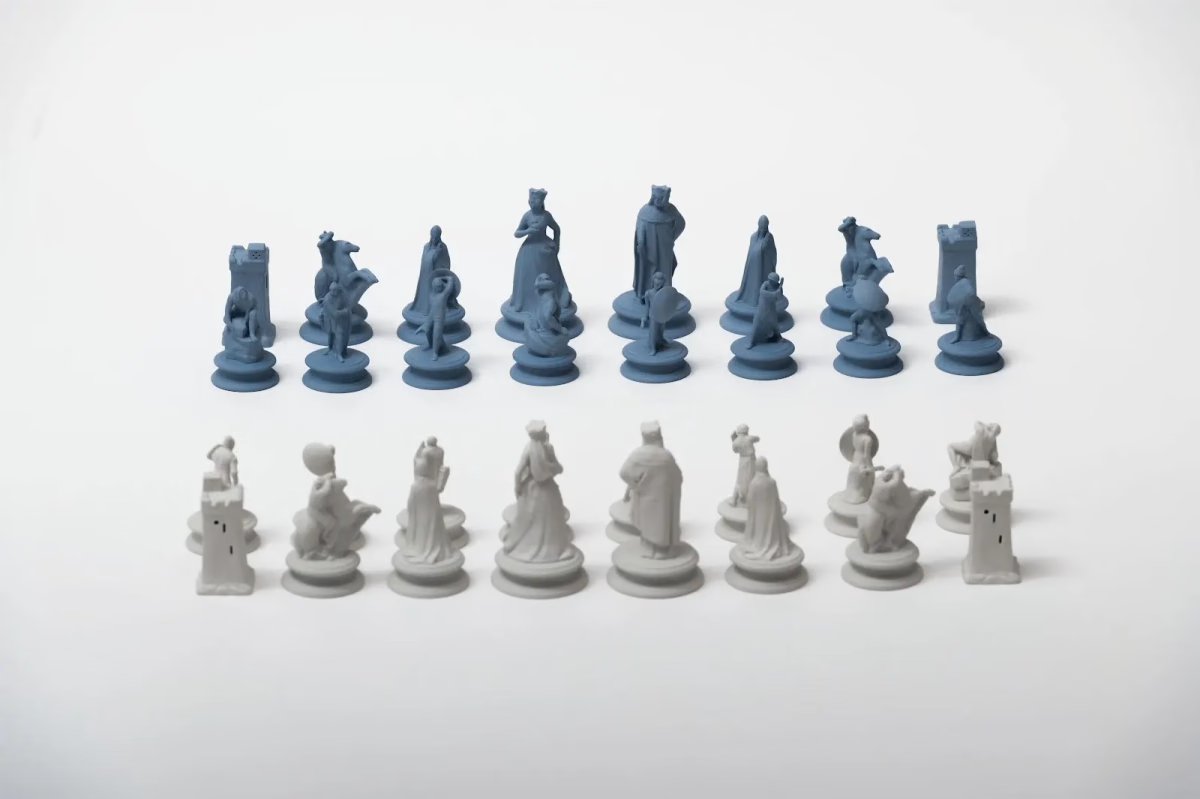
Royal Doulton & Company’s designer George Tinworth is known for his anthropomorphic, humorous figurines, including a mouse chess set. One of these sets was borrowed from Jon Crumiller’s collection and shown in the World Chess Hall of Fame & Galleries 2025 exhibition Paws & Pawns: Exploring Animal Chess Sets. These began production around 1885, with each piece engraved with George Tinworth’s initials.
Each porcelain manufacturer has a maker’s mark. These maker’s marks have changed over time, but most manufacturers can be easily identified, making it easier to date when certain molds and sets were designed and produced.
Connect With Our Collections: Another Volkstedt Porcelain Chess Set
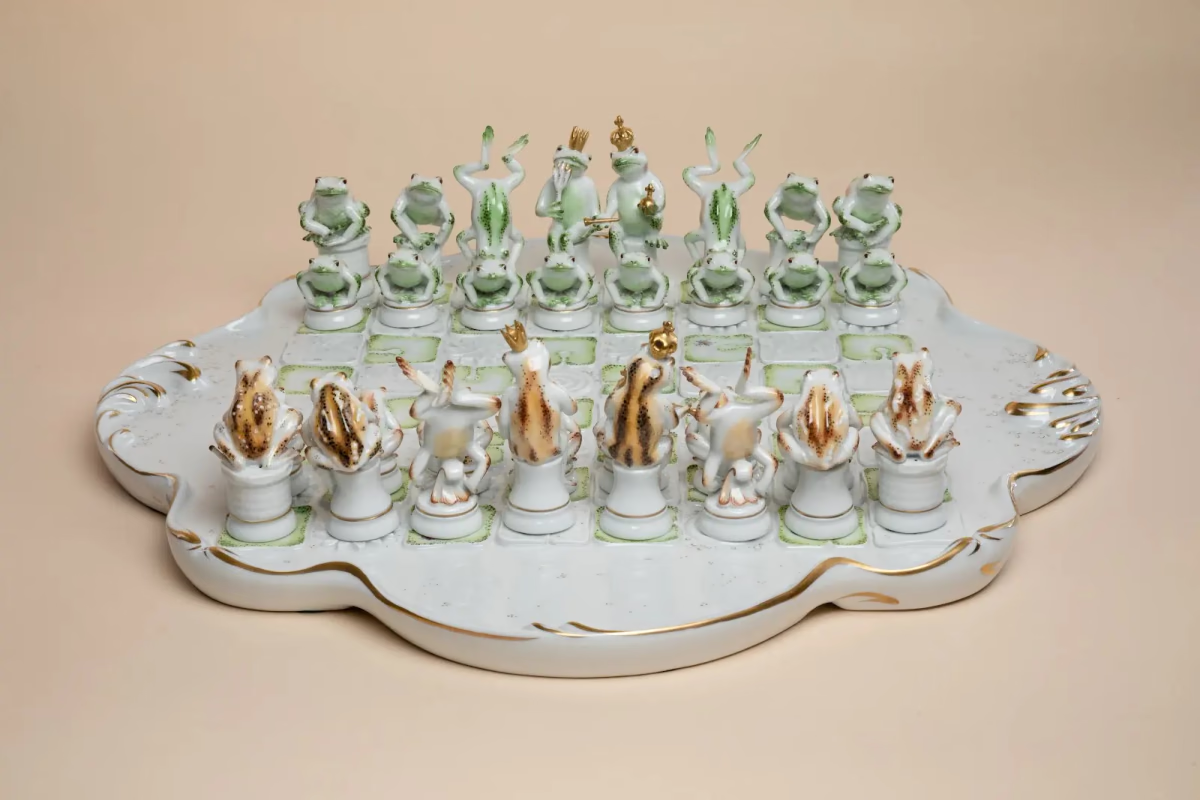
Another chess set in the World Chess Hall of Fame & Galleries’ collection attributed to the Volkstedt Porcelain Manufactory is a Frog Chess Set and Board. This set is dated between 1982 and 1999, just before the manufactory was restored to its 18th-century style.
The Frog Chess Set and Board was donated in 2004, when the World Chess Hall of Fame was located in Miami, Florida. The set later moved with the WCHOF from Miami to Saint Louis. Both the board and pieces are delicately designed, with a similar gold detailing to this month’s Featured Chess Set. On the board, the black tiles are painted to look like green lily pads, while the white squares have raised floral designs.
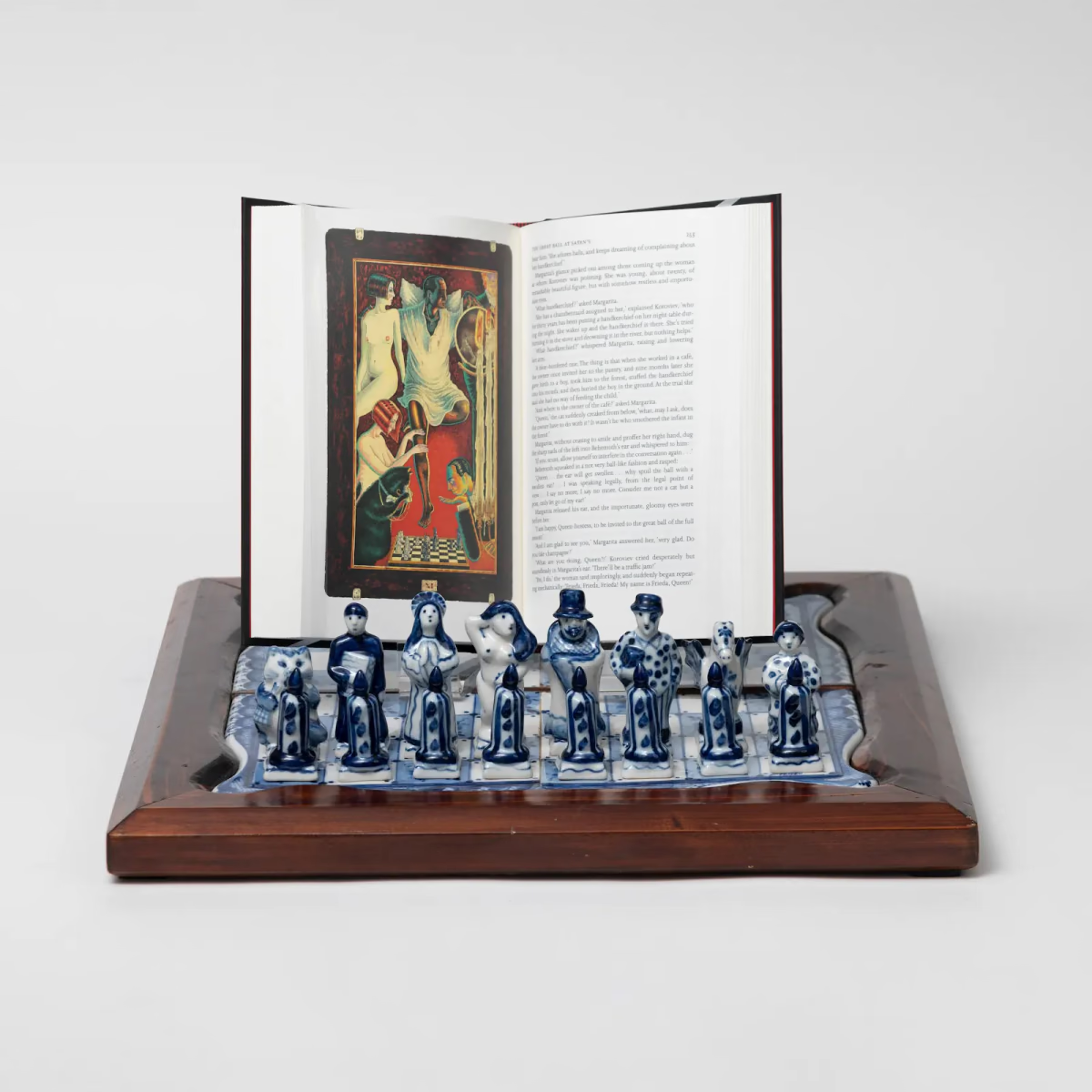
There are many more porcelain chess sets in the World Chess Hall of Fame & Galleries’ collections, including one that was displayed in one of our recent exhibitions, Reading Between the Lines: Chess and Literature. It depicts characters from the novel The Master & Margarita by Mikhail Bulgakov. Both the book and chess set are Russian; the porcelain is a traditional ceramic made in the Gzhel region of the country.
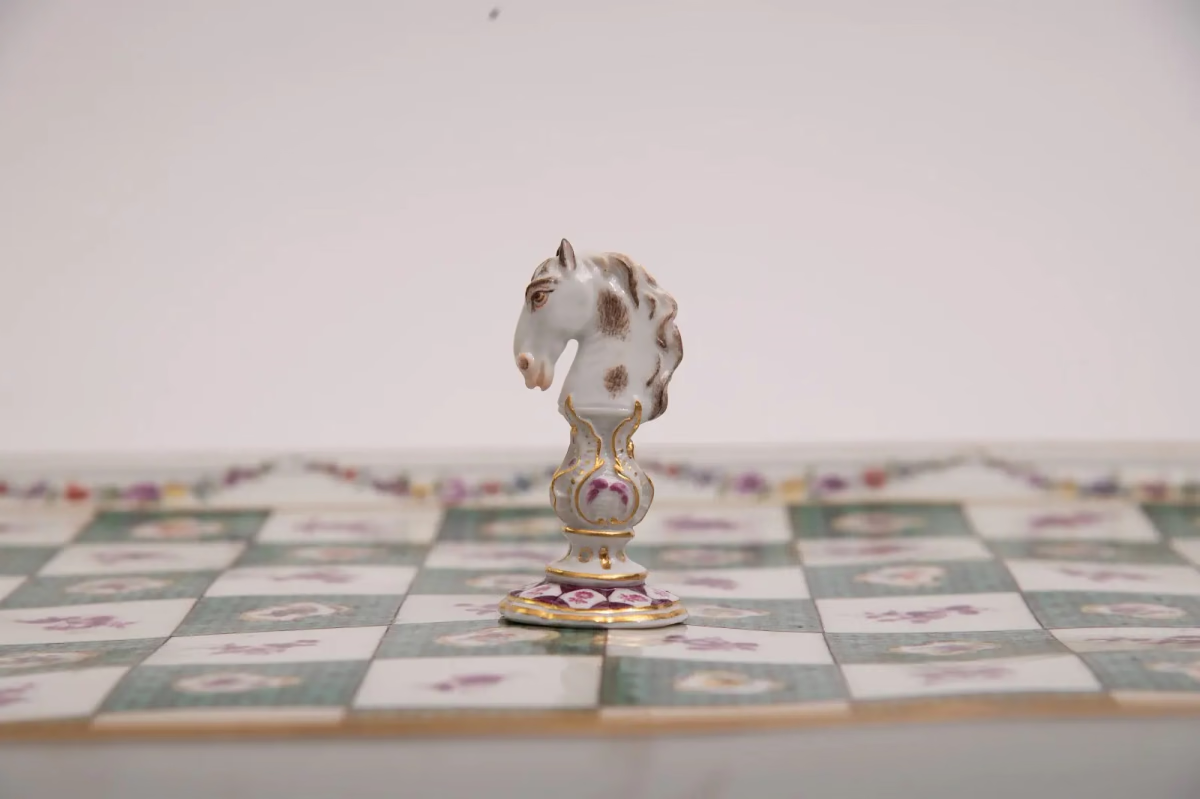
The oldest chess set in the WCHOF’s collection is a porcelain Meissen chess set. This set was originally owned by Jacqueline Piatigorsky and donated to the WCHOF in 2018. Dated all the way back to 1748, this chess set is decorated with pink and green floral designs. The Meissen porcelain manufactory, founded in 1710, was Europe’s first porcelain manufactory.
Written by Carrie Harper, Graduate Research Assistant
FAQs:
How can I participate in the Featured Chess Set Project?
Saint Louis area residents can email WCHOF curator Emily Allred at [email protected] or call 314.243.1543 if they are interested in participating in the Featured Chess Set project. Please include photos as well as a brief description of the set you would like to loan. Each set will be displayed on the third floor of the WCHOF and will be highlighted in the WCHOF’s monthly newsletter, website, and social media.
How can I see this month’s featured set?
Visit the WCHOF to see the sets in this rotating display yourself. From 3D-printed chess sets to one-of-a-kind artistic creations, the Featured Set Project shows how the ancient game has inspired artists and creators for centuries. Each set is only on view for a month at a time, so visit often to see a new set!
How can I donate chess sets to the WCHOF?
Our generous donors help us preserve chess history! From mass-produced sets with pop culture themes to rare and historical pieces, and sets used by everyday players, the WCHOF seeks to obtain artifacts that show the impact that the game has had on history, art, and culture. For more information about donations, email [email protected].
More From Beyond the Board
Porcelain Chess Through the Volkstedt Set
Dr. Edwin Munger and an Igorot Chess Set

Celebrating Excellence: Chess Greats to Join the 2026 U.S. and World Chess Halls of Fame in Saint Louis
The Monticello Chess Set
The Drueke Imperial Player’s Choice Chess Set
Route 66: History as a Chess Set
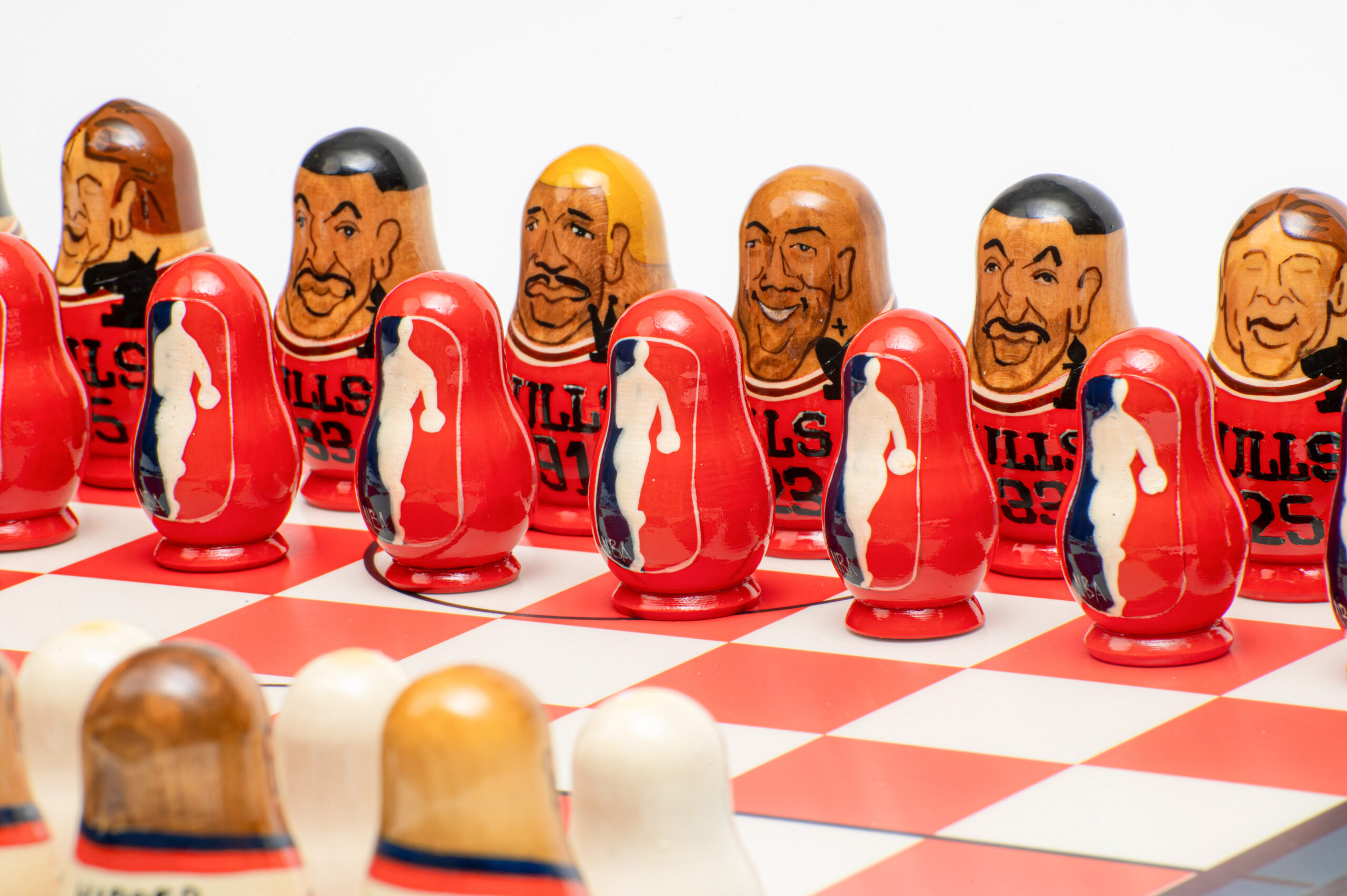
“Game Plan: The Strategy of Chess & Sports” Opens May 7 at World Chess Hall of Fame & Galleries
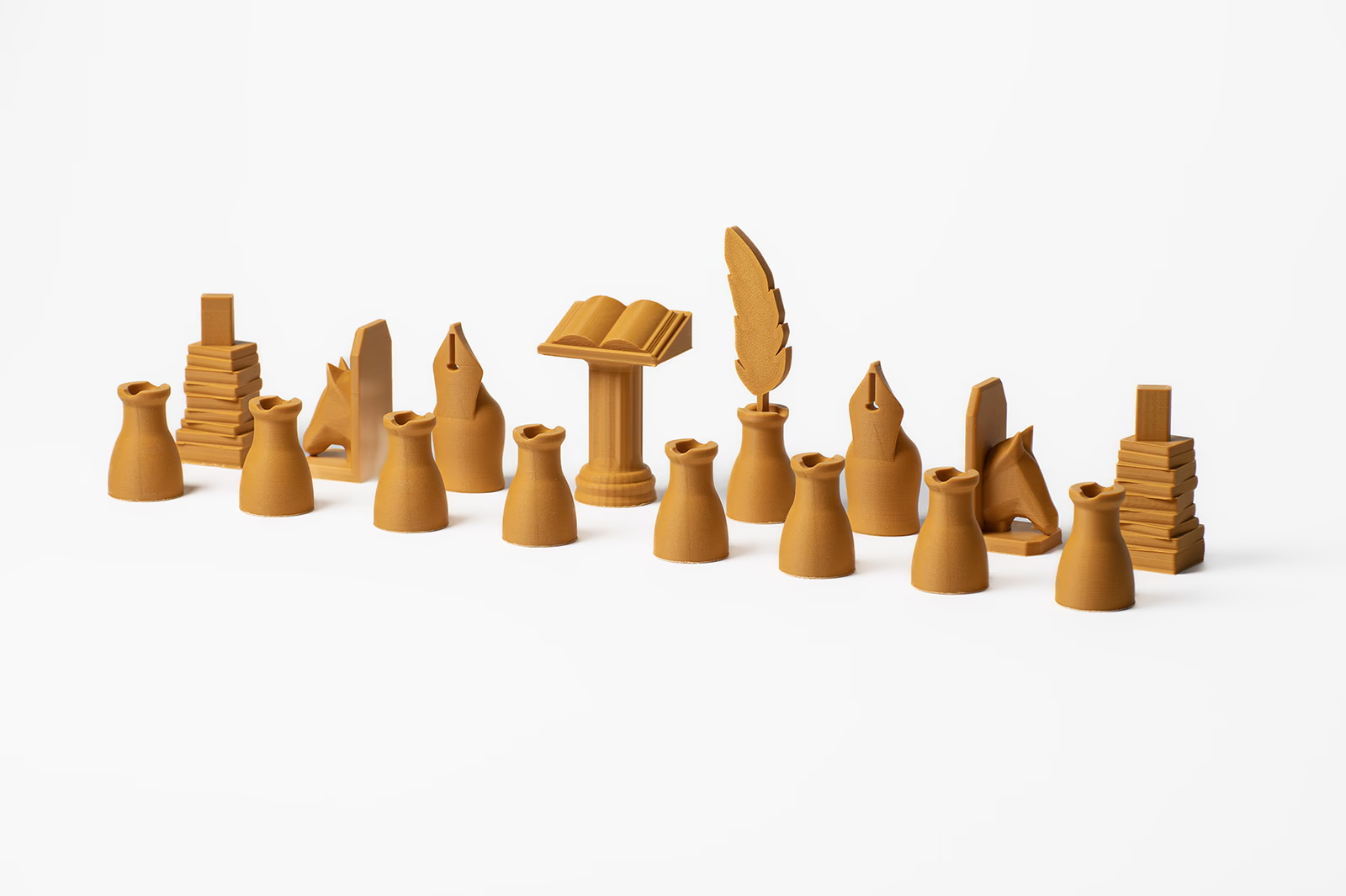
Two Timeless Pursuits: Chess and Reading
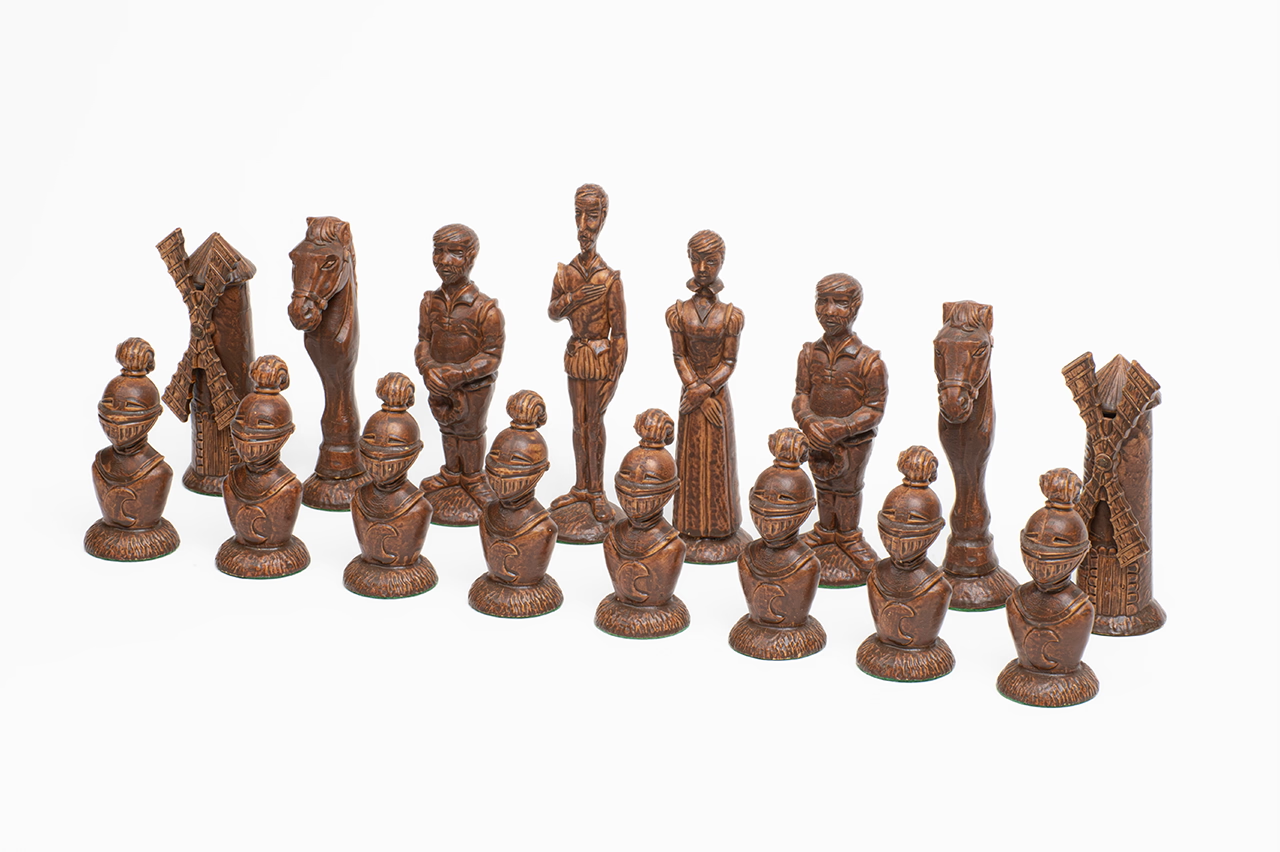
Chess in Literature: Don Quixote
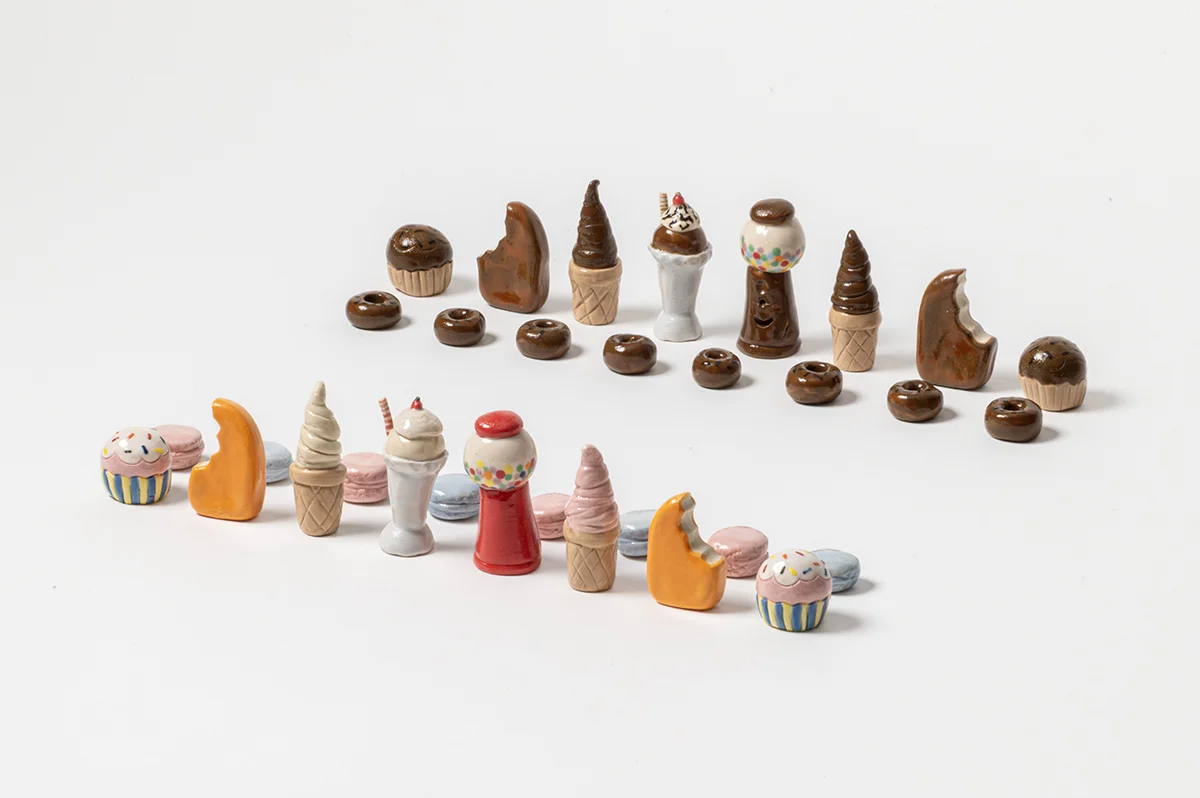
“You’re Sweet” Chess Set — February 2026 Featured Chess Set
Etched in Stone: Mexican Cultural Heritage in Chess

World Chess Hall of Fame & Galleries Announces New Exhibition: Reading Between the Lines: Chess & Literature
Game Plan: The Strategy of Chess & Sports
