
Route 66: History as a Chess Set
During May 2026, the World Chess Hall of Fame & Galleries (WCHOF) is highlighting a Route 66-inspired chess set. Part of the WCHOF’s Featured Chess Set project, it is on view outside the museum’s third-floor gallery next to a display of the plaques for the World Chess Hall of Fame and United States Chess Hall of Fame 2025 inductees.
The WCHOF’s Featured Set program features beautiful, offbeat, and unique chess sets from the museum’s collection. It also offers visitors from the Saint Louis area the opportunity to display special sets from their own collections for a month, highlighting collectors and the stories of how chess has played a role in their lives.
Featured Chess
News
Published on: May 8, 2026
Explore the May 2026 Featured Chess Set at the WCHOF—a Route 66-themed set by Richard Carpentier featuring classic 1950s and 60s automobiles.
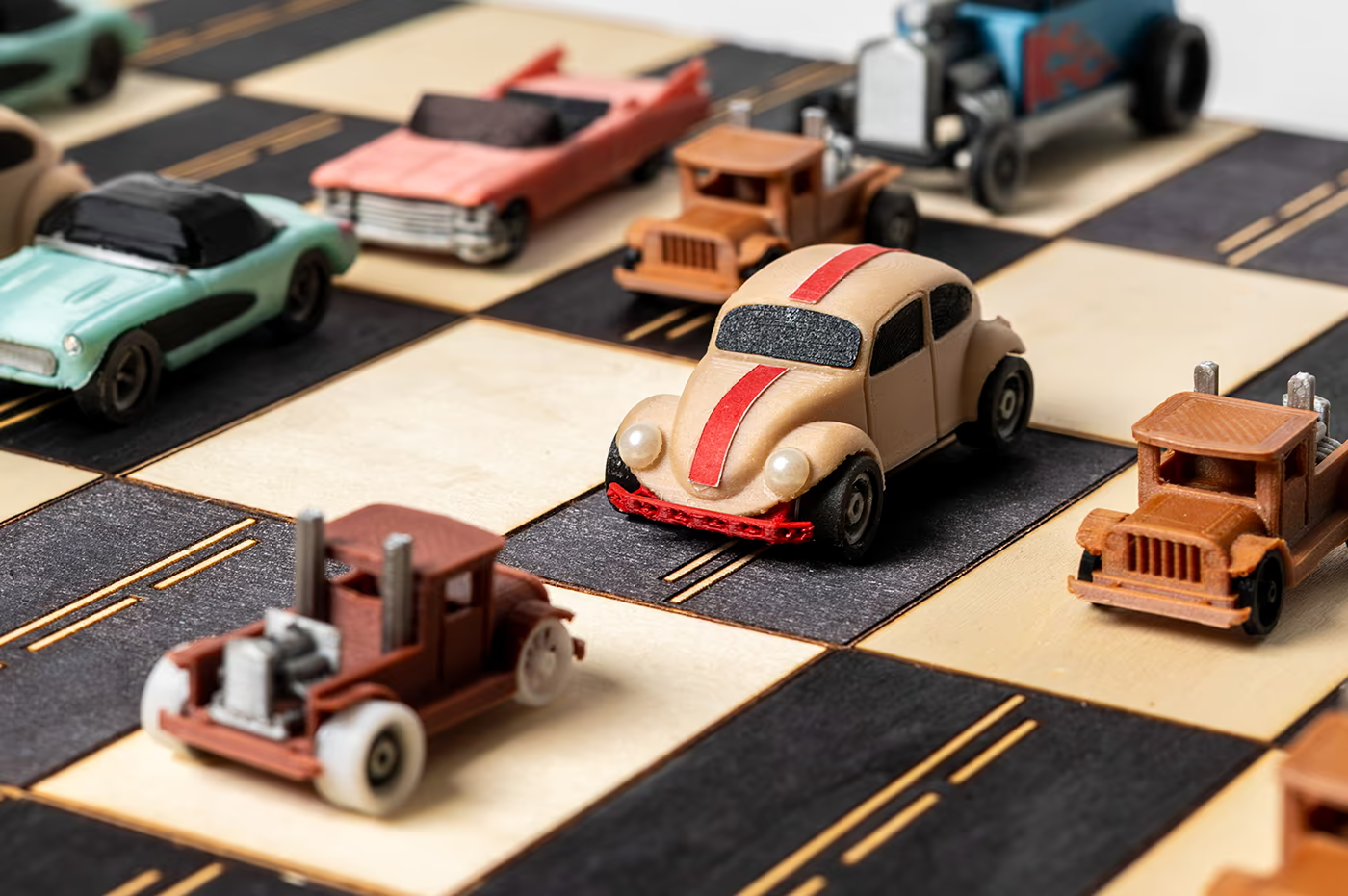
Route 66 Chess Set
This chess set is being featured for the 100th anniversary of Route 66, an historic highway spanning from Chicago to Santa Monica. The highway passes through Saint Louis, the home of the World Chess Hall of Fame & Galleries.
Made by Etsy seller Richard Carpentier under the shop name CraftyPenguin2, this set is an homage to Route 66. Carpentier describes his creative process for this set as a chess set with automobiles for the pieces, but he did not want to get into the racing world. So, he thought of common and iconic cars that would have been seen on the route in its heyday.
A laser-engraved wood board and storage box hold 3D-printed pieces based on classic cars. Inside the storage box are “parking spaces” for each chess piece, with a decorative lid to separate the pieces and the board.
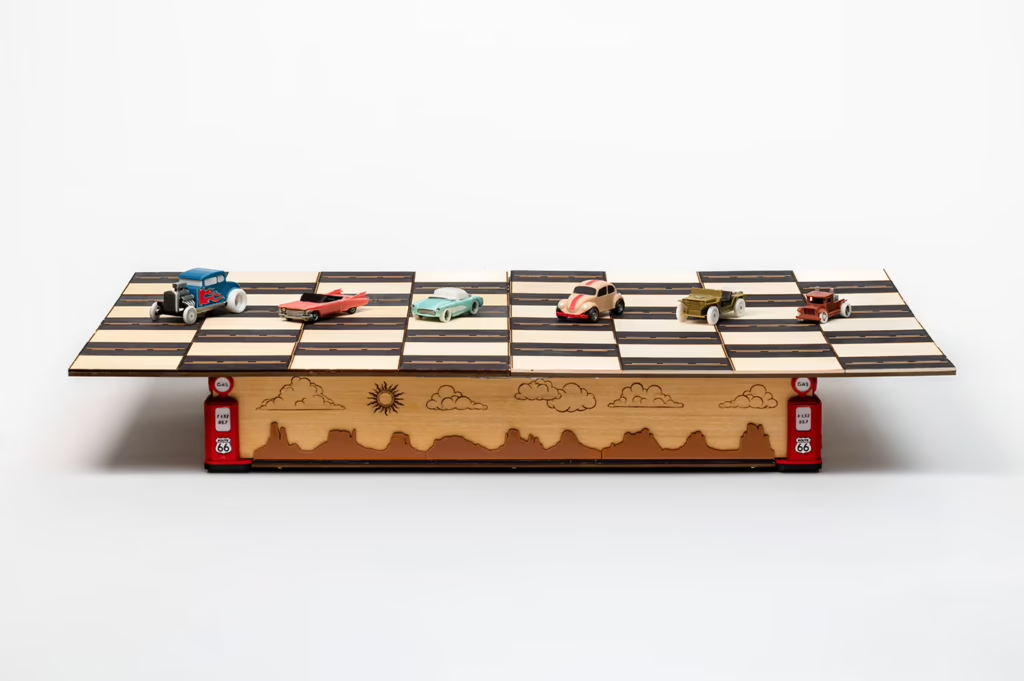
The corners of the box are 3D-printed old-fashioned gas pumps with the Route 66 logo. The engravings on the long sides of the box depict rolling landscapes, while the shorter sides are etched to resemble businesses along the highway.
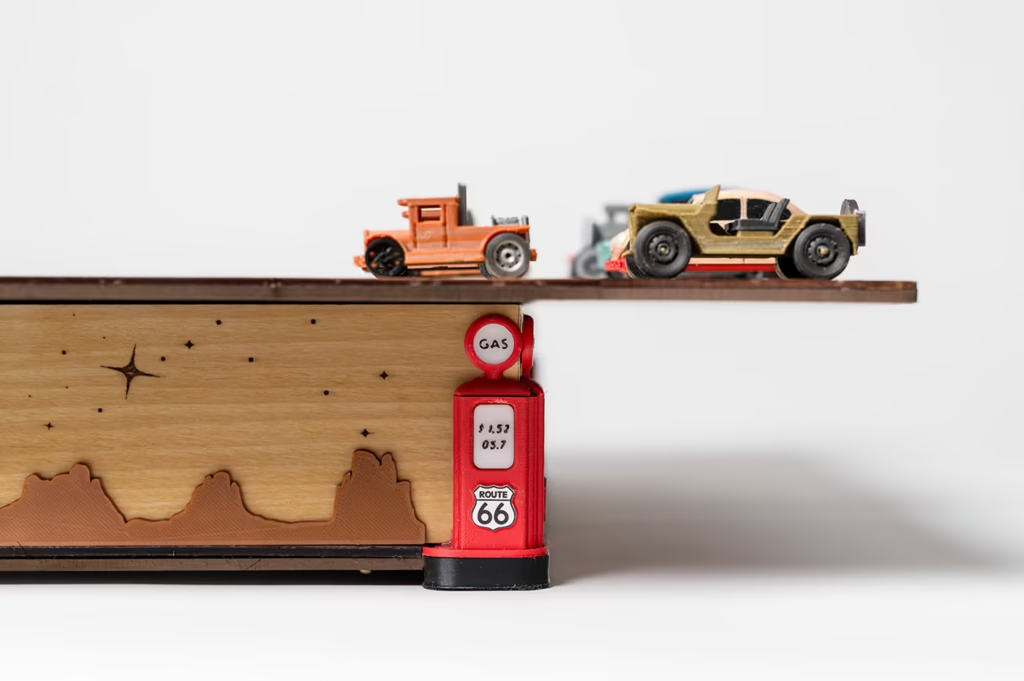
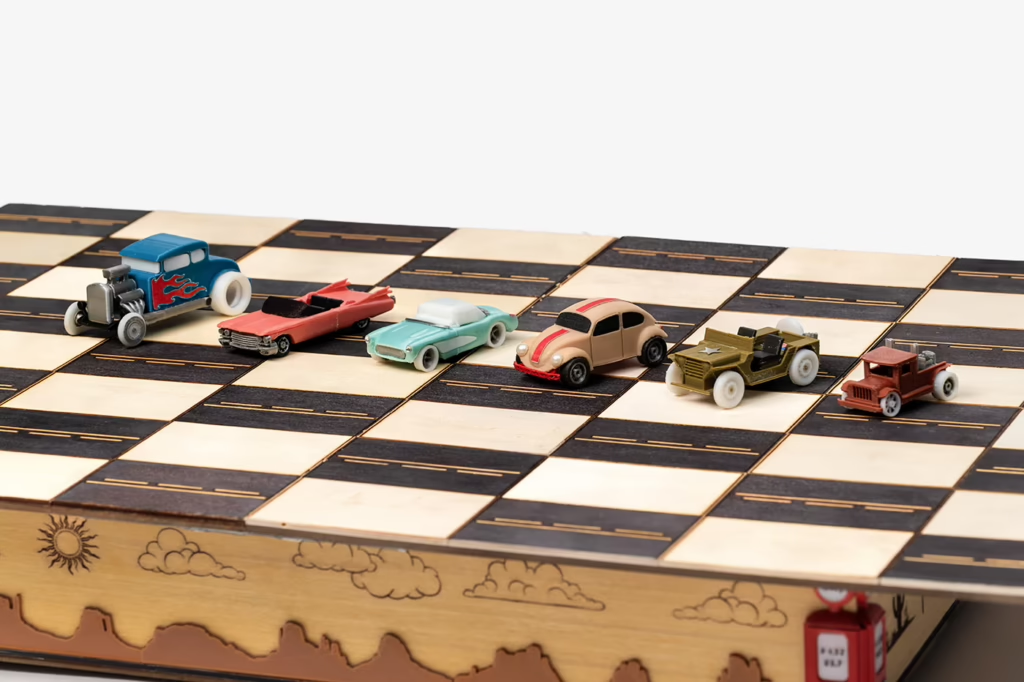
The pieces are designated by the color of the wheels and windshields. The pawns are two colors of brown pickup trucks; the rooks are Jeeps, most likely the classic Jeep Wranglers. Next to the Jeeps are the knights, Volkswagen Beetles with a red stripe down the center. One square in, the bishops are classic teal Corvettes. The kings and queens are hot rods and convertible Cadillacs, respectively. The king pieces are royal blue with red flames detailing on the body; the Cadillacs are a hot pink.
Creator Richard Carpentier even created a sign to put with this chess set, combining Route 66 and the chess campus here in Saint Louis. It honors the centennial of the highway, with the prominent image of the Saint Louis Arch and a chess piece above. You can see this with the chess set on display in the World Chess Hall of Fame & Galleries.
About the Creator: Richard Carpentier
Richard Carpentier is an Etsy seller from Florida under the name CraftyPenguin2. He uses a machine that does 3D-printing, laser engraving, and computer-controlled wood carving. This machine used each of its properties to help make the Route 66 chess set. He had always been a hobby woodworker and decided to monetize it through his store.
Other chess sets Carpentier has made include an adventure park-themed set, a necromancer set, a Christmas set, a puzzle box set, a fairy garden set, and a glass-and-mirror set. Not only does Carpentier make chess sets, but he also creates other woodworked game accessories, including a puzzle box, a Magic: The Gathering card holder, and other assorted game boxes. He also makes jewelry boxes and other small storage pieces.
Although he makes so many chess sets, Carpentier does not have a strong connection with chess. He states that he likes playing the game, but nothing more than designing and creating the sets for his online business.
Richard had a brick-and-mortar store in Orange City, Florida, called The Crafty Penguin. After it closed, Carpentier took some time off and then reopened the store online on Etsy. The store sells both vintage and handmade items.
The History of Route 66
U.S. Highway 66, more commonly known as Route 66, was established in 1926 as part of the beginning of the United States’ federal highway system. During the Great Depression and the Dust Bowl, Route 66 became a beacon of hope for migrants seeking safer, more lucrative places to live.
Established on November 11, 1926, Route 66 has been a quintessential American symbol for the past 100 years. It boosted the economies of each town it passed through, adding to the rise of service stations, restaurants, and motor courts, colloquially named mom-and-pop businesses. These towns were typically small and rural, with little revenue until the Route was established and advertised as the “fastest and most scenic route from Chicago to Los Angeles.”
The cultural impact of Route 66 can be seen in all types of media. This includes John Steinbeck’s novel, The Grapes of Wrath, the song “(Get Your Kicks on) Route 66” by Bobby Troup, the CBS television series Route 66, and the Disney/Pixar movie Cars. Each piece of media illustrates the importance of the highway and its significance across generations.
John Steinbeck’s book was published in 1939, reflecting the Great Depression and the hope that Route 66 had on the migrants from the Dust Bowl. The TV series Route 66 aired from 1960 to 1964, following two men traveling the highway in a Chevrolet Corvette convertible. Bobby Troup’s iconic song debuted in 1946, inspired by his cross-country drive from Pennsylvania to California, and has been covered by other famous musicians like Chuck Berry, John Mayer, Bing Crosby, and Nat King Cole. This song was also featured in Disney/Pixar’s 2006 animated film Cars, which depicts the now-defunct towns that boomed with the installation of the highway, bypassed by the new interstate highway systems that we have today. The movie became an instant hit, became a long-lasting franchise, and has rides at both United States Disney theme parks.
After President Eisenhower’s interstate highway system legislation was enacted, Route 66 lost popularity as the more streamlined interstates created faster travel routes. By 1984, Route 66 had been completely bypassed by the interstate system, and it was officially decommissioned in 1985.
Today, Route 66 is remembered by State or National Scenic Byways designations. The National Park Service has even conducted research on the road’s cultural impact, inspecting areas available for preservation, interpretation, and use. Through this research project, the National Park Service Route 66 Corridor Preservation Program was created, providing financial and technical assistance to all types of agencies to facilitate the preservation of some of the most significant parts of the highway.
In Missouri, there are a few registered scenic byways for the Route. The first is the Gateway Arch, the most recognizable monument in the Saint Louis area. Also, the Chain of Rocks Bridge, which spans the Mississippi River between Illinois and Missouri. The Meramec Caverns were also a popular stop for travelers on Route 66.
On its page about Route 66, the National Park Service writes, “There is a spirit, a feeling that resides along this highway. The spirit of Route 66 lives in the people and their stories, the views and buildings, and travelers’ perceptions of the highway.”
There are many celebrations of Route 66’s centennial all over the country. A website about the history of the highway and the importance of the centennial can be found, with programs and celebrations listed in all the states the “Mother Road” touches.
Here in Saint Louis, other museums are putting on festivals and events to commemorate the highway’s impact. The National Museum of Transportation has an exhibit highlighting the road titled “Roads, River, Rooms, and Reels” that opened this March. The Missouri Historical Museum has a festival called the Route 66 Centennial Festival from April 30th to May 3rd with activities, classic car shows, live music, and memorabilia. Later this year, in September, the city of Maplewood in the Saint Louis area is hosting a classic car festival with live music to celebrate the centennial.
Written by Carrie Harper, Graduate Research Assistant
FAQ
How can I participate in the Featured Chess Set Project?
Saint Louis area residents can email WCHOF curator Emily Allred at [email protected] or call at 314.243.1543 if they are interested in participating in the Featured Chess Set project. Please include photos as well as a brief description of the set you would like to loan. Each set will be displayed on the third floor of the WCHOF and will be highlighted in the WCHOF’s monthly newsletter, website, and social media.
How can I see this month’s featured set?
Visit the WCHOF to see the sets in this rotating display yourself. From 3D-printed chess sets to one-of-a-kind artistic creations, the Featured Set Project shows how the ancient game has inspired artists and creators for centuries. Each set is only on view for a month at a time, so visit often to see a new set!
How can I donate chess sets to the WCHOF?
Our generous donors help us preserve chess history! From mass-produced sets with pop culture themes to rare and historical pieces and sets used by everyday players, the WCHOF seeks to obtain artifacts that show the impact that the game has had on history, art, and culture. For more information about donations, email [email protected].
More From Beyond the Board
Porcelain Chess Through the Volkstedt Set
Dr. Edwin Munger and an Igorot Chess Set

Celebrating Excellence: Chess Greats to Join the 2026 U.S. and World Chess Halls of Fame in Saint Louis
The Monticello Chess Set
The Drueke Imperial Player’s Choice Chess Set
Route 66: History as a Chess Set
“Game Plan: The Strategy of Chess & Sports” Opens May 7 at World Chess Hall of Fame & Galleries
Two Timeless Pursuits: Chess and Reading
Chess in Literature: Don Quixote

“You’re Sweet” Chess Set — February 2026 Featured Chess Set
Etched in Stone: Mexican Cultural Heritage in Chess

World Chess Hall of Fame & Galleries Announces New Exhibition: Reading Between the Lines: Chess & Literature
Game Plan: The Strategy of Chess & Sports
