
Dr. Edwin Munger and an Igorot Chess Set
During August 2026, the World Chess Hall of Fame & Galleries (WCHOF) is highlighting a donation to the museum’s collection—an Igorot chess set, donated by Edwin and Ann Munger. Part of the WCHOF’s Featured Chess Set project, it is on view outside the museum’s third-floor gallery next to a display of the plaques for the World Chess Hall of Fame and United States Chess Hall of Fame 2025 inductees.
The WCHOF’s Featured Set program features beautiful, offbeat, and unique chess sets from the museum’s collection. It also offers visitors from the Saint Louis area the opportunity to display special sets from their own collections for a month, highlighting collectors and the stories of how chess has played a role in their lives.
Featured Chess
News
Published on: August 13, 2026
Explore the August 2026 Featured Chess Set—an indigenous Igorot set donated by Edwin and Ann Munger, celebrating Philippine regional culture, craftsmanship, and materials.
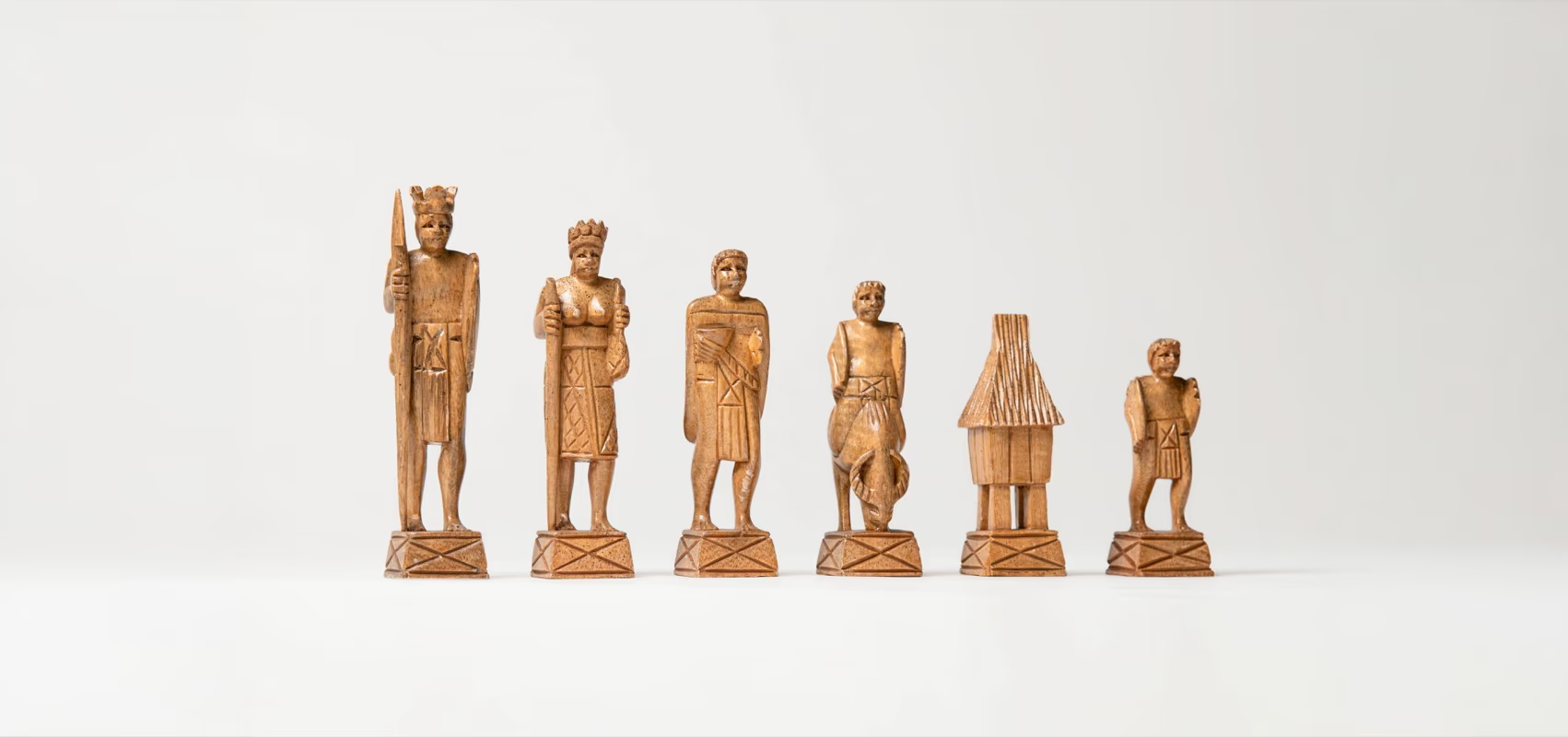
Igorot Chess Set
Igorot is a term for a number of indigenous tribes from the northern Luzon area of the Philippines. They comprise a number of mountain tribes and ethnic groups in the region. More recently, the Igorot population refers to themselves as the Cordilleran peoples, after the mountain range they reside in or nearby. Within this community, there are at least eleven unique ethnolinguistic tribes.
This month’s Featured Chess Set was created by an artist from this region. Each piece is modeled after a different aspect of indigenous life on the northern end of the country. Both sides of the chess set are unique, with distinct characteristics on the pieces. The white side is made out of a light brown mahogany wood. For the black side, the pieces are made from the kamagong tree, which has the hardest wood of any tree grown in the Philippines. Kamagong wood is known for its black interior wood, which the black side of this chess set was made from.
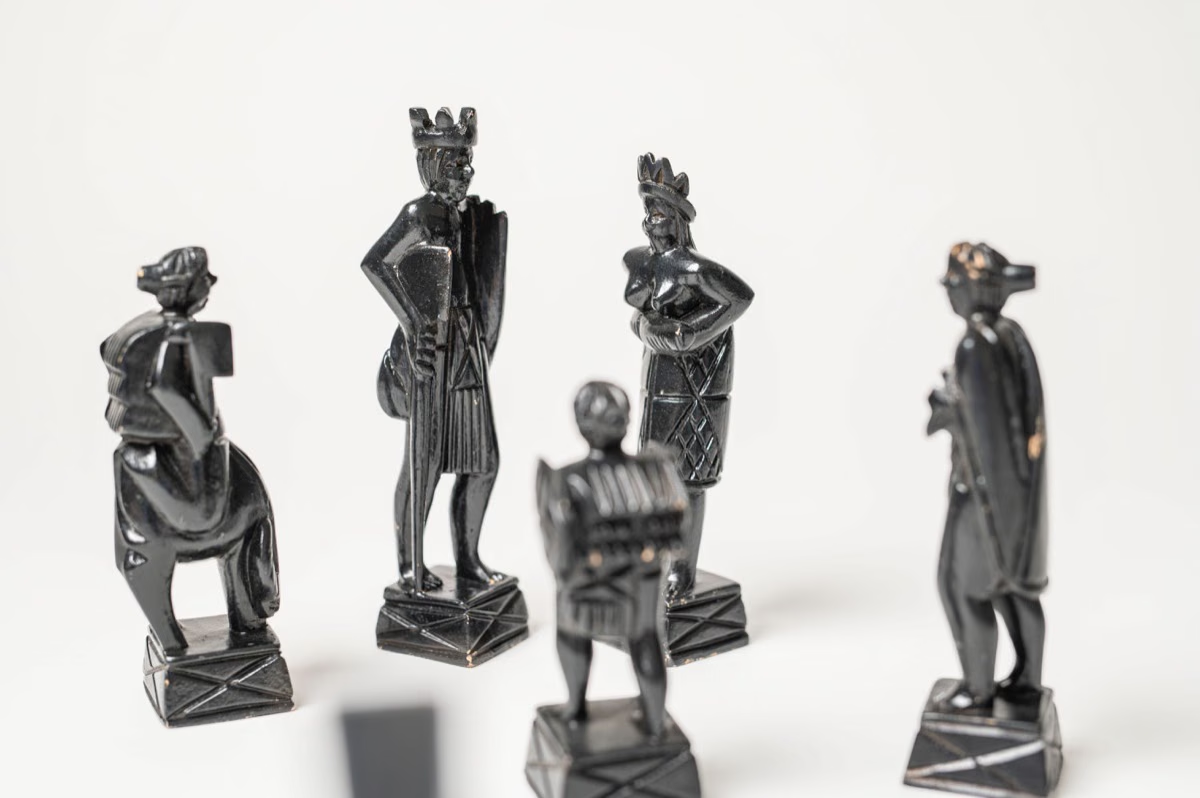
Its king pieces represent a tribal chief adorned with a sash and long spear. The white king’s shield is slightly longer than the black king’s, a small but noticeable difference. Next to them, the queen pieces depict a hand-woven skirt specific to the Baguio people located near the central west coast of Luzon.
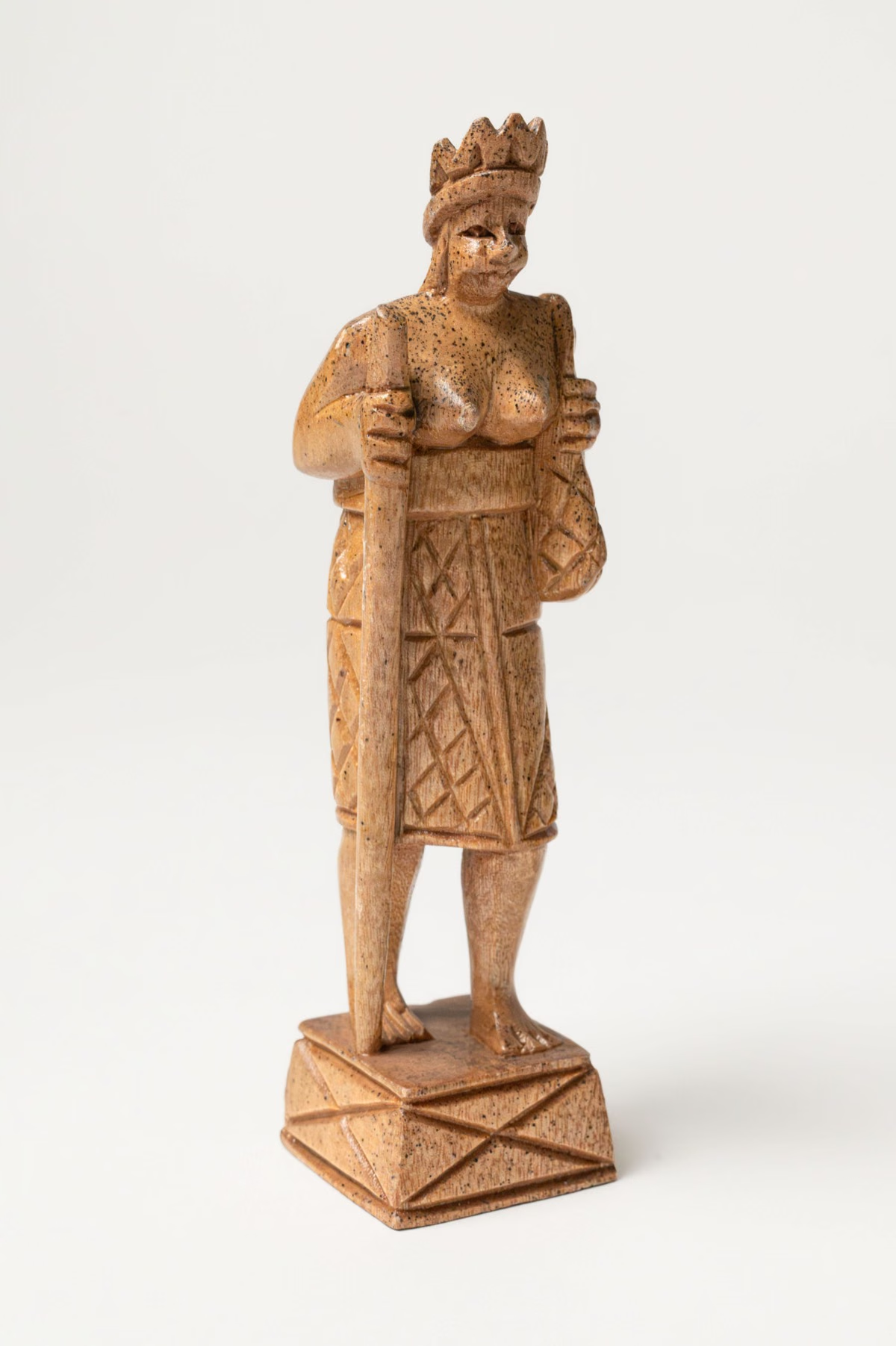
Each of the bishops, knights, and pawns features a knob tied with a cord to the back of their heads, representing a regional tool used to carry betel nuts. These nuts, native to the Philippines, come from a genus of palm trees. The nuts–which, combined with other ingredients, become a stimulant–can be used for chewing. Betel nut chewing is a practice common in Southeast Asia, Micronesia, and other nearby areas. The practice goes back thousands of years, but is highly addictive. Betel nuts are also used for their healing properties in some areas of Southeast Asia.
The set’s knight pieces each ride a carabao, a water buffalo native to the Philippines. These animals are used in lieu of tractors to plow the farm fields–specifically rice paddies–and as draft animals to move heavy objects around the areas. The carabao is the unofficial national animal of the Philippines, symbolizing hard work. Not only are carabaos used as draft animals, but they are also sources of milk, meat, and other products.
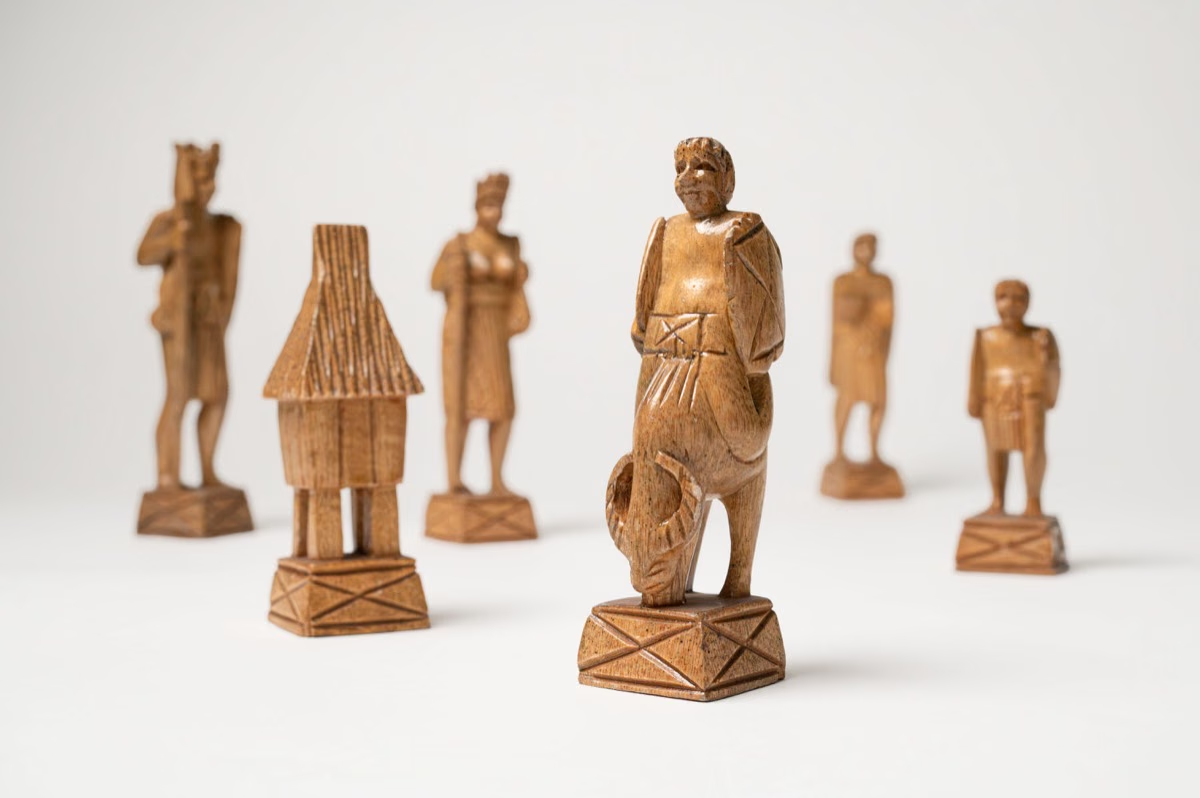
The rooks depict thatched-roof granaries. On the white side, these granaries are on stilts. These buildings are found on farms as a place to dry and store harvested grains. Thatched-roof granaries are common in the Philippines, especially among the indigenous peoples in the country.
Each pawn, along with the betel nut knobs, carries a shield, ax, and rattan backpack called a bango. These accessories illustrate young men going on a hunt. Bangos are hand-woven, waterproofed backpacks traditionally used in the Luzon area by the Cordilleran tribes. They can be used for long hunts, foraging, and farming.
About the Donor: Edwin and Ann Munger
If you know about chess set collecting, you may know who Dr. Edwin (Ned) Munger was. If you are new to the chess world, Ned Munger was a prolific collector of chess sets from every corner of the world. Dr. Munger traveled to over 250 countries collecting both chess sets and stories. He wrote about his experiences and many of the chess sets he collected in his three-volume series titled Cultures, Chess, and Art: A Collector’s Odyssey Across Seven Continents. In this series, Dr. Munger wrote about the people, places, and artistry of specific chess sets he collected in different parts of the world. These stories were not only about the sets themselves, but also the people he met that he associated each set with and the materials and techniques used for each set.
Edwin Stanton Munger was born on November 19, 1921, in La Grange, Illinois. He attended the University of Chicago, receiving his BS, MS, and PhD in geography. Munger served in the Army and briefly lived around the African continent doing research and other jobs. He began teaching geography, specializing in Africa, at the California Institute of Technology (Caltech) in 1961. By 1988, Munger was professor emeritus there. He published over 1,000 articles and 11 books about geography, chess, Africa, and his life during his illustrious career.
Ned Munger first visited Africa in 1947. He returned over 100 times in his life, including as a Fulbright Fellow at Makerere University in Kampala, Uganda, in 1949. He continued working and researching around the continent as an Institute of Current World Affairs (ICWA) Fellow from 1950 to 1954. From 1955 to 1961, Munger also worked as an American Universities Field Staff correspondent, each year moving to countries that included Ghana, Nigeria, Kenya, and South Africa. Dr. Munger did not return to Africa until 1966 as a Peace Corps evaluator in Uganda. The next year he returned to evaluate in Botswana.
In 1971, Dr. Munger became the chairman of the U.S. State Department Evaluation Team for their operations in South Africa. He also served as the president of the L.S.B. Leakey Foundation for fourteen years. This foundation pioneered the study of early human life through different prongs of research, including archeological and primatological advancements. Starting in 1985, Dr. Munger also served as president of the Cape of Good Hope Foundation, which sends books and other educational materials to black universities in southern Africa.
Dr. Munger died in 2010 of prostate cancer. He and his wife, Ann, left his chess set collection to the World Chess Hall of Fame & Galleries through the Edwin and Ann Munger Living Trust. Overall, more than 400 chess sets were added to our collections thanks to Dr. Edwin Munger.
Connect with Our Collections: Munger Donations in Exhibitions
The donation from the Munger estate is so vast and diverse that sets from it have been in many of our past exhibitions and have been part of the Featured Set Program.
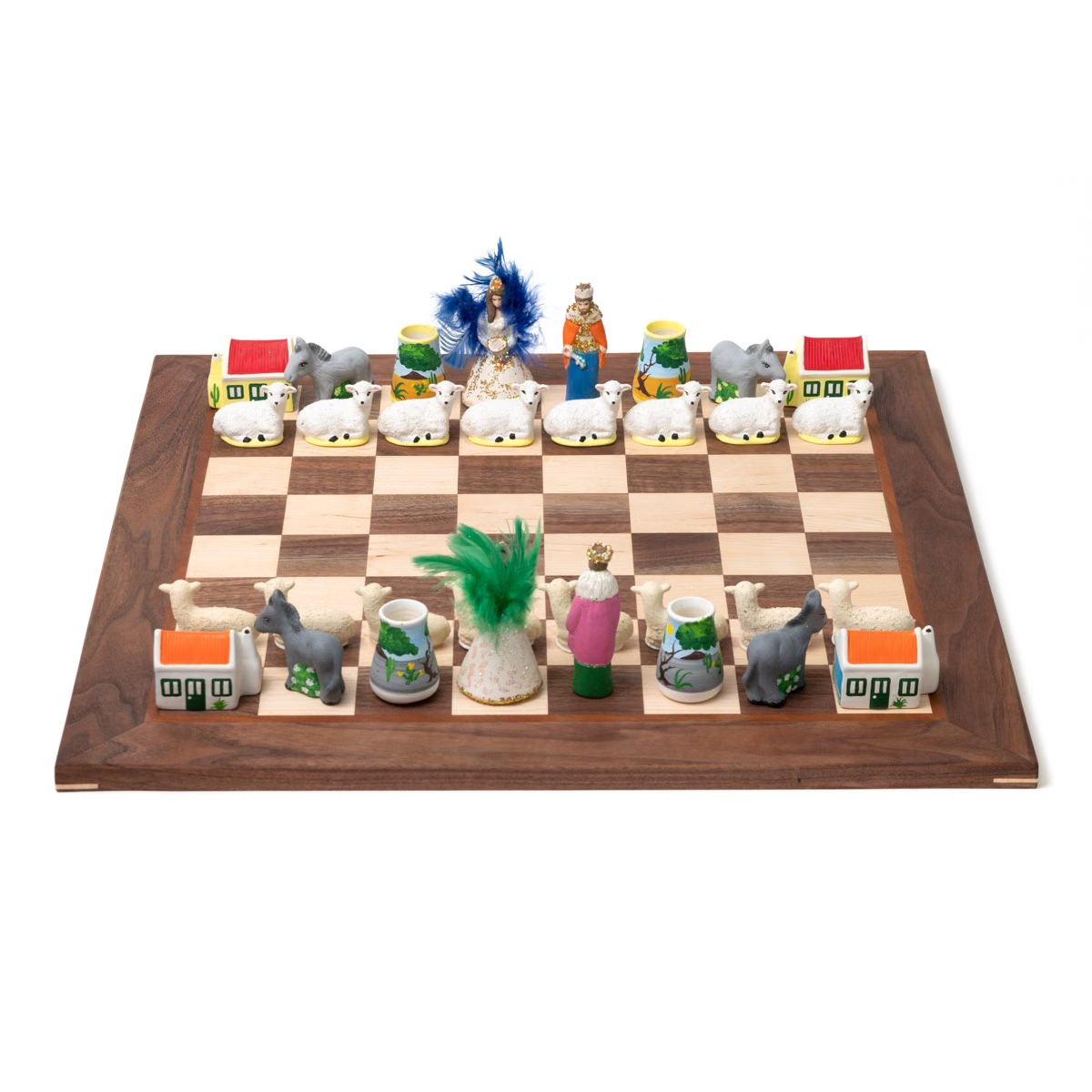
In 2023, two chess sets from Edwin Munger’s collection were in the Featured Chess Set Program. The first was shown in February, a colorful Aruban chess set. The next Munger collection chess set shown was in September, featuring a South African Township chess set.
The Aruban chess set was created by Aruban citizen Lia Sanchez Maldonado, who is the owner of the ceramics company, Creative Hands. In this set, each piece takes inspiration from local culture, especially the pre-Lent festival Carnival held in January and February, usually celebrated with parades, music, and parties. The king pieces hold the keys to Carnival; the queens hold bowls of white Aruban beach sand. Bishops are decorated with watapana trees (aka Divi-Divi trees), while the rooks are houses painted with the Aruban flag.
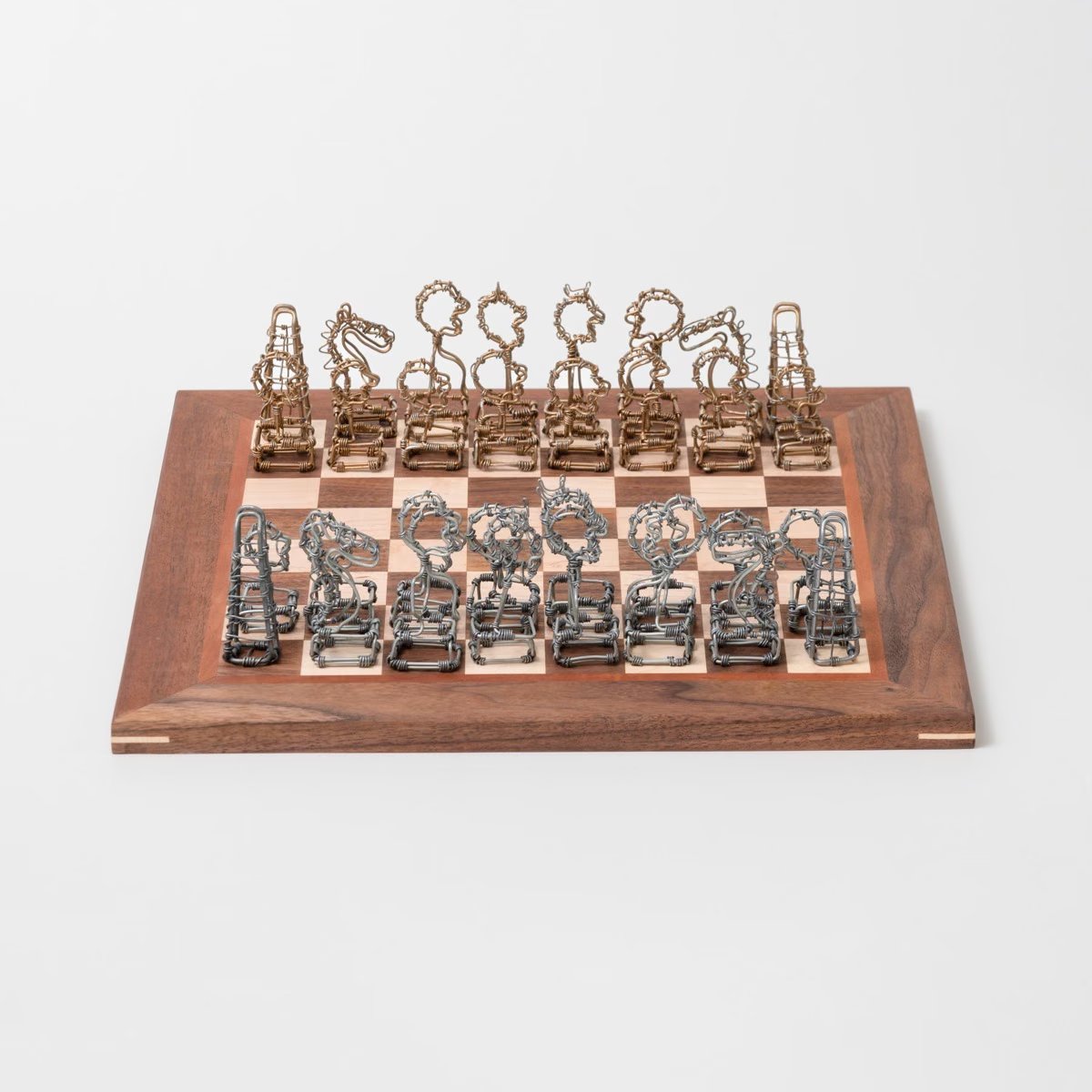
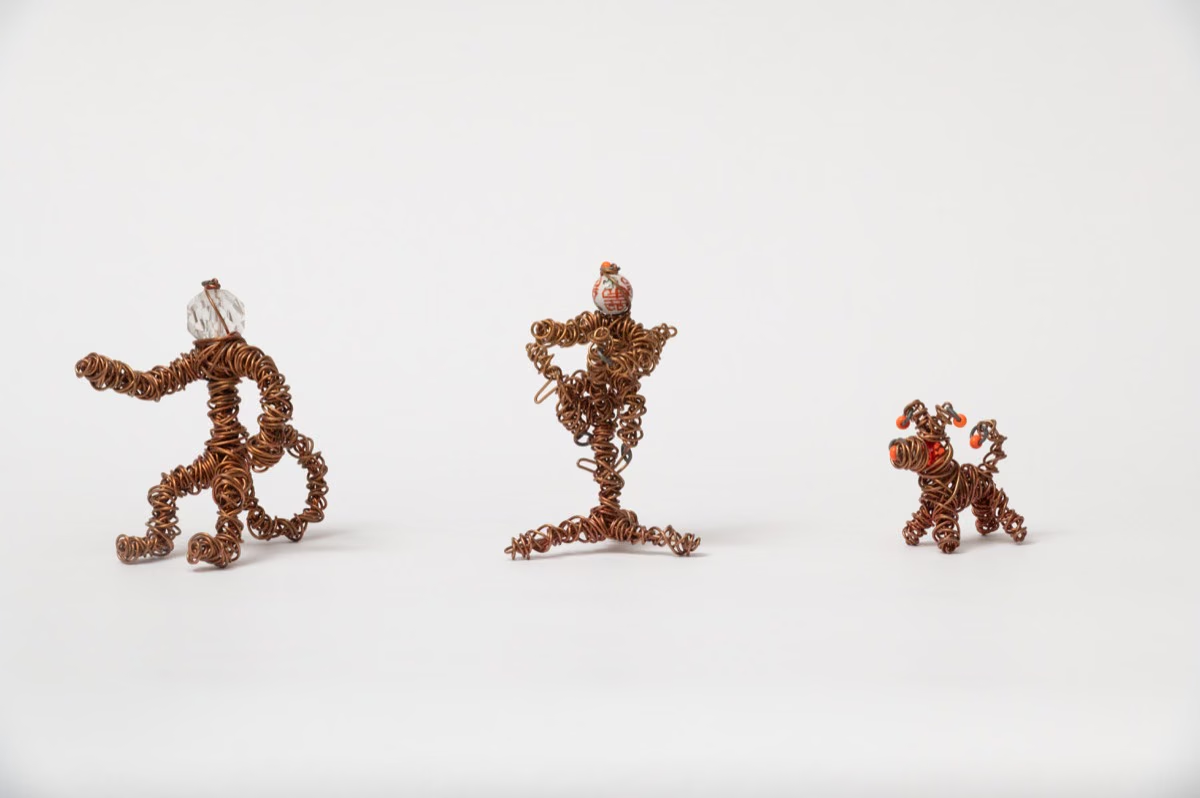
September 2023’s Featured Chess Set, the Southern African Township set, allows us to see some of Dr. Munger’s fascination with the African continent. The creator, Steve Chizero, got the idea from a conversation with a group of mostly Zimbabwean men, creating the set in only one weekend. Township art, part of South African communities, is made primarily of copper wire, which is why this set is made from copper and silver wires. All pieces except for the knight and rook have human-like features, best seen in profile.
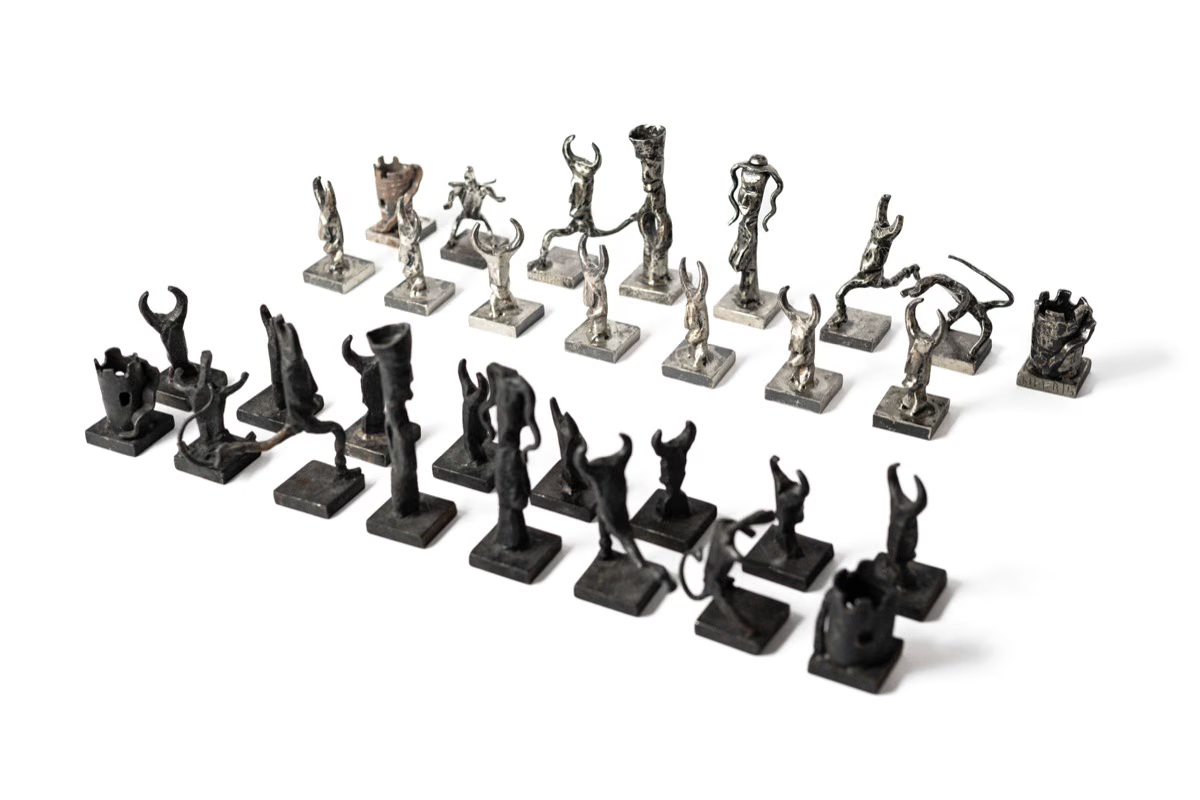
2024’s Featured Chess Set Program included a Munger set in September. This was a chess set from Gotland, Sweden. Gotland is a Swedish island in the Baltic Sea, known for its own Swedish dialect, Gutnish. Over the years, the island has become a popular tourist destination. Runes are carved into the bottoms of the light-colored pieces of this chess set.
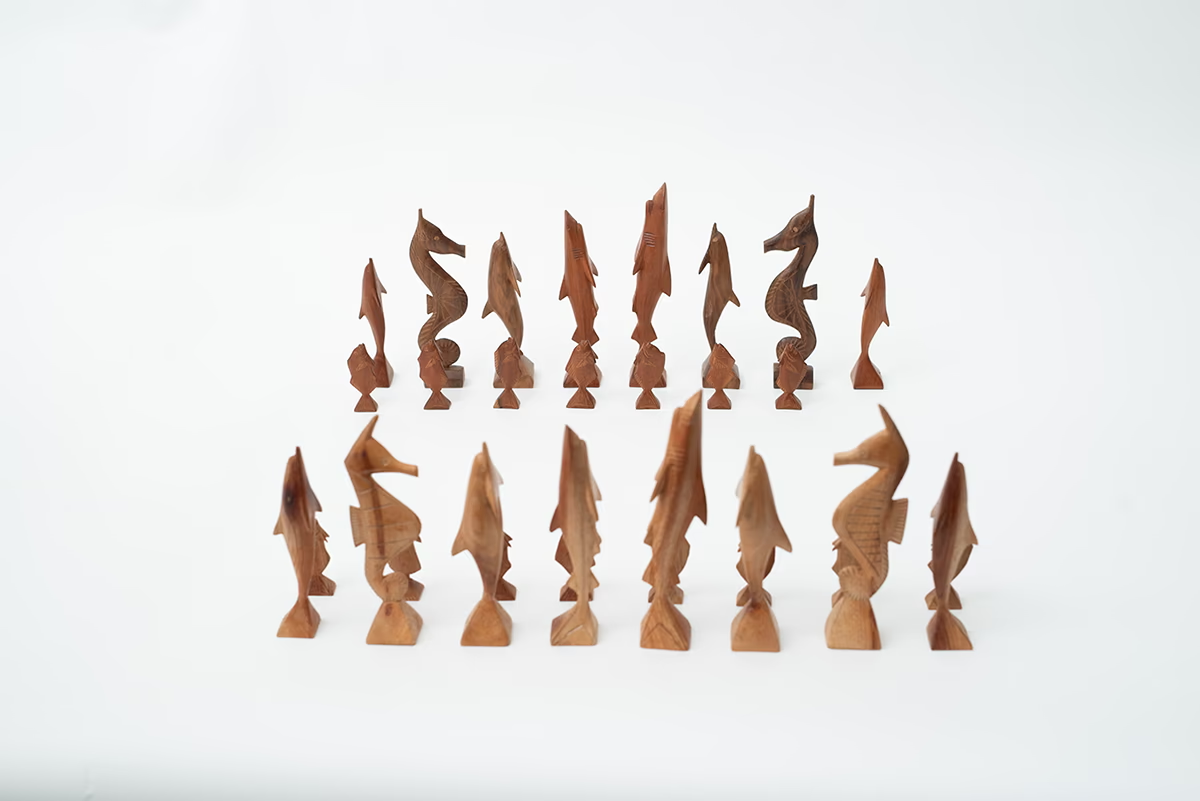
One chess set from the Munger collection was shown in two of our recent exhibitions. It was first featured in the artist exhibition Donna Dodson: Match of the Matriarchs and Other Amazonomachies, and later shown in our exhibition Paws and Pawns: Exploring Animal Chess Sets. This sea life chess set is from Kosrae, Micronesia. It depicts sea life from the area, highlighting how important marine animals are to the island country. Peter Lick, the artist, created this set specifically for Dr. Ned Munger’s collection. The wooden pieces give the impression of marine life swimming up to the surface of the ocean, as if you could reach down and touch them.
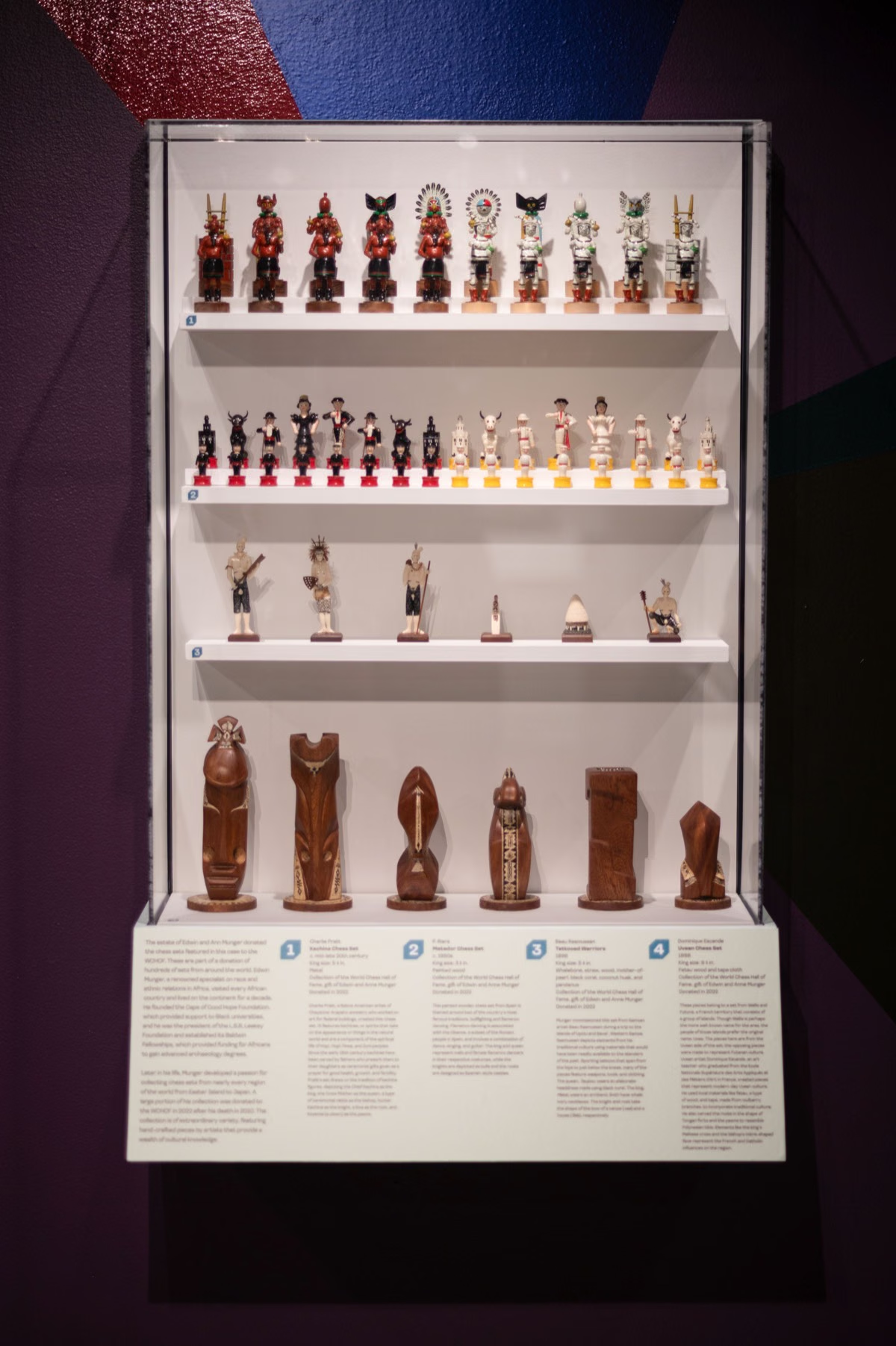
Four chess sets were featured in the 2024 exhibition Crown Jewels: Donation Highlights. This exhibit was inspired by the many donors to the World Chess Hall of Fame & Galleries, including the Mungers. All four were together in a case, demonstrating the diverse chess sets Dr. Munger collected. One, a Kachina set, is representative of the Native American kachina spirit dolls created by a Cheyenne-Arapaho man named Charlie Pratt. Another is a Matador chess set, where Spanish culture is depicted. The other two from this exhibition are from Oceania: a Samoan Tattooed Warriors chess set and a Uvean chess set.
There were eight Munger donation chess sets shown in the Paws and Pawns: Exploring Animal Chess Sets exhibit. One was the Kosrae chess set already discussed, and the others depict more animals from all over the world. Two chess sets portray birds, one made of bone from Singapore, and the other made of wood. Another unique set from the Munger estate that was shown is the Wire Monkey chess set. The pieces are all made of wire, shaped like various types of monkeys.
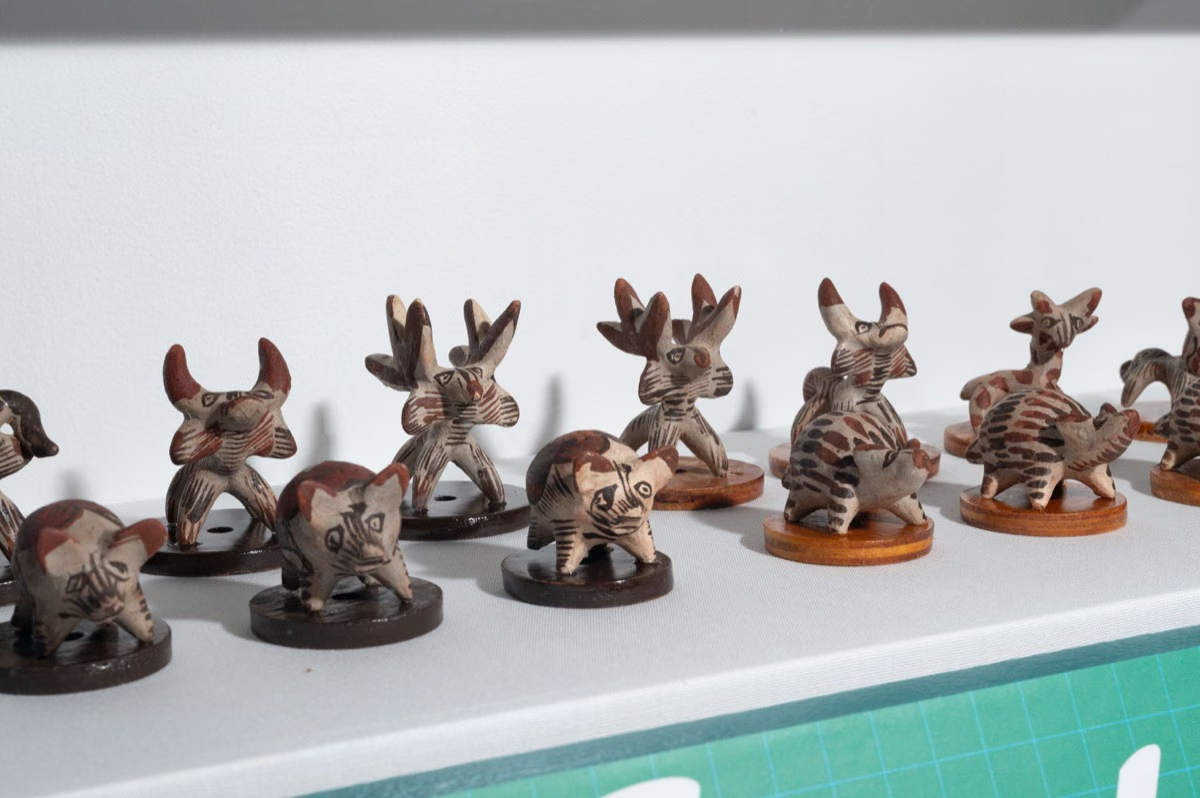
Another chess set from the Munger estate in Paws and Pawns: Exploring Animal Chess Sets was a handmade chess set from southern Mexico. Made of wood and stone in Chiapas, Mexico, the country’s southernmost state, the chess set depicts North American animals such as deer, bulls, squirrels, pigs, and anteaters.
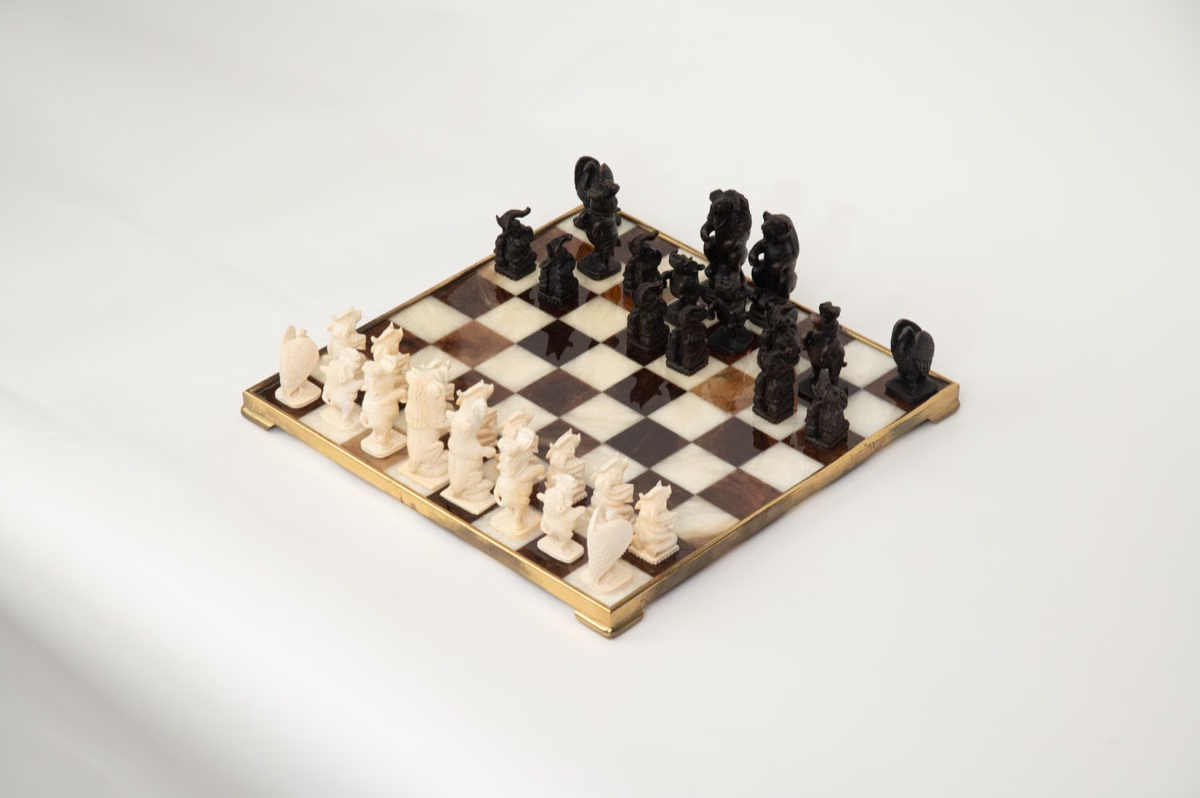
In the exhibit, another chess set portrayed the natural diversity of South Africa. With animals native to the area, including lions (kings), lionesses (queens), vultures (bishops), warthogs (knights), hippos (rooks), and elephants (pawns), this hand-carved chess set gives the viewer a glimpse into what life surrounded the residents.
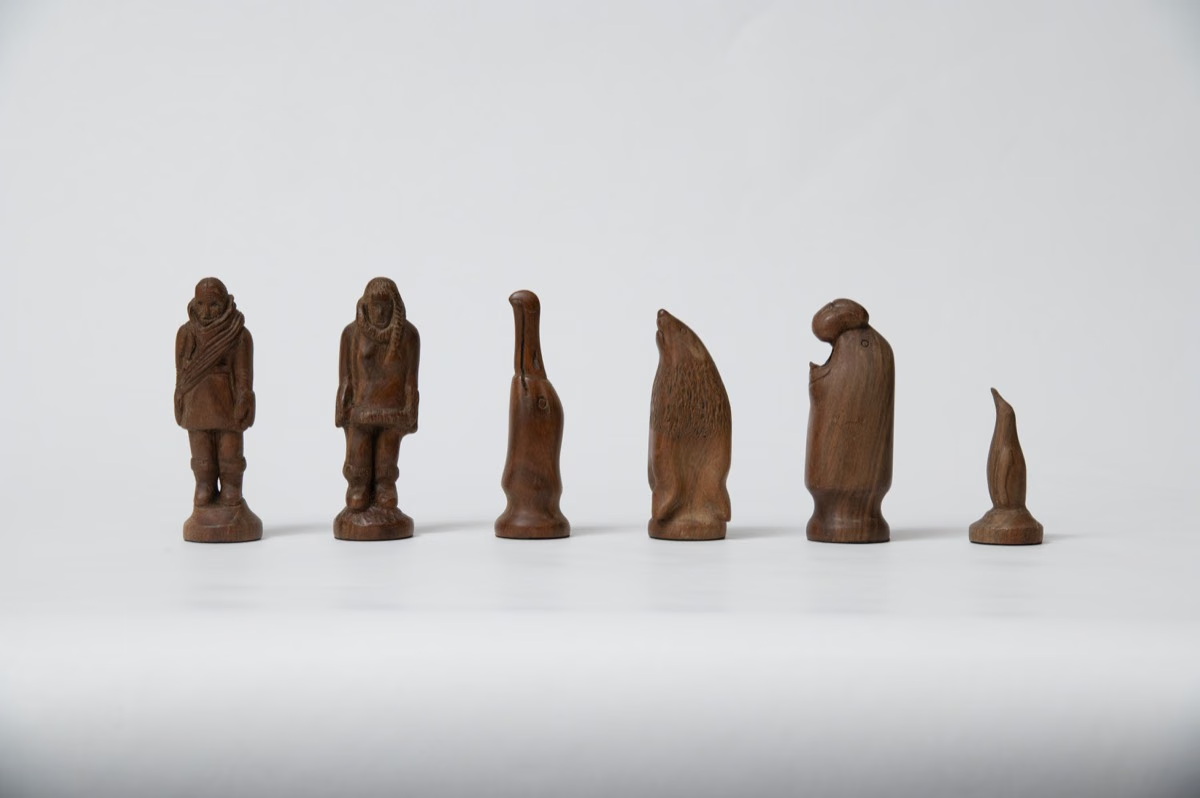
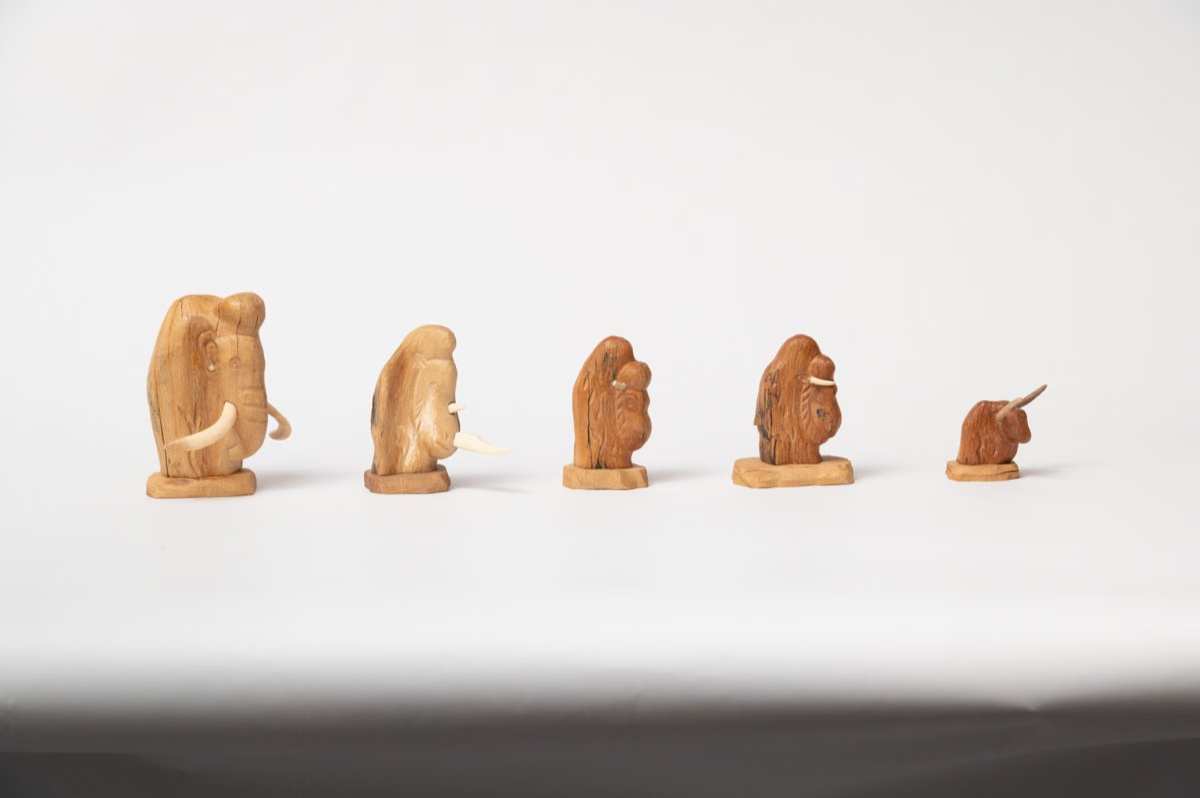
The last two chess sets from the Munger estate that were on view in the Paws and Pawns: Exploring Animal Chess Sets are one illustrating the famous explorer Ernest Shackleton and his expedition to the island of South Georgia, while the other is a mammoth ivory chess set depicting the mastodons.
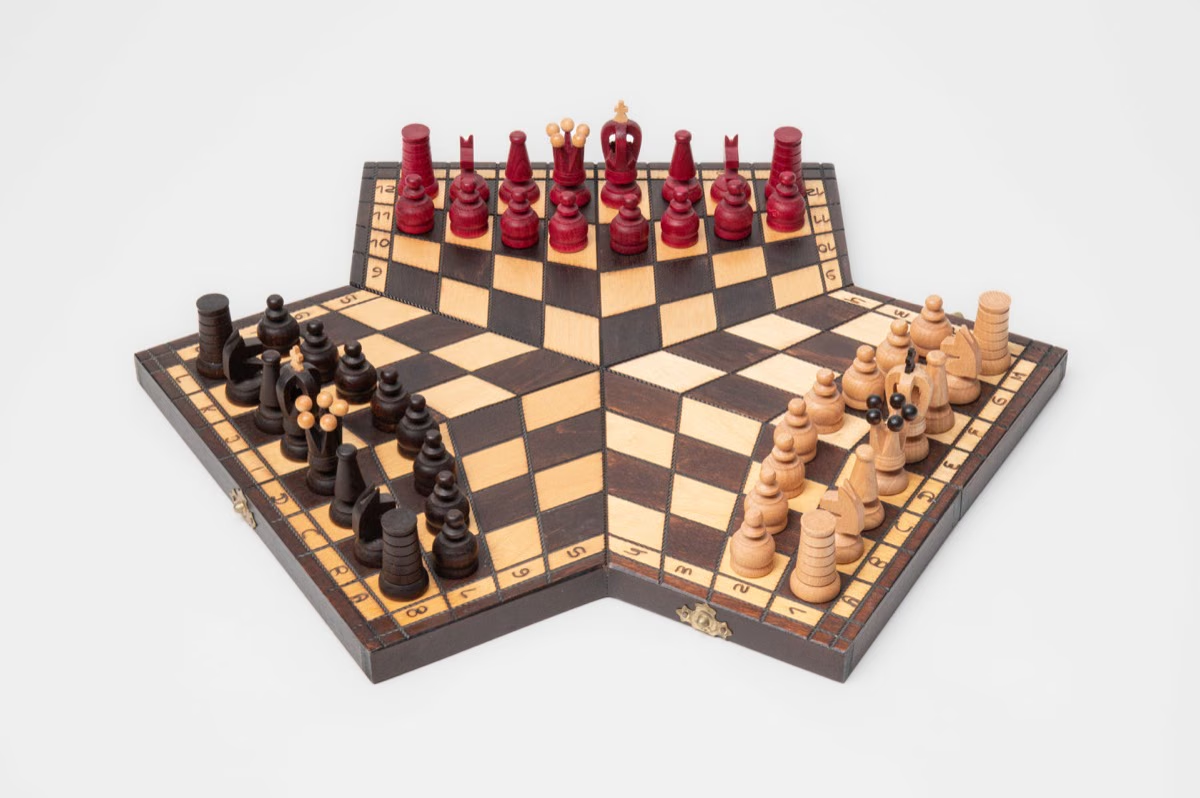
In one of our most recent exhibitions, Chess Variants: Transforming Tradition, one chess set from the Munger collection was shown. Created in 1996 by Kraków resident Jerzy Luberda, the Trinary chess set is a three-person chessboard, with white, black, and red pieces all made of dyed wood.
The World Chess Hall of Fame & Galleries is excited to keep displaying all of the unique chess sets donated by Dr. Edwin and Ann Munger in the coming years.
Written by Carrie Harper, Graduate Research Assistant
FAQs:
How can I participate in the Featured Chess Set Project?
Saint Louis area residents can email WCHOF curator Emily Allred at [email protected] or call 314.243.1543 if they are interested in participating in the Featured Chess Set project. Please include photos as well as a brief description of the set you would like to loan. Each set will be displayed on the third floor of the WCHOF and will be highlighted in the WCHOF’s monthly newsletter, website, and social media.
How can I see this month’s featured set?
Visit the WCHOF to see the sets in this rotating display yourself. From 3D-printed chess sets to one-of-a-kind artistic creations, the Featured Set Project shows how the ancient game has inspired artists and creators for centuries. Each set is only on view for a month at a time, so visit often to see a new set!
How can I donate chess sets to the WCHOF?
Our generous donors help us preserve chess history! From mass-produced sets with pop culture themes to rare and historical pieces, and sets used by everyday players, the WCHOF seeks to obtain artifacts that show the impact that the game has had on history, art, and culture. For more information about donations, email [email protected].
More From Beyond the Board
Porcelain Chess Through the Volkstedt Set
Dr. Edwin Munger and an Igorot Chess Set

Celebrating Excellence: Chess Greats to Join the 2026 U.S. and World Chess Halls of Fame in Saint Louis
The Monticello Chess Set
The Drueke Imperial Player’s Choice Chess Set
Route 66: History as a Chess Set
“Game Plan: The Strategy of Chess & Sports” Opens May 7 at World Chess Hall of Fame & Galleries
Two Timeless Pursuits: Chess and Reading
Chess in Literature: Don Quixote
“You’re Sweet” Chess Set — February 2026 Featured Chess Set
Etched in Stone: Mexican Cultural Heritage in Chess

World Chess Hall of Fame & Galleries Announces New Exhibition: Reading Between the Lines: Chess & Literature
Game Plan: The Strategy of Chess & Sports
