The Drueke Imperial Player’s Choice Chess Set
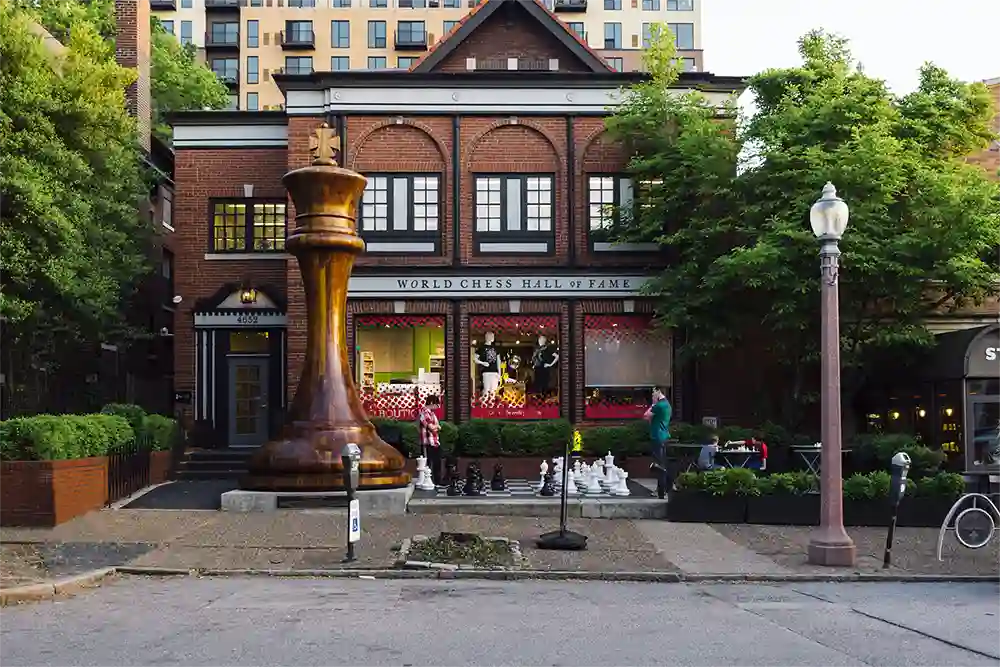
During June 2026, the World Chess Hall of Fame & Galleries (WCHOF) is highlighting a brand-new donation to the museum’s collection—a chess set from William. F. Drueke & Sons Inc., donated by Bruce Hedman. Part of the WCHOF’s Featured Chess Set project, it is on view outside the museum’s third-floor gallery next to a display of the plaques for the World Chess Hall of Fame and United States Chess Hall of Fame 2025 inductees.
The WCHOF’s Featured Set program features beautiful, offbeat, and unique chess sets from the museum’s collection. It also offers visitors from the Saint Louis area the opportunity to display special sets from their own collections for a month, highlighting collectors and the stories of how chess has played a role in their lives.
Featured Chess
News
Published on: June 2, 2026
Explore the Drueke Imperial Player’s Choice chess set, a June 2026 WCHOF Featured Chess Set with American-made roots and Bobby Fischer ties.
Imperial Player’s Choice Chess Set
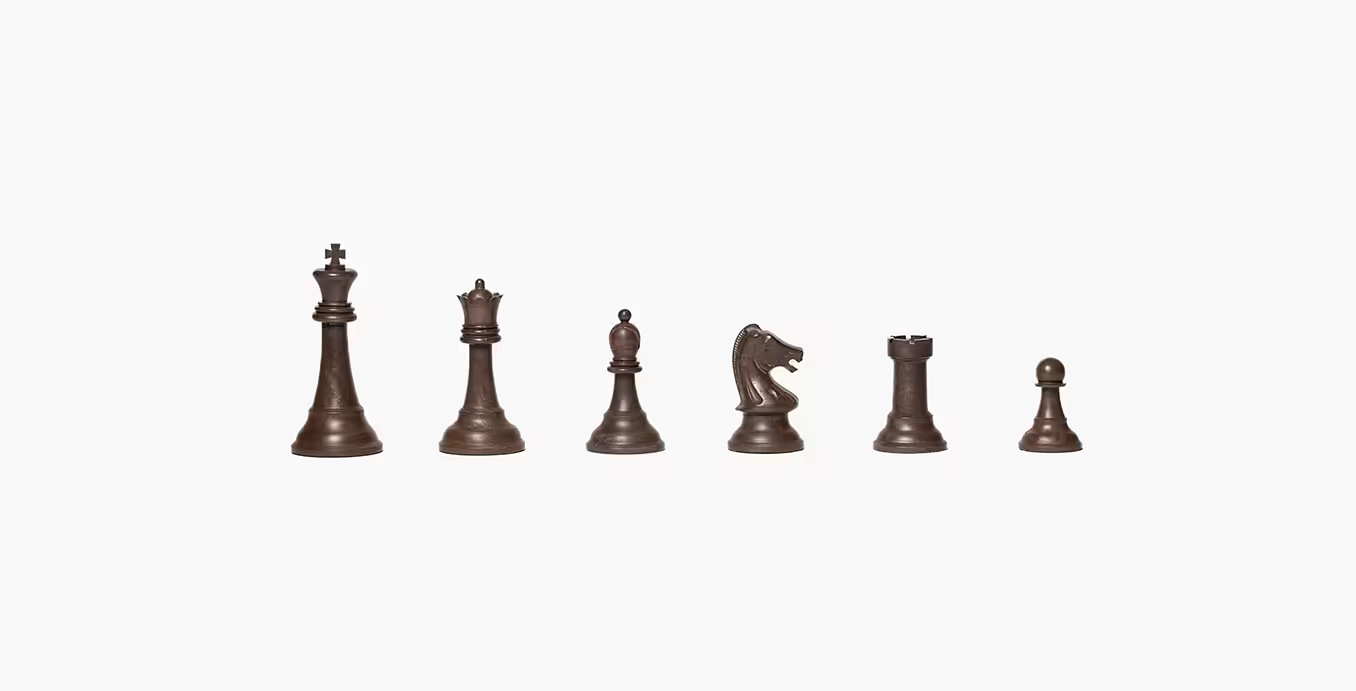
One of the many chess sets created by William F. Drueke & Sons Inc., the Imperial Player’s Choice is among the most iconic. The Player’s Choice sets were designed for tournament play and were introduced around 1963. The renowned American chess prodigy, Bobby Fischer, was photographed with this type of chess set while preparing for the famous 1972 World Chess Championship match against the Russian World Chess Champion Boris Spassky.
This chess set is the largest of the Player’s Choice sets, with its king standing tall at 5 inches. The black pieces are made of Cycolac, a unique plastic used by the Drueke company, with a pattern that makes them look wooden. It is also called pseudo-wood.
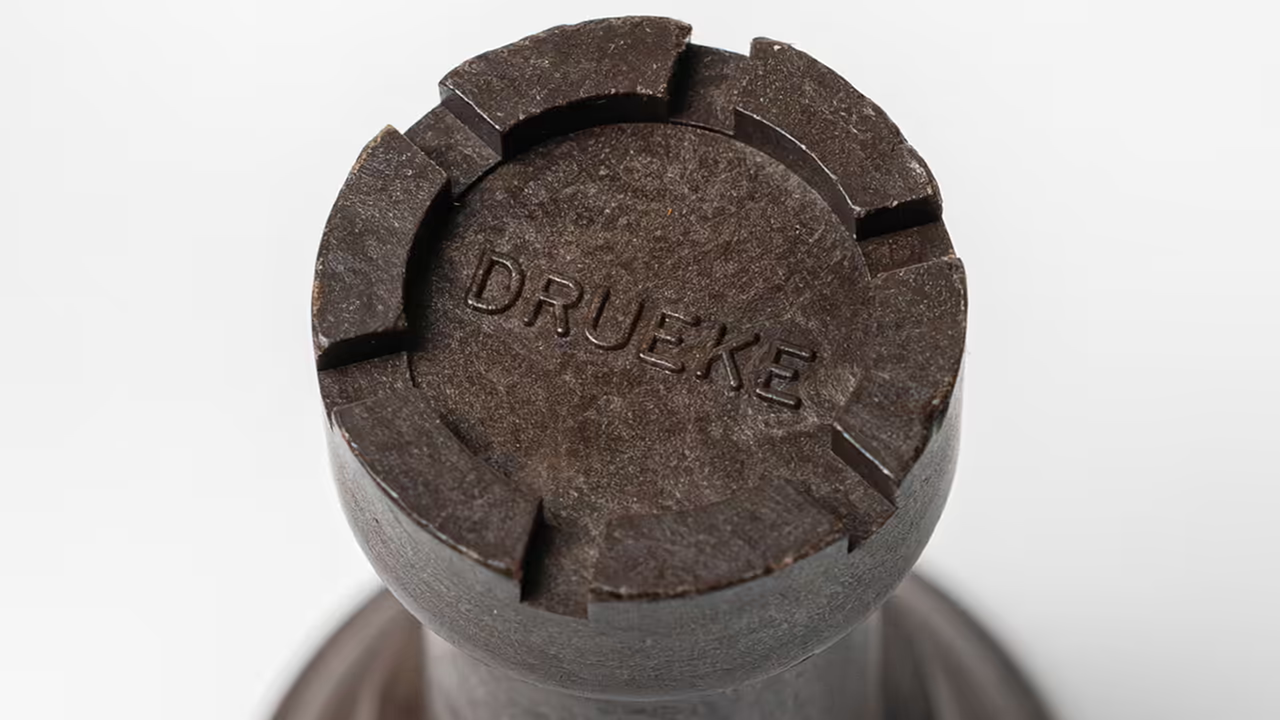
One aspect of this chess set is its box. Made of walnut, the coffer has a hinged lid with two compartments to separate the colors. The characteristic knight piece of the Drueke logo is on the inside of the lid, bearing the company’s name and location. Each knight piece in Drueke chess sets mimics the logo’s design.
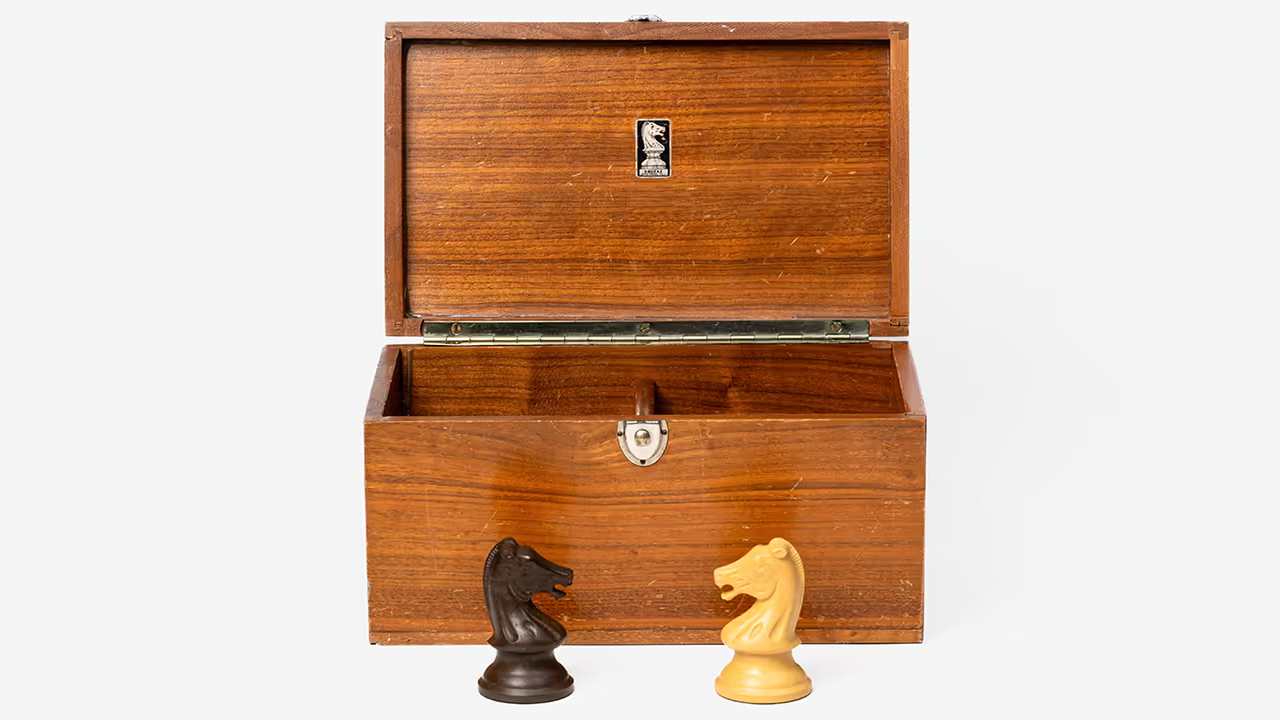
Bruce Hedman, the donor of this and many other Drueke chess sets, believes this chess set and its wooden box were sold around 1977 or 1978. Its model number is 38B, titled The Imperial Coffer.
There are three sizes of Player’s Choice chess sets. The smallest is the Analysis chess set, with the king measuring 2 ½ inches tall. The Tournament size is in the middle, with a 3 ½ inch king piece. The largest is this set, the Imperial chess set, with its 5-inch-tall king. All Analysis and Tournament chess sets are ivory and black, while the Imperial pieces are all made with Cycolac, the material creating the illusion of their being made from wood.
About the Drueke Company
William F. Drueke & Sons Inc. was founded in Grand Rapids, Michigan, in 1914. It began producing chess sets on the home front, becoming the first American company to create and distribute chess sets. Before World War I, Americans imported chess sets from Europe, but when the war broke out, countries diverted all their resources from chess sets to war supplies. This created a gap in the market, which William Francis Drueke filled stateside. Drueke partnered with Waddell Manufacturing to develop the first American-made chess set.
After the war, Drueke’s company expanded beyond chess sets, and it began manufacturing toys and other games such as cribbage and rhum–a card game from the time. He adopted the knight piece as his logo and continued until the stock market crash in 1929, when he lost virtually everything.
Around 1920, William Francis Drueke helped launch the American career of the European chess prodigy Samuel Reshevsky. As a child in Poland, Reshevsky was well-known as a prodigy, easily beating chess players around Warsaw. In November 1920, he and his family moved to the United States. With Drueke’s help, Reshevsky not only played in chess clubs but also in department stores where Drueke sets were sold. When photographed for the cover of Chess Life, Reshevsky sat behind a Drueke set.
In 1932, William F. Drueke restarted the company in his basement, importing chess sets from France after losing all the manufacturing equipment during the Great Depression. Until 1935, Drueke sold only chess and cribbage sets. After 1935, the company was prosperous enough to expand into a larger space and to start selling other games and game pieces, such as dominoes, poker chips, and dice.
During World War II, Drueke sold millions of his Play-A-Way series, which included games of chess, checkers, backgammon, dominoes, and cribbage, to the United States military for soldiers to take overseas. Also in 1941, Drueke submitted a patent for “American Design” chess pieces. This design featured octagonal bases and was either black, ivory, or red.
After William Francis Drueke’s death in 1956, the company went to his children. Each of whom owned a stake in the company, but his two sons, William (Bill) Jr. and Joseph (Joe), took over. This is when tournament-size pieces began to be developed. By 1963, the Player’s Choice line was made available as an option for tournament play. In 1986, Bill and Joe sold the company to investors, and the branded chess sets continued to be produced by the Carrom Company.
Over the years, Drueke chess sets have been featured in chess magazines. Many editions of Chess Life and Chess Review feature ads selling the sets, while others include photos and articles featuring the American-made chess pieces. Two 1965 covers featured Drueke sets: the first in April with Samuel Reshevsky, and the other in December with Pal Benko. Beginning in 1963, the United States Chess Federation (USCF) made the Tournament Player’s Choice set with a king size of 3 ½ inches its official chess set.
This section is written with special thanks to articles written by Bruce Hedman on Chess.com and William Drueke III in Duncan Pohl’s book Vintage Chess Sets of the United States.
About the Donor: Bruce Hedman
Bruce Hedman collected a sizeable amount of Drueke chess sets to analyze in order to best write a history of the company, and more specifically, the chess sets sold throughout its tenure. In an article he wrote on Chess.com, Hedman provides interpretations of the company’s chess sets with detailed sections on eras in its history. He goes into detail about each set he had in his possession, the subtleties of Drueke’s logo, the materials of chess sets, and the different models created. His number of over 50 Drueke chess sets is now a part of the World Chess Hall of Fame & Galleries collections.
When he is not researching and writing about William F. Drueke & Sons, Inc. and other chess-related topics, Rev. Dr. Bruce Hedman is an associate math professor at the University of Connecticut, Hartford. He holds a Master of Divinity and a Ph.D. in mathematics and serves as both a professor and an ordained pastor at Abington Congregational Church in Pomfret, Connecticut. His special interests include chess, math history, and Jungian psychology, and he has published works on each topic.
Written by Carrie Harper, Graduate Research Assistant
FAQs:
How can I participate in the Featured Chess Set Project?
Saint Louis area residents can email WCHOF curator Emily Allred at [email protected] or call at 314.243.1543 if they are interested in participating in the Featured Chess Set project. Please include photos as well as a brief description of the set you would like to loan. Each set will be displayed on the third floor of the WCHOF and will be highlighted in the WCHOF’s monthly newsletter, website, and social media.
How can I see this month’s featured set?
Visit the WCHOF to see the sets in this rotating display yourself. From 3D-printed chess sets to one-of-a-kind artistic creations, the Featured Set Project shows how the ancient game has inspired artists and creators for centuries. Each set is only on view for a month at a time, so visit often to see a new set!
How can I donate chess sets to the WCHOF?
Our generous donors help us preserve chess history! From mass-produced sets with pop culture themes to rare and historical pieces and sets used by everyday players, the WCHOF seeks to acquire artifacts that demonstrate the game’s impact on history, art, and culture. For more information about donations, email [email protected].
More From Beyond the Board

Celebrating Excellence: Chess Greats to Join the 2026 U.S. and World Chess Halls of Fame in Saint Louis
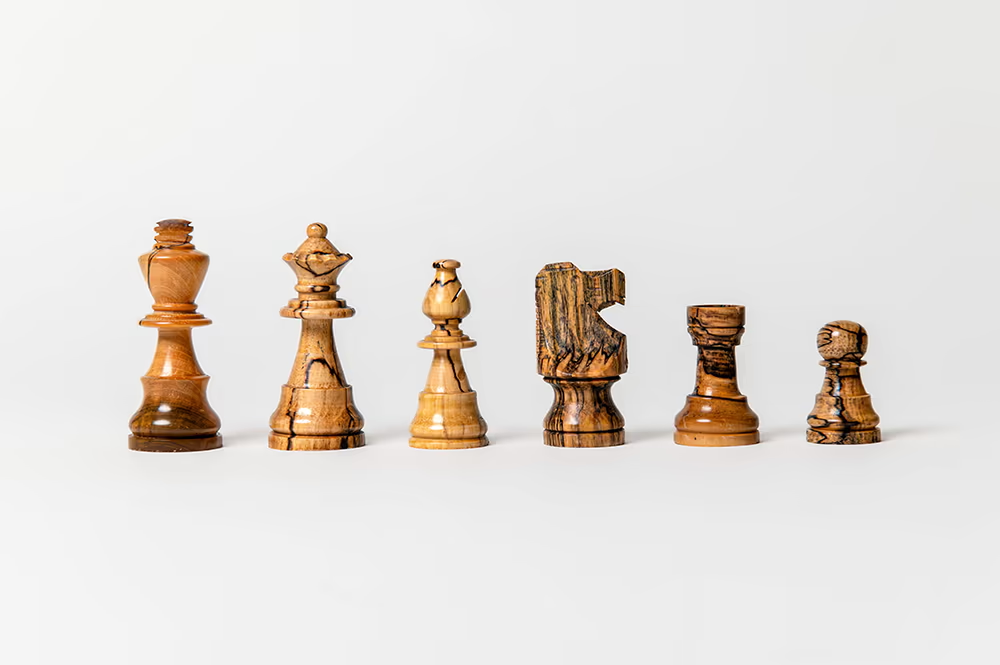
The Monticello Chess Set
The Drueke Imperial Player’s Choice Chess Set
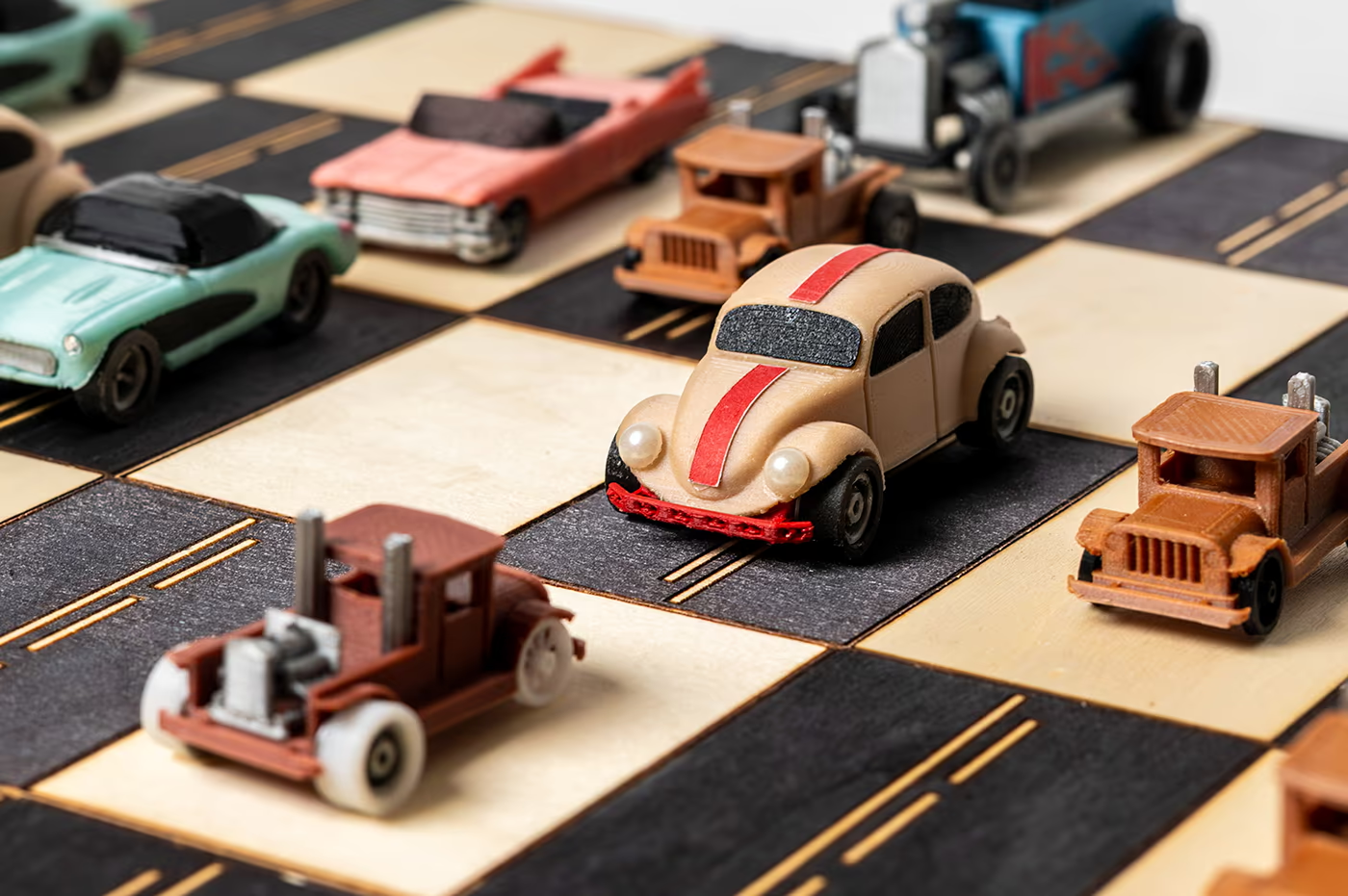
Route 66: History as a Chess Set
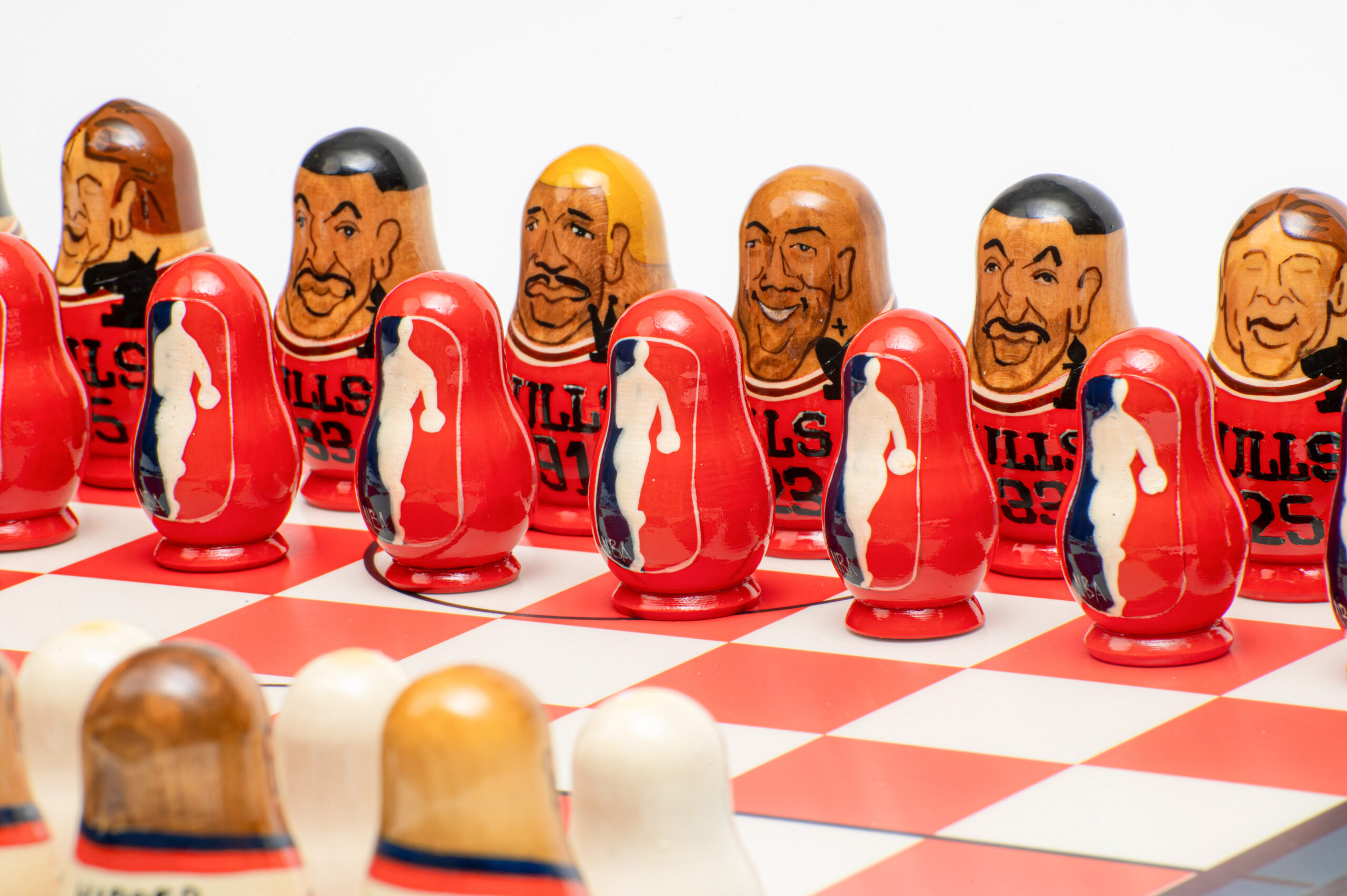
“Game Plan: The Strategy of Chess & Sports” Opens May 7 at World Chess Hall of Fame & Galleries
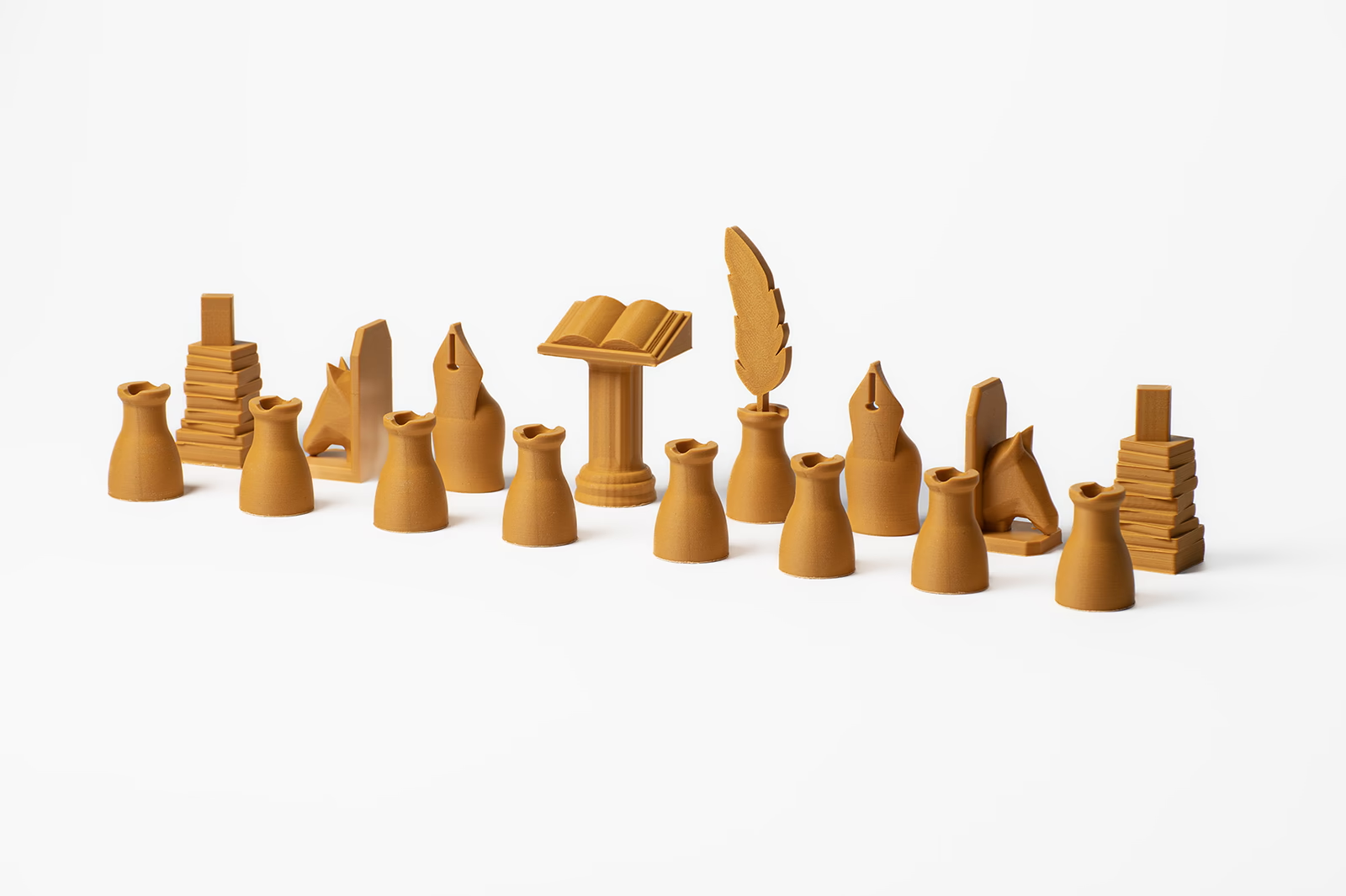
Two Timeless Pursuits: Chess and Reading
Chess in Literature: Don Quixote
“You’re Sweet” Chess Set — February 2026 Featured Chess Set
Etched in Stone: Mexican Cultural Heritage in Chess

World Chess Hall of Fame & Galleries Announces New Exhibition: Reading Between the Lines: Chess & Literature
The Teeth Chess Set: A Unique Blend of Dentistry and Strategy
Chess Legends to be Inducted into the 2025 U.S. and World Chess Halls of Fame in Saint Louis This October