WCHOF Archives - World Chess Hall of Fame & Galleries

Two Timeless Pursuits: Chess and Reading

April 2026 Featured Chess Set

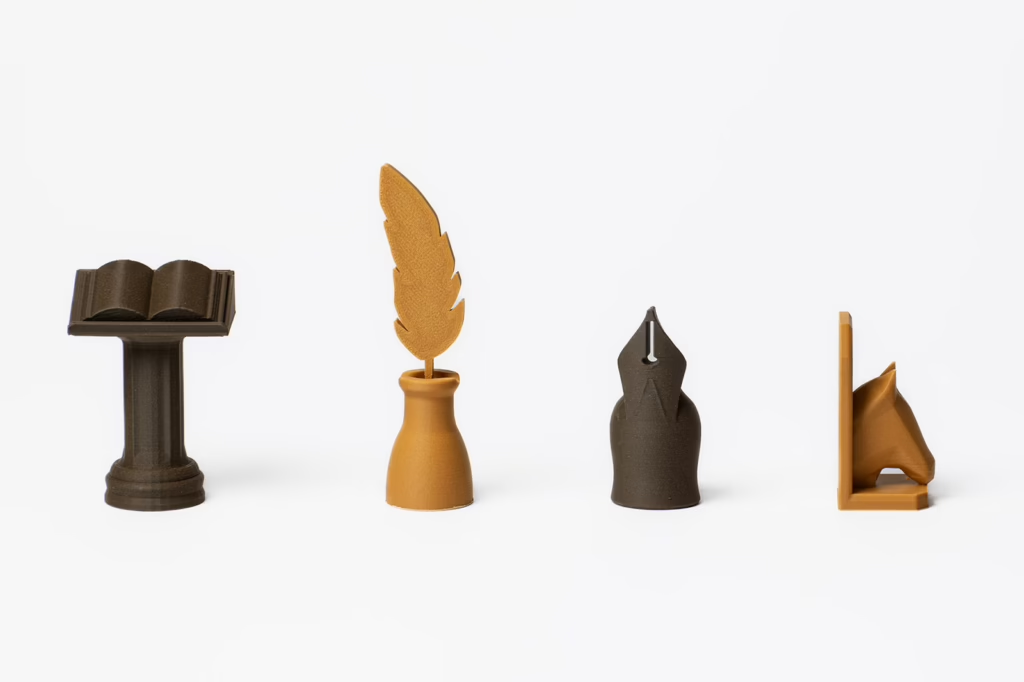
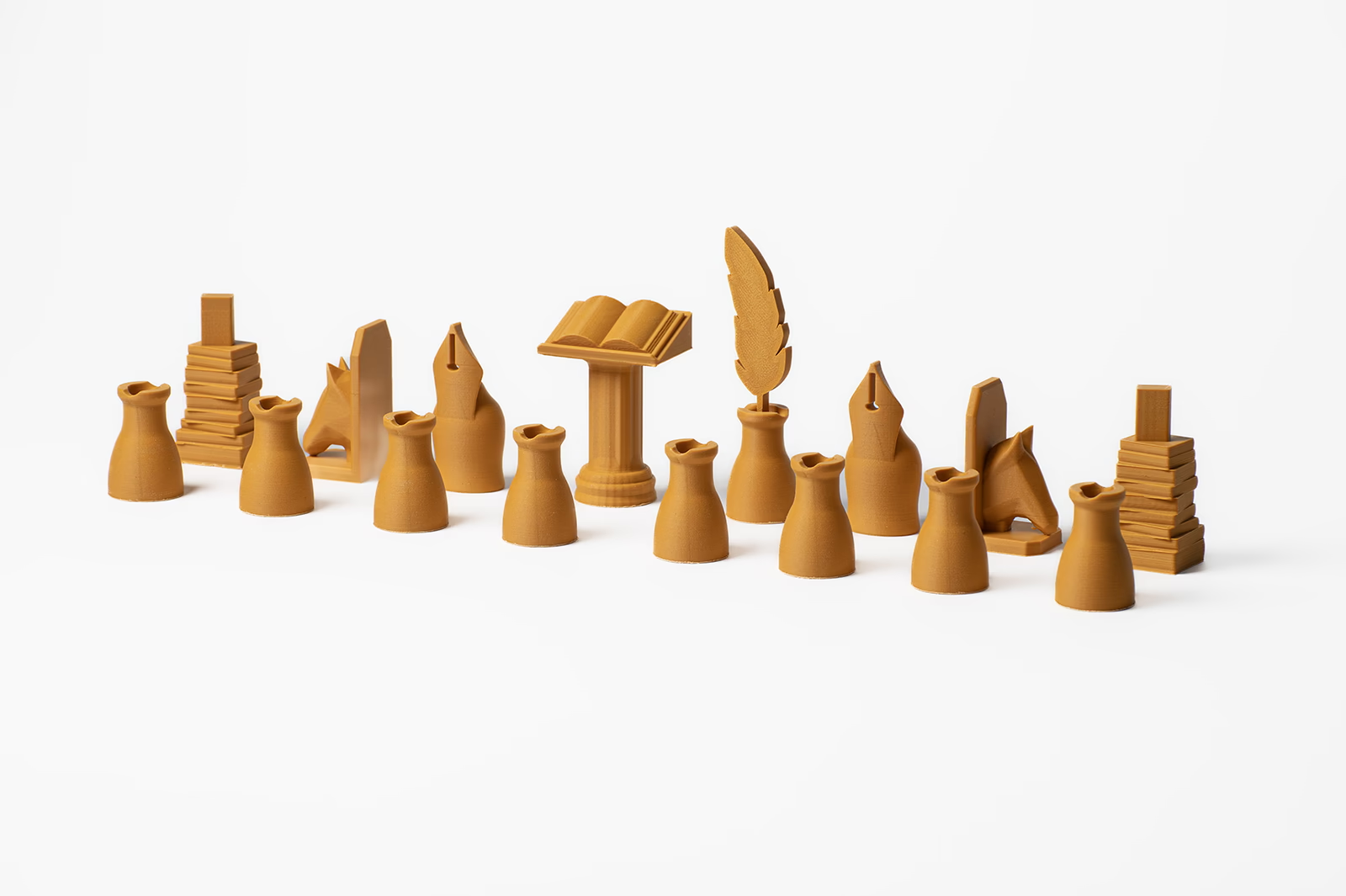
During April 2026, the World Chess Hall of Fame & Galleries (WCHOF) is highlighting a new addition to the collection: a 3D-Printed Book-Themed Chess Set, designed and created by KBHCreate, an Etsy seller. Part of the WCHOF’s Featured Chess Set project, it is on view outside the museum’s third-floor gallery next to a display of the plaques for the World Chess Hall of Fame and United States Chess Hall of Fame 2025 inductees. 

The WCHOF’s Featured Set program features beautiful, offbeat, and unique chess sets from the museum’s collection. It also offers visitors from the Saint Louis area the opportunity to display special sets from their own collections for a month, highlighting collectors and the stories of how chess has played a role in their lives.
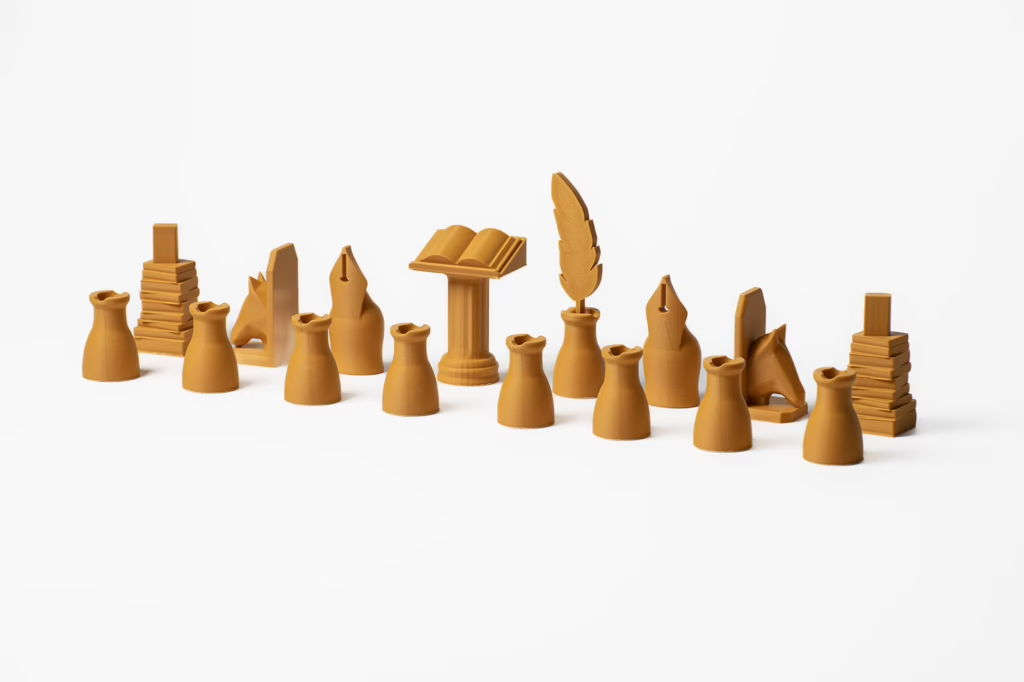
3D-printed book-themed chess set featuring pieces designed as literary staples like fountain pens, quills, and stacks of books.
Alisha Karabinus and Terence Babb, Book-Themed Chess Set, 2025, Collection of the World Chess Hall of Fame & Galleries, Photo by Austin Fuller

April 2026 Featured Chess Set Image: https://drive.google.com/file/d/1ZK2hRj0tlhFj7Z2XxqzYIeD5QIP6CNOm/view?usp=drive_link 

[Image Caption: Alisha Karabinus and Terence Babb, Book-Themed Chess Set, 2025, Collection of the World Chess Hall of Fame & Galleries, Photo by Austin Fuller]

Book-Themed Chess Set

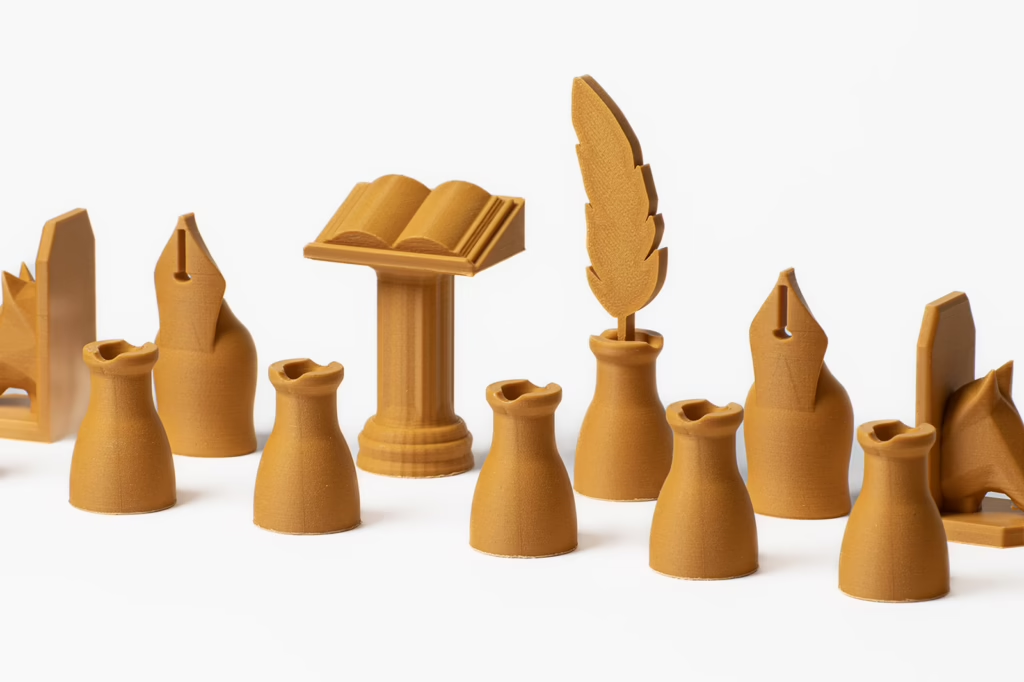
As the designers state, this chess set combines two timeless pursuits– the love of books and the art of chess. Each piece represents a literary staple: fountain pens, a quill and ink, bookends, a stack of books, and a book on a lectern. 

All of the pieces give homage to standard chess pieces; the bookends include horses’ heads to denote they are the knights in the set. The bishops are the fountain pens, because the nibs resemble the top of the traditional pieces. The stack of books are the rooks, with the solid, tower-like shape most iterations of the piece possess. 
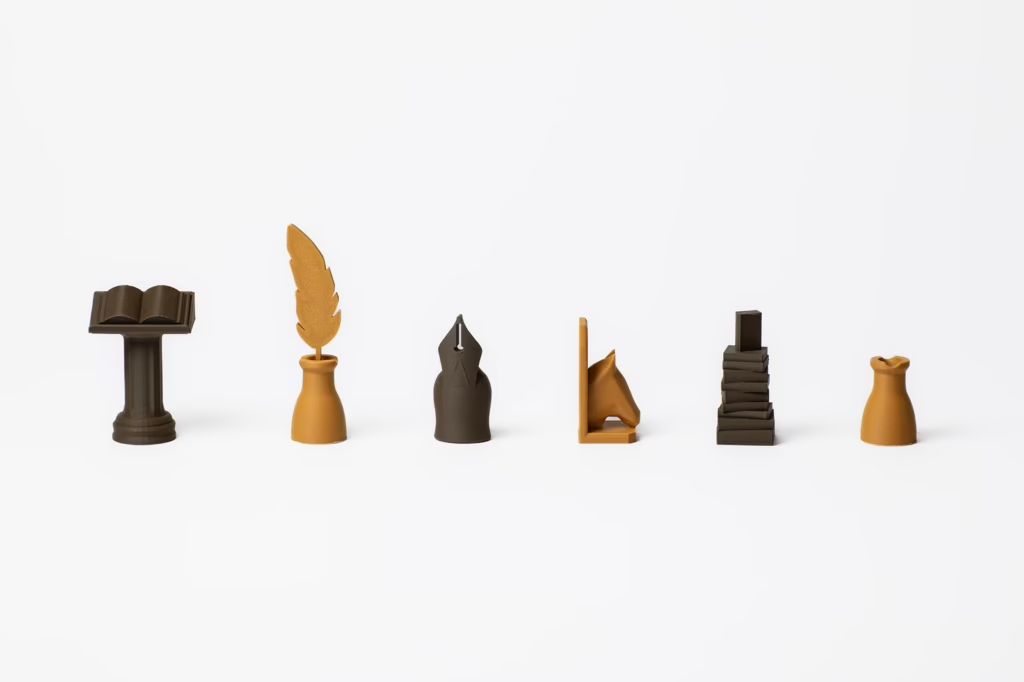
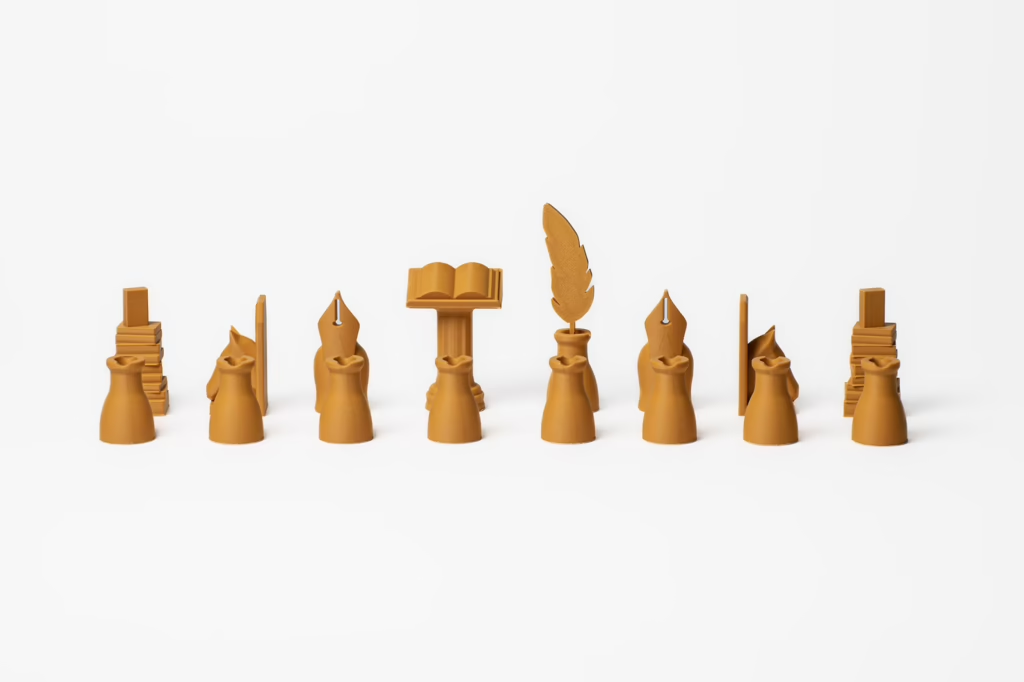
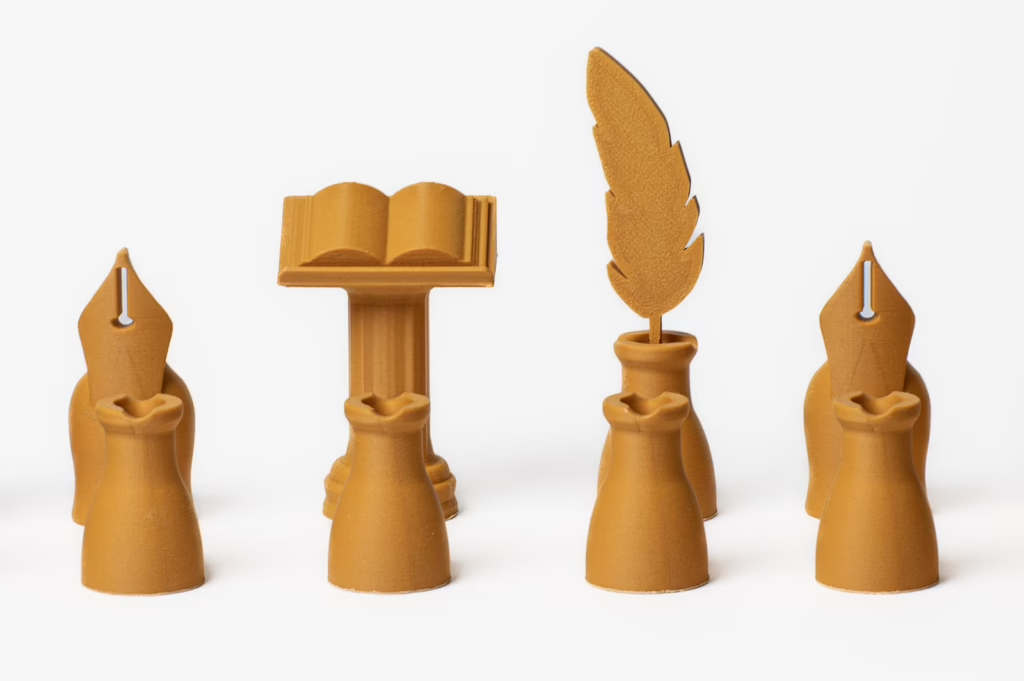
Comparison of the queen piece (a quill in an inkwell) and the pawn pieces (inkwells) from the book-themed set.
Alisha Karabinus and Terence Babb, Book-themed Chess Set (Queens and Pawns), 2025, Collection of the World Chess Hall of Fame & Galleries, Photo by Austin Fuller

Cleverly designed, the pawns and queen pieces have the same base. The queen is a quill in an inkwell, which sets it apart from the pawns in the front rank, which are represented by inkwells. Pawns can easily be promoted to queens by adding a quill to the inkwell. 
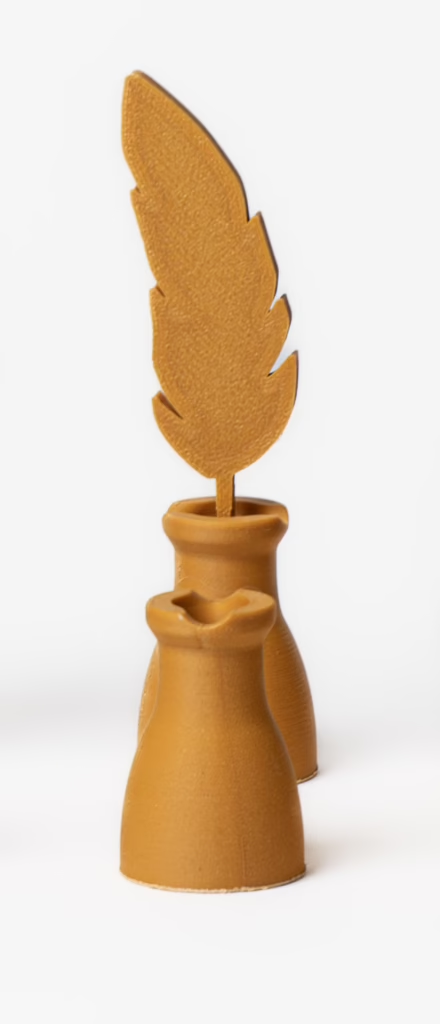
Comparison of the queen piece (a quill in an inkwell) and the pawn pieces (inkwells) from the book-themed set.
Alisha Karabinus and Terence Babb, Book-themed Chess Set (Queens and Pawns), 2025, Collection of the World Chess Hall of Fame & Galleries, Photo by Austin Fuller

About the Creators: KBH Create

KBH Create is a family-run Etsy business run primarily by Alisha Karabinus and Terence Babb, based in Grand Rapids, Michigan, that designs and creates 3D printed materials. They not only produce chess sets, but also other games such as checkers and tic-tac-toe. Additionally, they make accessories for games, like dice towers, euchre counters, and polyhedral dice. KBH Create designs and sells other items, like 3D-printed ornaments, yarn-work accessories, miniatures, fidgets, magnets, and keychains. 

The family uses Bambu Lab 3D printers to bring each piece to life. They love to experiment with the materials they use to print their products, but mostly use a PLA filament. KBH Create prints in FDM style, which is Fused Deposition Modeling, meaning that during the printing process, melted PLA filament is placed layer by layer to create the object. KBH Create is very eco-conscious, reusing or recycling what they can throughout their creative process.

Q&A with the Creators Alisha Karabinus and Terence Babb (KBH Create)

What is your favorite product to make for your Etsy shop?

Alisha: I love making crafting items because as soon as I run into an obstacle or problem in the hobby, we can solve it. Over the last few years, I’ve been getting more and more into fiber arts, and I’m so dependent on the things we make, but it means new variations and add-ons are really satisfying.

Terry: I like making simple items that solve problems in fun ways, but my absolute favorites are making the little novelty items, like our various desk buddies sets—cat tree, dog house, chicken coop—and creating the themed game sets, both checkers & chess, because of the pure creative freedom you have when designing something from scratch.   

Which chess set that you have designed is your favorite?

Alisha: It’s simpler, but I really like our dice chess. Maybe I’m attached because it was the first one Terry tackled, but it’s such an elegant pairing, the way standard polyhedral dice map right onto chess pieces. The shapes are really well-suited to chess, too.

Terry: I have to agree. In the past few years, I got back into TTRPGs, and dice just naturally aligned with the pieces. The small dice set is fun and novel, and the large dice set is just very clean and traditional. We wanted to mirror that elegant simplicity when making the book-inspired set, choosing designs that simultaneously represented both literature and traditional chess pieces.

Can you tell me more about your design process?

Alisha: It almost always goes something like this: one of us has an idea—often silly in the early stages—and we talk it through. Sometimes one of us will start designing and then surprise the other, but often in the early stages, we’re talking. We manage our business and our general family chatter on Discord, a chat platform, and you can tell when one of us is excited because suddenly a dozen new messages will pop up as we start sending over notes and quick sketches. We have several whiteboards, too, and we’ll start sketching things out for each other, but I’m terrible at drawing, so that can sometimes make things worse! But we work really well together and are good at focusing on different things. Terry is really good at little finishing details and overall polish, but I teach usability in my day job, so I’m often thinking about how things feel, how they’ll be handled, and how they respond to common actions. After a lot of this back and forth, we finalize a prototype and then start testing. Sometimes I think he gets annoyed at how strict I am about this part! But we’ve definitely had some ideas die at this last stage, and some that got dramatically improved.

Terry: You always have to be mindful of the limitations of working with a specific medium, and 3D-printing in particular has the stigma of “cheapness,” from how the piece feels, to its durability, and the texture of its finish. From the very beginning, Alisha was determined to choose only materials that felt good in the hand, and for things like game pieces, that tactile feel of a piece and the satisfaction of hearing it plonk down on a board can be just as important to the players as the way it looks. The back and forth may be frustrating sometimes, but it always helps to have that second person working on something, because while you might think “good enough for me,” they will come back with, “but I think this can make it better.”

Do you have a connection to chess? Do any of you play chess?

Alisha: We aren’t serious tournament players or anything, but Terry and I both play chess, and our kids play as well. I get really obsessed with chess puzzles about once a year and then burn myself out over a couple of weeks. Our eldest, who just turned 18, plays pretty frequently. We all love games in general.  

How different was the process of designing this set because the two of you worked together on this one?

Alisha: In some ways, it was probably faster, because when we really started to work on it, we just split the pieces—I took a few, and Terry took the rest, and we just dug in. But we’d been talking about this one for over a year, so we had all that background discussion to fuel the creation. Once we actually started, the pieces just fell into place. The queen was probably the most challenging, since delicate and slender contrasts a little with books, but Terry handled that with the quill and bottle-pawn combo. 

How do you find inspiration for your chess set designs?

Alisha: We think a lot about what kind of theme will map really well onto the spirit of the pieces. The rook has to be something solid, for instance, something that gives that castle feel. We try to include a point in all the bishops. We always strive to evoke classic piece shapes. Something that maps onto that expected visual line of a set. 

Terry: It has to be more than just 5 different designs around a theme; each piece needs to fit within both worlds, like in the cat set, our knight is a hunter that caught a mouse, but in the book set, it’s the horsehead bookends everyone had when we were kids. Winnowing down the ideas and deciding how to represent each piece while staying loyal to the concept is, for me, the toughest part. 
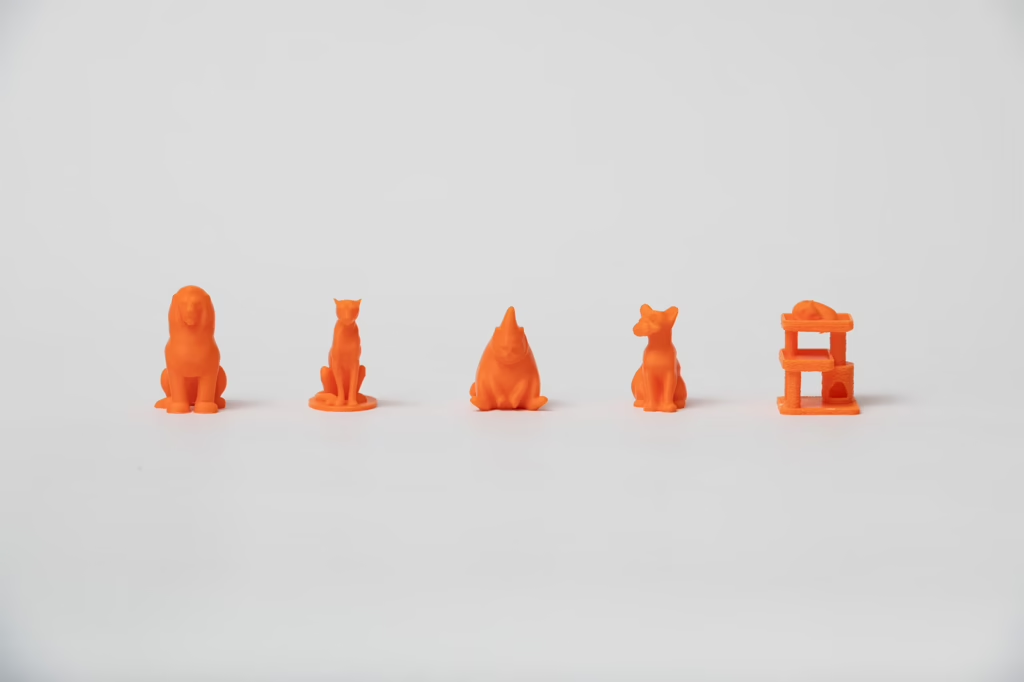
3D-printed "Cats" chess set by KBH Create featuring various feline figures as chess pieces.
Terence Babb, Cats Chess Set, 2024, Collection of the World Chess Hall of Fame & Galleries, Photo by Austin Fuller

How do you feel about the WCHOF featuring your set?

Alisha: I’m thrilled! I always wanted to be an artist when I was a kid, but I struggle to visualize. Computer-aided design helps to open a lot of possibilities for me. I can do things I can’t seem to do in any other medium. Young-me would have been so excited to have helped design this set.

Terry: It’s always a great feeling when at a market to have someone stop and compliment the various sets we have on display, and to see them light up when I mention being featured in the [World Chess Hall of Fame & Galleries]. It’s really amazing the way WCHOF regularly features smaller artists and gives them a chance to show off their creations.

Connect with our Collections and Past Exhibitions!

To check out other previously exhibited sets that are literary-themed, visit the World Chess Hall of Fame & Galleries until April 12th to see Reading Between the Lines: Chess & Literature, or visit online.

This Author’s Chess Set is another in the World Chess Hall of Fame & Galleries’ collection that pays homage to the love of literature. Using busts of famous authors from the 19th century as the pieces, this set exalts the accomplishments of Mark Twain, Emily Dickinson, Henry Wadsworth Longfellow, Edgar Allen Poe, and Walt Whitman. Mark Twain is the king piece, giving this set a Missouri connection as well, since two of Mark Twain’s famous stories are based on his childhood in Hannibal, Missourik, and his experiences on steamboats up and down the Mississippi River. This set was featured in our Featured Chess Set program in August 2021.

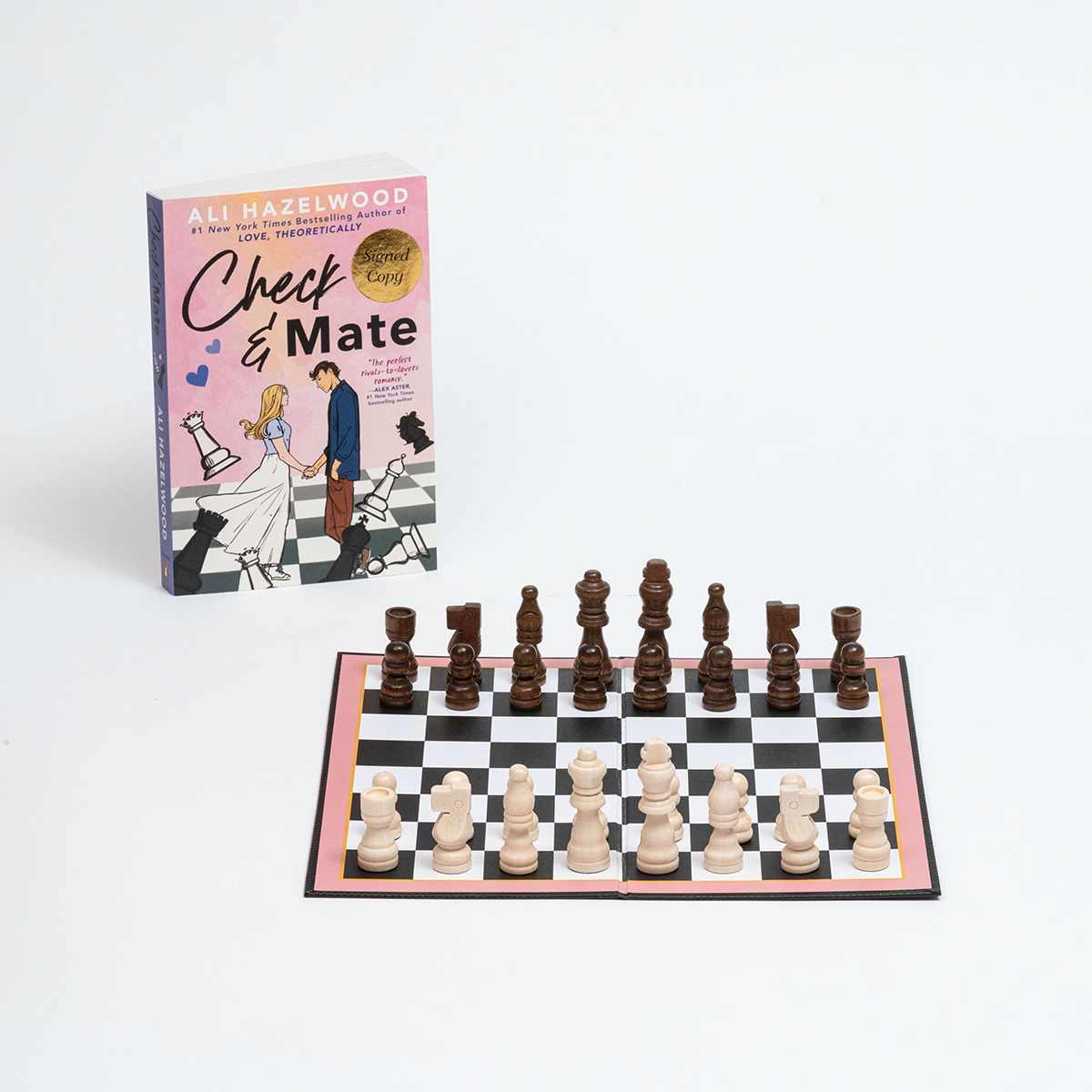
Another literature-inspired chess set that was recently in our Featured Chess Set program is the Love and Chess Chess Set, or Mallory Greenleaf’s Chess Set. Featured in February 2025, this set was inspired by the Young Adult fiction book, Check & Mate by Ali Hazelwood. Mallory Greenleaf is the main character, and the book follows her life as she rekindles her love of chess with the help of a former chess prodigy, Nolan Sawyer. As a chess set, this set has traditional wood pieces, while the board’s edges are tinged with the same gradient the cover of the book uses. This chess set suggests that creating chess sets inspired by books continues to be popular. 
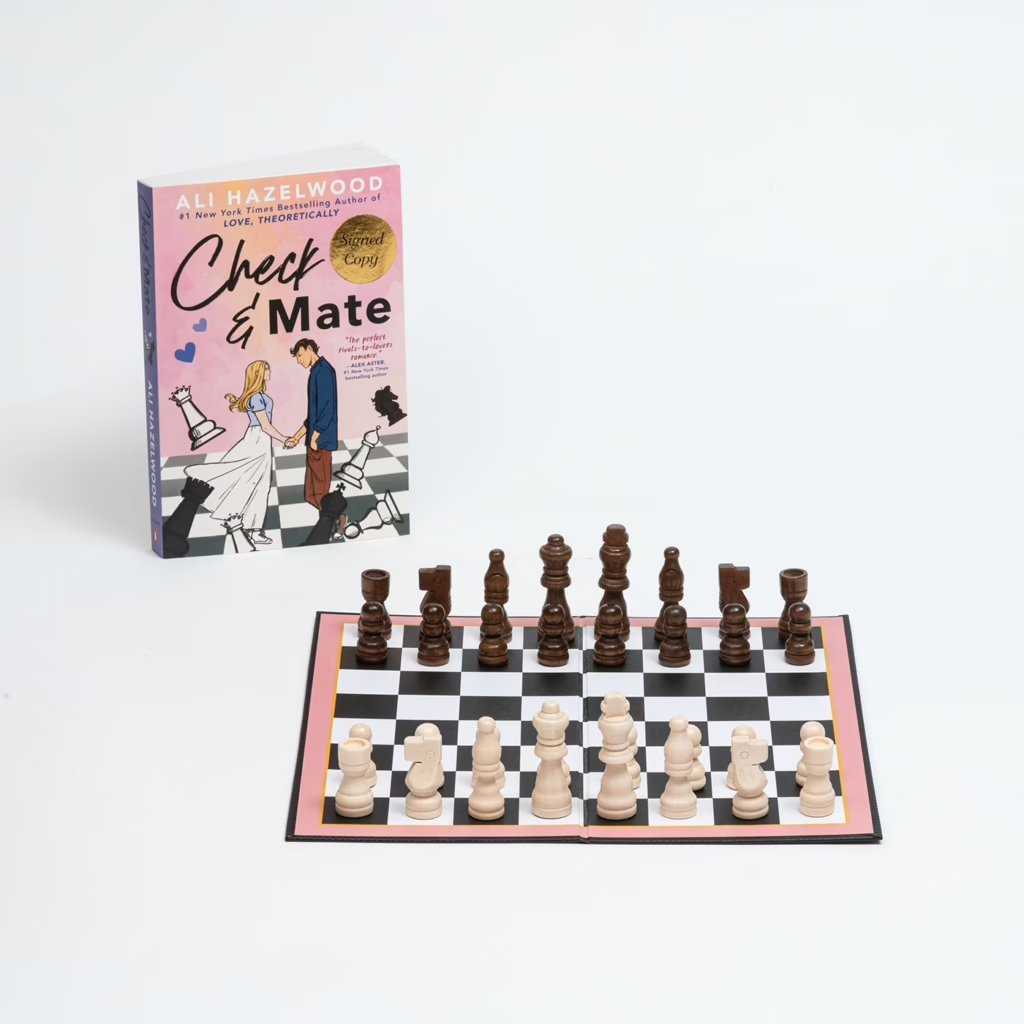
Heartland Publishing Services, Authors Chess Set, 2007, Collection of the World Chess Hall of Fame & Galleries
Once Upon a Book Club, Love and Chess Chess Set/Mallory Greenleaf’s Chess Set, 2024, Collection of the World Chess Hall of Fame & Galleries, Photo by Austin Fuller

Written by Carrie Harper, Graduate Research Assistant

FAQs:

How can I participate in the Featured Chess Set Project?

Saint Louis area residents can email WCHOF curator Emily Allred at [email protected] or call at 314.243.1543 if they are interested in participating in the Featured Chess Set project. Please include photos as well as a brief description of the set you would like to loan. Each set will be displayed on the third floor of the WCHOF and will be highlighted in the WCHOF’s monthly newsletter, website, and social media.

How can I see this month’s featured set?

Visit the WCHOF to see the sets in this rotating display yourself. From 3D-printed chess sets to one-of-a-kind artistic creations, the Featured Set Project shows how the ancient game has inspired artists and creators for centuries. Each set is only on view for a month at a time, so visit often to see a new set!

How can I donate chess sets to the WCHOF?

Our generous donors help us preserve chess history! From mass-produced sets with pop culture themes to rare and historical pieces and sets used by everyday players, the WCHOF seeks to obtain artifacts that show the impact that the game has had on history, art, and culture. For more information about donations, email [email protected].

To finalize your document for upload to worldchesshof.org, here is the uploader toolkit created for the April 2026 Featured Set (Timeless Pursuits) blog post. All source citation markers, URLs, and email addresses have been removed as requested.
Chess in Literature: Don Quixote

March 2026 Featured Chess Set

During March 2026, the World Chess Hall of Fame & Galleries (WCHOF) is highlighting a set from a significant donation to the collection—a Don Quixote-inspired chess set, gifted by Jordan Aibel. Part of the WCHOF’s Featured Chess Set project, it is on view outside the museum’s third-floor gallery next to a display of the plaques for the World Chess Hall of Fame and United States Chess Hall of Fame 2025 inductees. 

The WCHOF’s Featured Set program features beautiful, offbeat, and unique chess sets from the museum’s collection. It also offers visitors from the Saint Louis area the opportunity to display special sets from their own collections for a month, highlighting collectors and the stories of how chess has played a role in their lives.

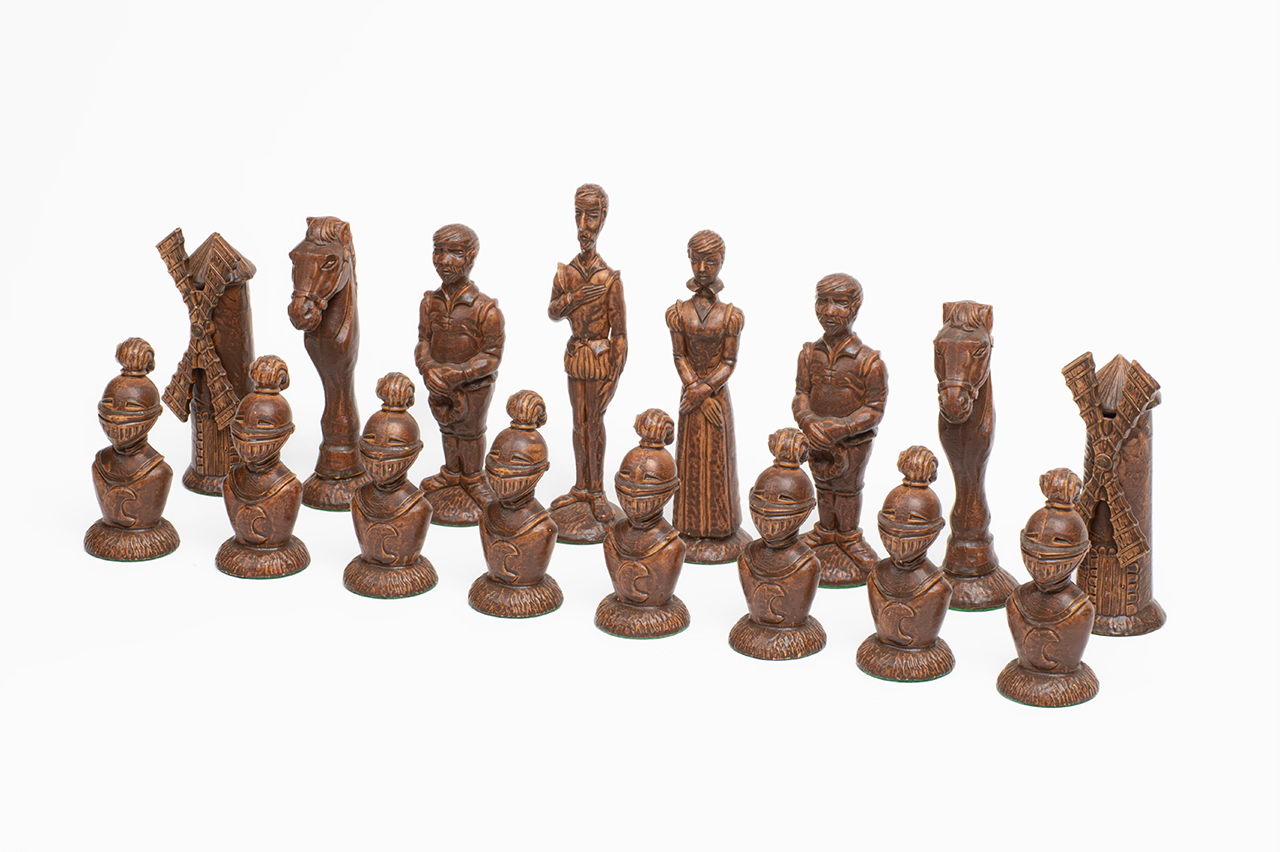
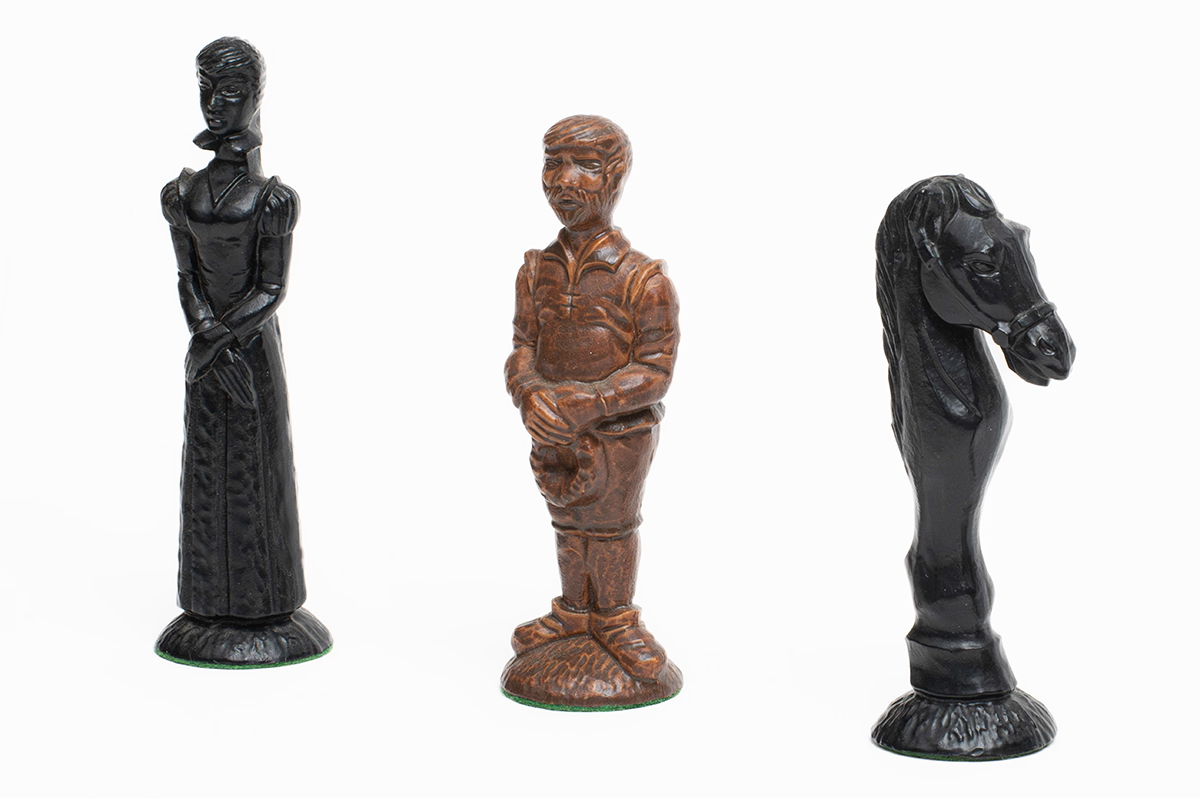
Maker unknown, Don Quixote Chess Set, c. late 20th century, Collection of the World Chess Hall of Fame & Galleries, gift of Harvey and Teddi Robbins, Photo by Austin Fuller

The Story of Don Quixote 

This chess set depicts characters and important parts of the famous 17th-century novel, The Ingenious Gentleman Don Quixote of La Mancha by Miguel de Cervantes. The book is considered a classic today and is regarded as the first modern novel. It was published in two parts: the first in 1605, the second in 1615. Today, one can read both parts as one novel.

The story follows a man in the lower nobility of Spain named Alonso Quijano, who, after reading many chivalric romances, decides to become a knight-errant and revive medieval chivalry under the name of Don Quixote de la Mancha. He recruits a farm laborer to be his squire, named Sancho Panza, and uses an old workhorse he names Rosinante. Don Quixote and Sancho Panza set out on “adventures” around Spain to save the woman he transforms into his love interest, Dulcinea de Toboso.

As Don Quixote and Sancho Panza traverse the country, Don gets himself into trouble with these fantastical chivalric deeds. He famously fights windmills, which he views as giants, and friars whom he believes have kidnapped a lady. Many more “adventures” ensue, as Don Quixote and Sancho Panza continue along the way.

Maker unknown, King to Pawn Setup, c. late 20th century, Collection of the World Chess Hall of Fame & Galleries, gift of Harvey and Teddi Robbins, Photo by Austin Fuller

Don Quixote Chess Set

Although the pieces are made of plastic, their color and texture evoke a sense of being in the story. The black-and-brown textured pieces appear to be carved from wood, giving the characters a more natural look.

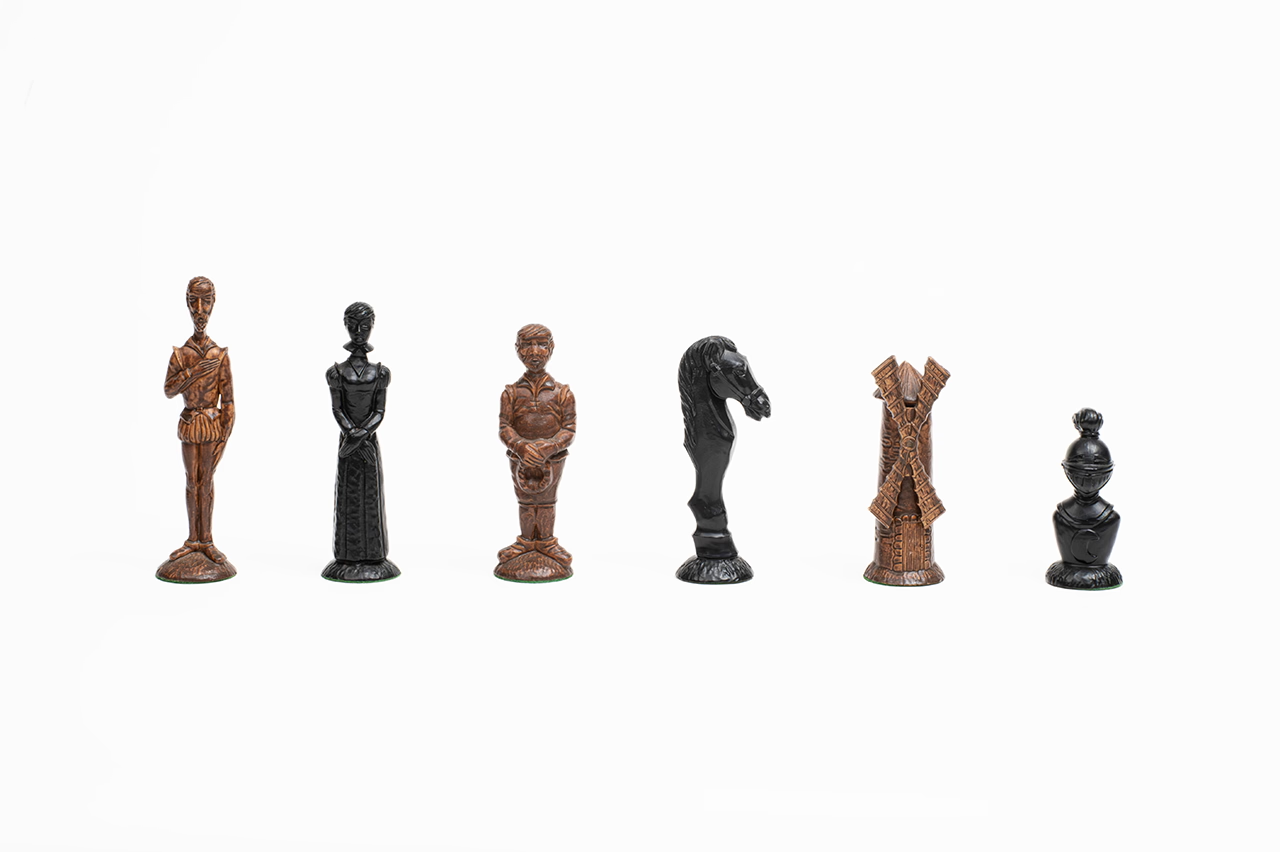
The pawns represent Don Quixote’s trusty squire, Sancho Panza, who accompanies him on his chivalric quests around Spain. The rooks are windmills, which Don Quixote famously believes to be giants, “slaying” them all over the country. Don Quixote himself is the king, towering over the others. The queen is Don Quixote’s betrothed, Dulcinea de Tobosa. The knights represent Don Quixote’s horse, Rocinante, while the bishops portray the priests Don Quixote meets along the way. Many artists have transformed the characters of this classic tale into chess pieces throughout the years, and the WCHOF has several sets inspired by this tale in its collection.

Maker unknown, Queen, Bishop, and Knight, c. late 20th century, Collection of the World Chess Hall of Fame & Galleries, gift of Harvey and Teddi Robbins, Photo by Austin Fuller

About the donor: Jordan Aibel

Jordan Aibel is the grandson of Harvey and Teddi Robbins, chess set collectors who had hundreds of chess sets in their home. He donated over 200 of the chess sets from his grandparents’ collection to the World Chess Hall of Fame & Galleries in 2018, one of the largest donations in the institution’s history.

Aibel remembers his grandparents’ house, chess sets nearly everywhere. There were sets on shelves, under the bed, and behind clothes. He fondly recalls his memories of the house and his grandfather’s unending creativity.

Harvey and Teddi Robbins

Harvey Robbins first encountered chess while stationed in Japan during World War II. He would play with his fellow Marines to pass the time and fell in love with the intellectual beauty. After the war, Harvey began collecting chess sets from around the world. Many of these sets were from countries he frequently visited, including Mexico, New Zealand, and Israel.

Harvey and Teddi Robbins were not only chess set collectors. Harvey Robbins also loved working on crafts and doing things with his hands. Some of the chess sets from their collection, donated to the World Chess Hall of Fame & Galleries, were made from “found objects” that Harvey would craft into chess sets. He and Teddi would also paint pieces in unique colors to make them one-of-a-kind.

Connect with our Collections and Past Exhibitions!

To check out other previously exhibited sets inspired by Don Quixote or other literary works, visit our website. Also, visit the World Chess Hall of Fame & Galleries before April 12th to see Reading Between the Lines: Chess & Literature for more chess and literary content.

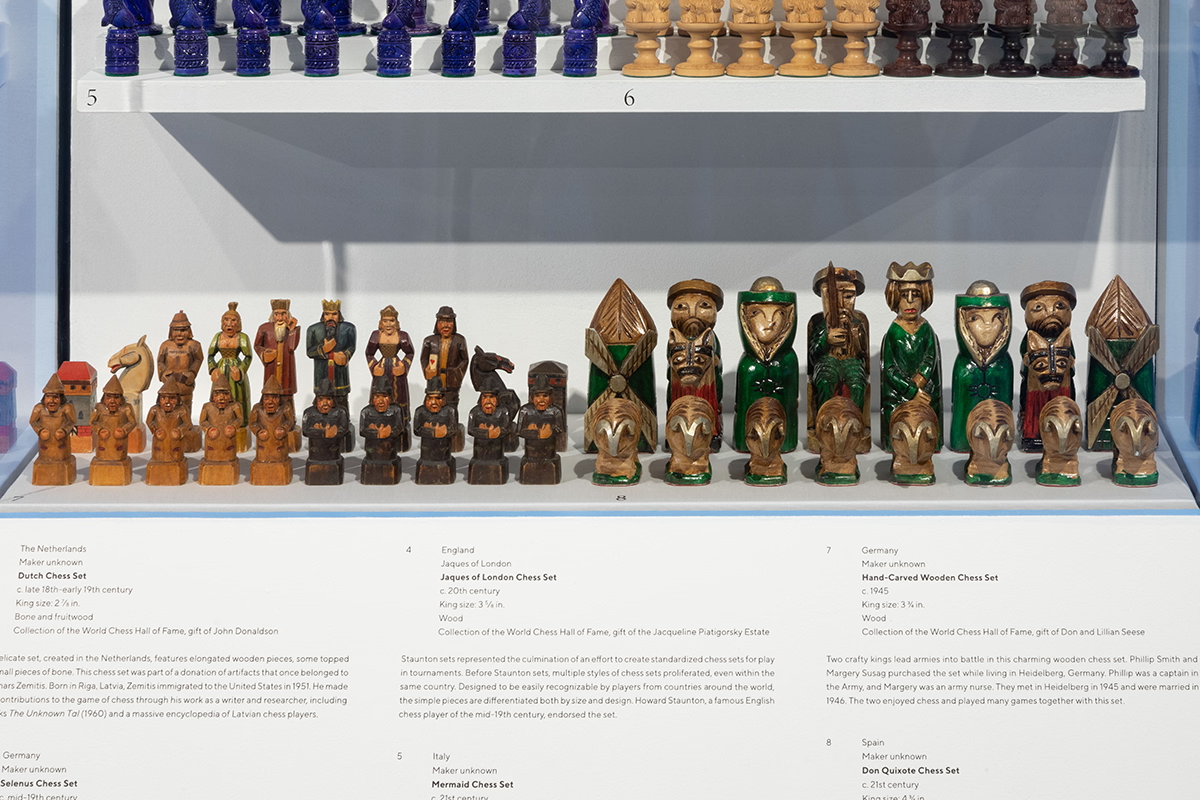
Another Don Quixote set was displayed at the WCHOF  in a 2021 exhibit, Pawns & Passports: Chess Sets from Around the Globe. This set was made in Spain and features colorful pieces in vibrant shades of red, green, and gold. As in this month’s featured set, rooks are the windmills Don Quixote mistakes for giants, and the king piece is the title character. In this set, the pawns are not busts of suits of armor representing Sancho Panza, but knights’ helmets. Both sets give life to the timeless story of Don Quixote and allow the viewer to glimpse what the novel is about, even if they have not read the book. 

Maker unknown, Don Quixote Chess Set, c. 21st century, Collection of the World Chess Hall of Fame & Galleries, Photo by Sarah Carmody

Another literature-inspired chess set that was recently in our Featured Chess Set program is the Love and Chess Chess Set, or Mallory Greenleaf’s Chess Set. Featured in February 2025, this set was inspired by the young adult fiction book, Check & Mate by Ali Hazelwood. Mallory Greenleaf is the main character, and the book follows her life as she rekindles her love of chess with the help of a former chess prodigy, Nolan Sawyer. This set has traditional wood pieces, while the board’s edges are tinged with the same gradient the cover of the book uses.

Once Upon a Book Club, Love and Chess Chess Set/Mallory Greenleaf’s Chess Set, 2024, Collection of the World Chess Hall of Fame & Galleries, Photo by Austin Fuller

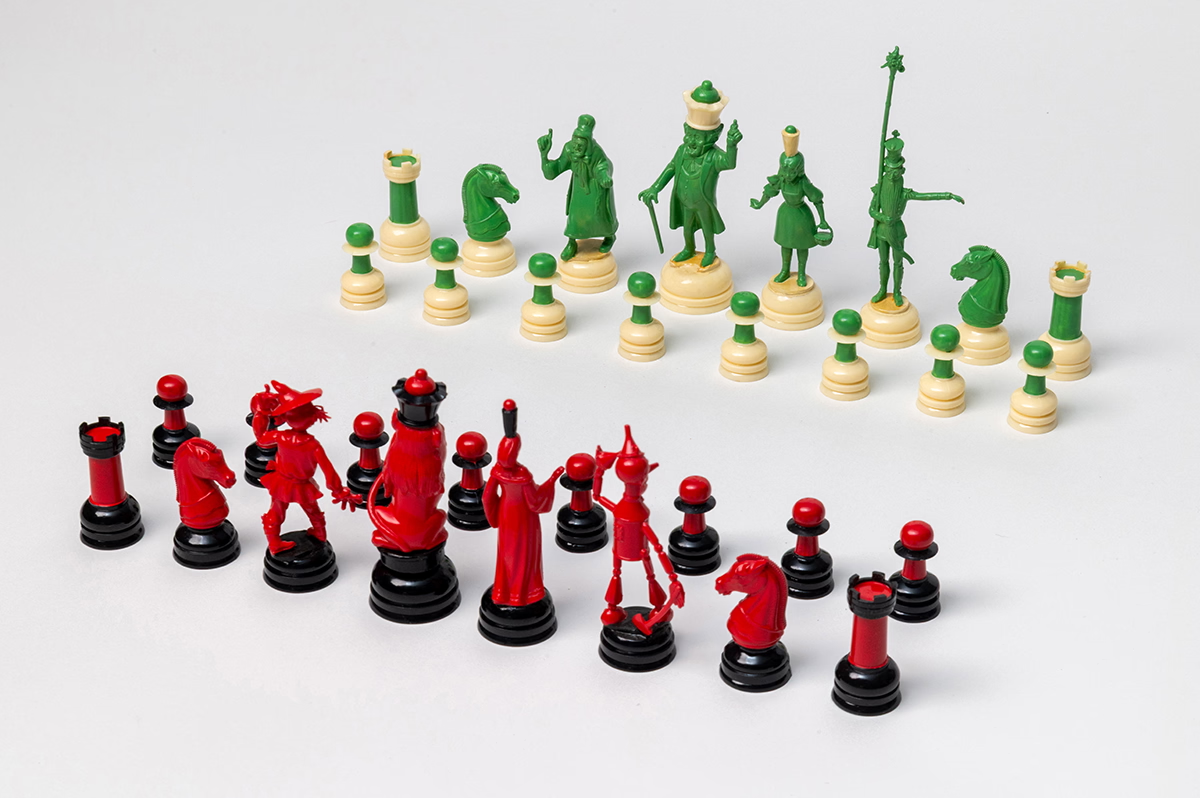
The WCHOF’s collection includes sets inspired by numerous stories, from Through the Looking-Glass, and What Alice Found There to Moby-Dick. The following set was included in the WCHOF’s Featured Chess Set program in 2020, and is currently in the World Chess Hall of Fame & Galleries’ second-floor exhibit, Reading Between the Lines: Chess & Literature. This set takes the classic fiction of L. Frank Baum’s The Wizard of Oz, and places it on a chessboard. The set features figures based on W.W. Denslow’s illustrations of the story, detailing all the important characters from the book. Learn more about this set and others in person at the WCHOF before April 12th!

Maker unknown, Wizard of Oz Chess Set, Date unknown, Collection of the World Chess Hall of Fame & Galleries, Photo by Austin Fuller

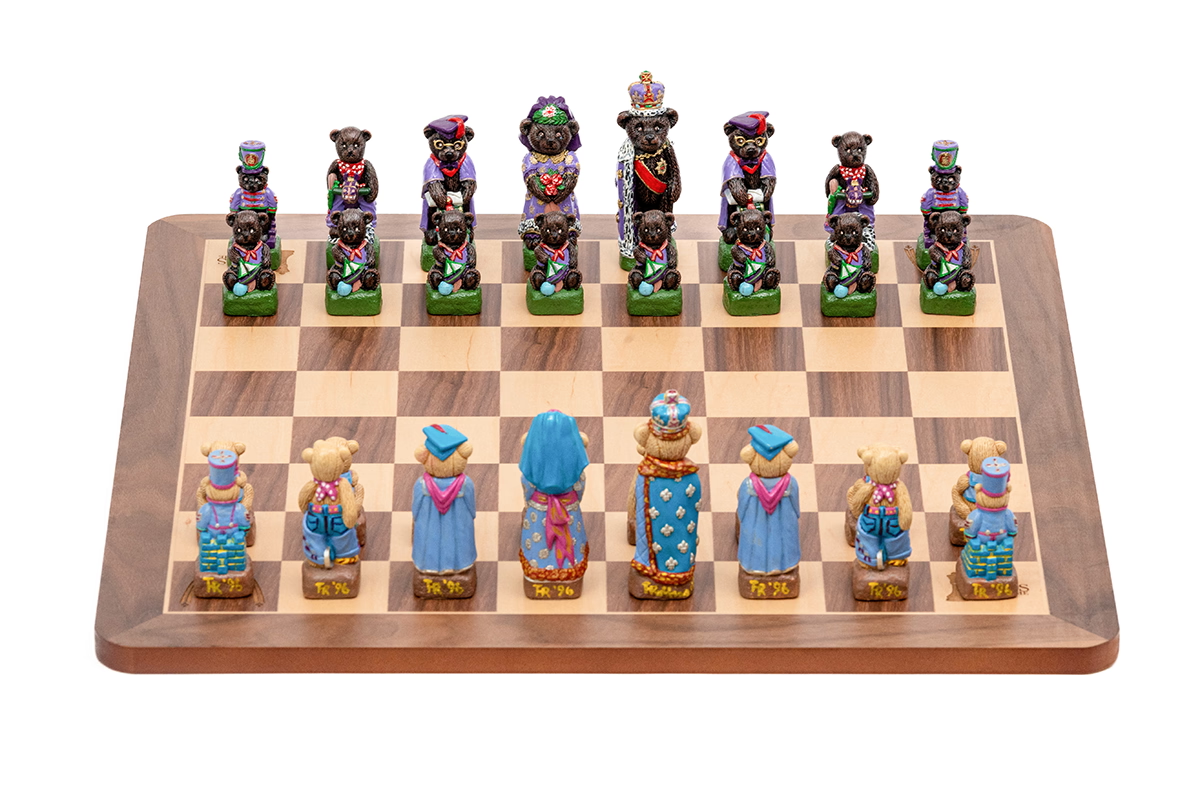
This next chess set is from the same donation as this month’s featured set. It is one that was hand-painted by Harvey and Teddi Robbins themselves, the Teddy Bear Chess Set. This set was part of the Featured Chess Set program in June 2024. One can see the care and effort put into painting this set, and can imagine the other sets they hand-painted throughout their lives. The purple and blue sides feature numerous colorful accents, painstakingly painted to make this set pop.

Teddi Robbins, Teddy Bear Chess Set, 1996, Collection of the World Chess Hall of Fame & Galleries, gift of Harvey and Teddi Robbins, Photo by Austin Fuller

Written by Carrie Harper, Graduate Research Assistant

FAQs:

How can I participate in the Featured Chess Set Project?

Saint Louis area residents can email WCHOF curator Emily Allred at [email protected] or call at 314.243.1543 if they are interested in participating in the Featured Chess Set project. Please include photos as well as a brief description of the set you would like to loan. Each set will be displayed on the third floor of the WCHOF and will be highlighted in the WCHOF’s monthly newsletter, website, and social media.

How can I see this month’s featured set?

Visit the WCHOF to see the sets in this rotating display yourself. From 3D-printed chess sets to one-of-a-kind artistic creations, the Featured Set Project shows how the ancient game has inspired artists and creators for centuries. Each set is only on view for a month at a time, so visit often to see a new set!

How can I donate chess sets to the WCHOF?

Our generous donors help us preserve chess history! From mass-produced sets with pop culture themes to rare and historical pieces and sets used by everyday players, the WCHOF seeks to obtain artifacts that show the impact that the game has had on history, art, and culture. For more information about donations, email [email protected].

Etched in Stone: Mexican Cultural Heritage in Chess

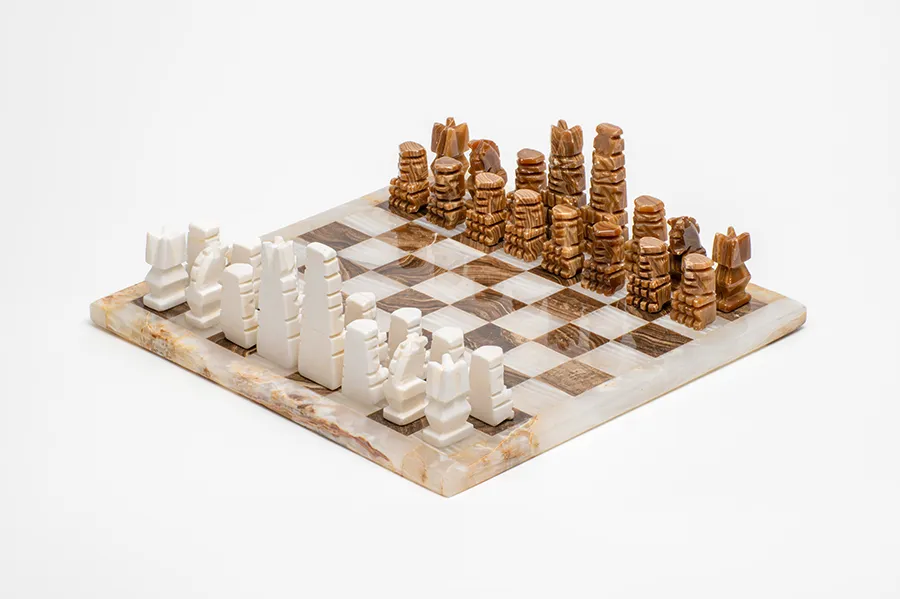
This January, the World Chess Hall of Fame & Galleries features a hand-carved Mexican onyx chess set donated by retired Judge David Noce, celebrating the fusion of Aztec artistry and traditional stone craftsmanship.

During January 2026, the World Chess Hall of Fame & Galleries (WCHOF) is highlighting a brand-new donation to the museum’s collection—an onyx Mexican chess set, donated by David Noce. Part of the WCHOF’s Featured Chess Set project, it is on view outside the museum’s third-floor gallery next to a display of the plaques for the World Chess Hall of Fame and United States Chess Hall of Fame 2025 inductees. The WCHOF’s Featured Set program features beautiful, offbeat, and unique chess sets from the museum’s collection. It also offers visitors from the Saint Louis area the opportunity to display special sets from their own collections for a month, highlighting collectors and the stories of how chess has played a role in their lives.

Hand-Carved Mexican Chess Set

Made of onyx, sardonyx, and marble, this Mexican chess set displays the natural beauty of materials and culture native to its country of origin. This set, which features intricately carved pieces, is a popular souvenir of travels to Mexico. One appeal of this Aztec-inspired carving style is the synthesis of ancient and modern design. The Aztec people lived in parts of what is now central Mexico until 1521, when Spanish conquistadors overthrew the Empire. Today, citizens of Mexico are very proud of this heritage, partly shown through the amount of carvings done in this style. The artists may have incorporated influences of Aztec buildings and monuments from archeological sites during the carving process in order to pay homage to their heritage.

Materials

Each hand-carved onyx and sardonyx piece is unique, with its banding throughout the rock used. Sardonyx, another name for white-and-brown-layered onyx, is typically paired with white onyx to create a contrast in shades of each side. The onyx used in these sets is likely mined in Mexico and hand-carved by artisans to be made into such beautiful chess sets. Such carvers make other carvings to sell, such as bookends and statuettes.

About the Donor: David D. Noce

David D. Noce is a retired United States Magistrate Judge for the Eastern District of Missouri. After many years in this position—he began as a Magistrate Judge on October 1, 1976 (holding the record for longest-serving active service Magistrate Judge in the country), he officially retired in late April 2023. 

In school, Noce originally wanted to be a clergy member in the Catholic Church, then pivoted to law after taking a political science class at Saint Louis University. There, he met Rex Sinquefield, the co-founder of the Saint Louis Chess Campus. He studied law at the University of Missouri-Columbia School of Law. Noce served in the Army as an attorney advisor for the Department of Defense until being released from active duty. Right out of the Army, David Noce began clerking for two U.S. District judges in the St. Louis area. David Noce has also served as an adjunct professor at Saint Louis University’s School of Law, teaching Jury Instructions and the Trial Process since 1996. In his retirement, he continues to teach and periodically serves in the courts when the need arises.

David Noce and Chess

This Mexican chess set came into David Noce’s possession as a gift from a good friend of his, Richard Donahue, after Donahue was told about Noce’s love for the game. Noce even mentioned chess when asked about what he will be doing during his retirement in an interview with the Bar Association of Metropolitan St. Louis, where he responds, “Chess or golf, anyone?” 

In 2025, Noce generously donated three chess sets to the WCHOF. He donated the two other sets, which have pieces inspired by the Civil War and the children’s book series Harry Potter, as a tribute to his grandkids, who are avid chess players.

Connect with our Collections and Past Exhibitions!

To check out other previously exhibited sets from Mexico or that explore Mexican culture, visit our past exhibitions pages!

Mexican Chess Sets From Past Exhibitions

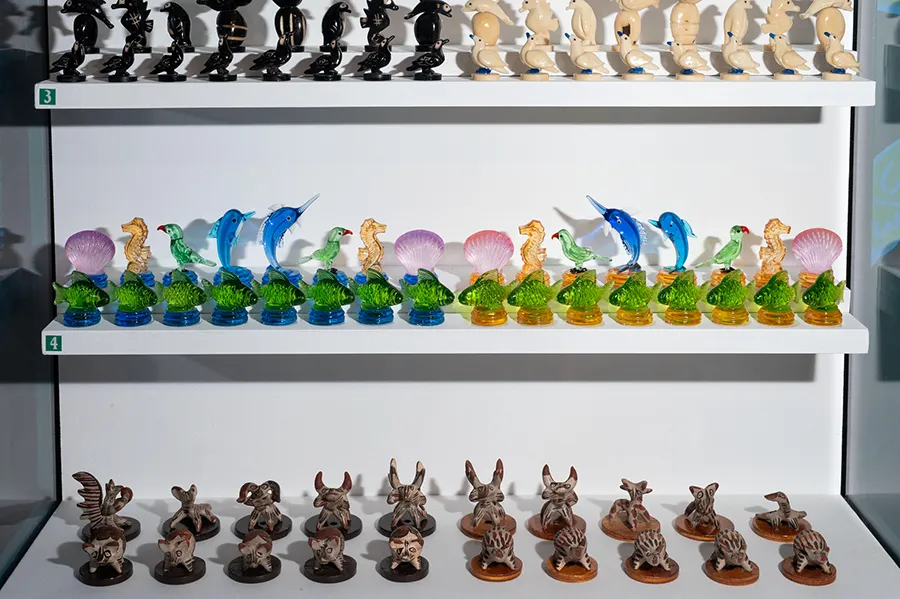
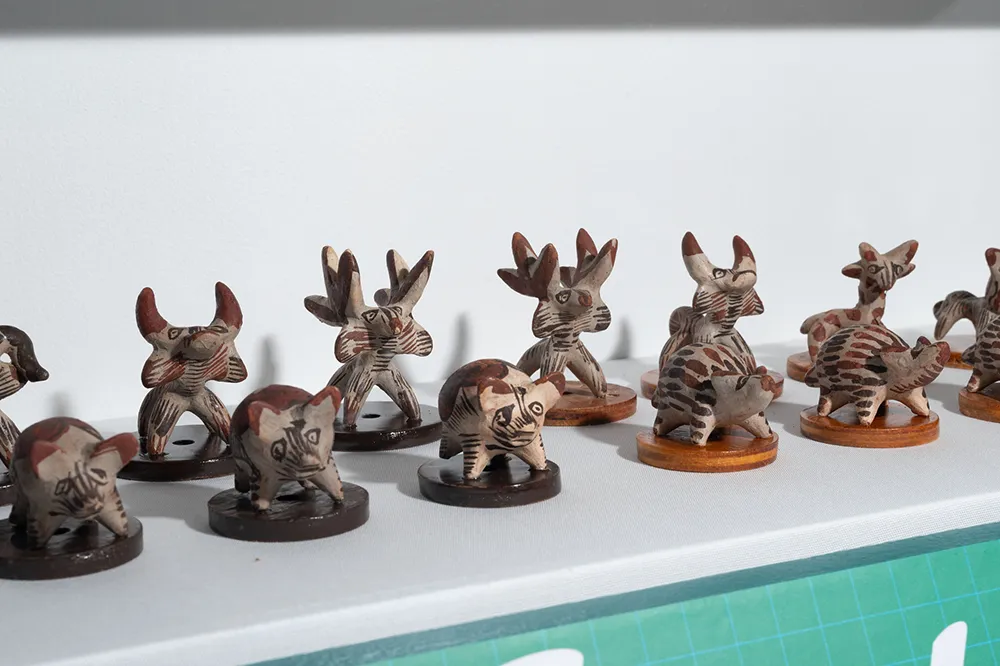
Artist unknown, Mexican Animals Chess Set, late 1990s to early 2000s, Collection of the World Chess Hall of Fame & Galleries, gift of Edwin and Ann Munger, Photo by Austin and Crystal Fuller

This chess set, donated by David Noce, is not the only chess set from Mexico or exploring Mexican culture that has been exhibited at the WCHOF. Another Mexican set was on view in a recent exhibit, Paws and Pawns: Exploring Animal Chess Sets. This set, which has pieces representing animals native to the Americas, was donated by Edwin and Ann Munger and originated in Chiapas, Mexico. Chiapas is Mexico’s southernmost state and is known for its artisan handicrafts and abundant folk art. Munger, a renowned collector, included the set in his books exploring chess sets from around the world.

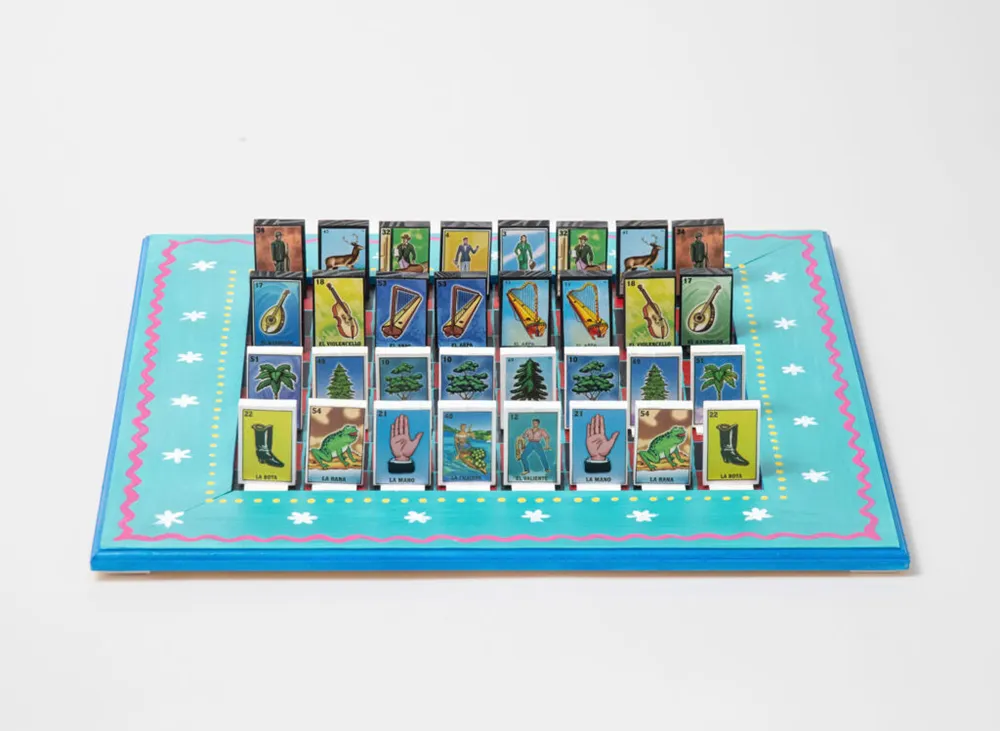
The WCHOF’s collection also includes a chess set based on the game Loteriá, which is not specifically from Mexico but related to Mexican culture. Loteriá is a game of chance, with similarities to Bingo. The Loteriá Chess Set was created with important figures of the game represented. This set was created by artist Gloria Gurrola-Graciano, who is based in Banning, California, and was exhibited as the Featured Chess Set in May 2023.

Gloria Gurrola-Graciano, Loteriá Chess Set, 2020, Collection of the World Chess Hall of Fame & Galleries, Photo by Austin Fuller

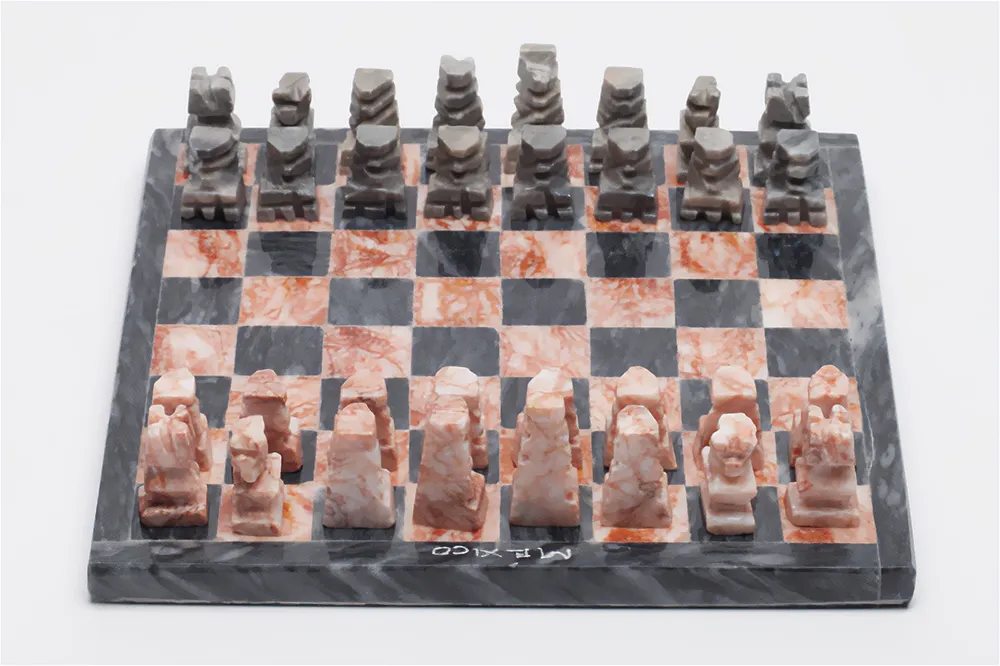
Another Mexican chess set that has been exhibited at the WCHOF is a loan from one of our curators, Emily Allred. It is in a similar style to this month’s Featured Set, but made of pink and gray marble. Like David Noce, Allred received the set as a gift and has added it to her personal collection. On the board of this set is inscribed the country of origin (Mexico). The WCHOF displayed it as the Featured Chess Set for July 2017.

Mexico, Hand Carved Chess Set, 2016, Collection of Emily Allred, Photo by Michael DeFilippo

Chess Sets from Around the World

The World Chess Hall of Fame & Galleries has chess sets from all around the globe. While a set from Mexico is being highlighted this month, the WCHOF houses hundreds of chess sets created globally. Each chess set allows us a glimpse of what each culture values and how they live.

Written by Carrie Harper, Graduate Research Assistant

FAQs:

How can I participate in the Featured Chess Set Project?

Saint Louis area residents can email WCHOF Curator Emily Allred or call 314.243.1543 if they are interested in participating in the Featured Chess Set project. Please include photos as well as a brief description of the set you would like to loan. Each set will be displayed on the third floor of the WCHOF and will be highlighted in the WCHOF’s monthly newsletter, website, and social media.

How can I see this month’s featured set?

Visit the WCHOF to see the sets in this rotating display yourself. From 3D-printed chess sets to one-of-a-kind artistic creations, the Featured Set Project shows how the ancient game has inspired artists and creators for centuries. Each set is only on view for a month at a time, so visit often to see a new set!

How can I donate chess sets to the WCHOF?

Our generous donors help us preserve chess history! From mass-produced sets with pop culture themes to rare and historical pieces and sets used by everyday players, the WCHOF seeks to obtain artifacts that show the impact that the game has had on history, art, and culture. For more information about donations, email [email protected].