chess set Archives - Page 2 of 2 - World Chess Hall of Fame & Galleries

Featured Chess Set: June 2020

June’s Featured Chess Set is part of the collection of the World Chess Hall of Fame (WCHOF). Since its creation in 1986, the WCHOF has endeavored to highlight the history and cultural significance of the game of chess. The WCHOF’s collection is diverse and includes sets once owned by legendary players, mass-produced sets with lively pop culture themes, antique ivory sets, travel sets, as well as chess computers. Through these artifacts, the WCHOF illustrates how chess has evolved through its over 1500-year history. This set is part of the museum’s permanent collection.

Napoleonic Chess Set, date unknown

Maker unknown

Napoleonic Chess Set

Date unknown

King size: Red: 4 ½ in.; Blue: 5 in.

Glazed and fired clay

Collection of the World Chess Hall of Fame

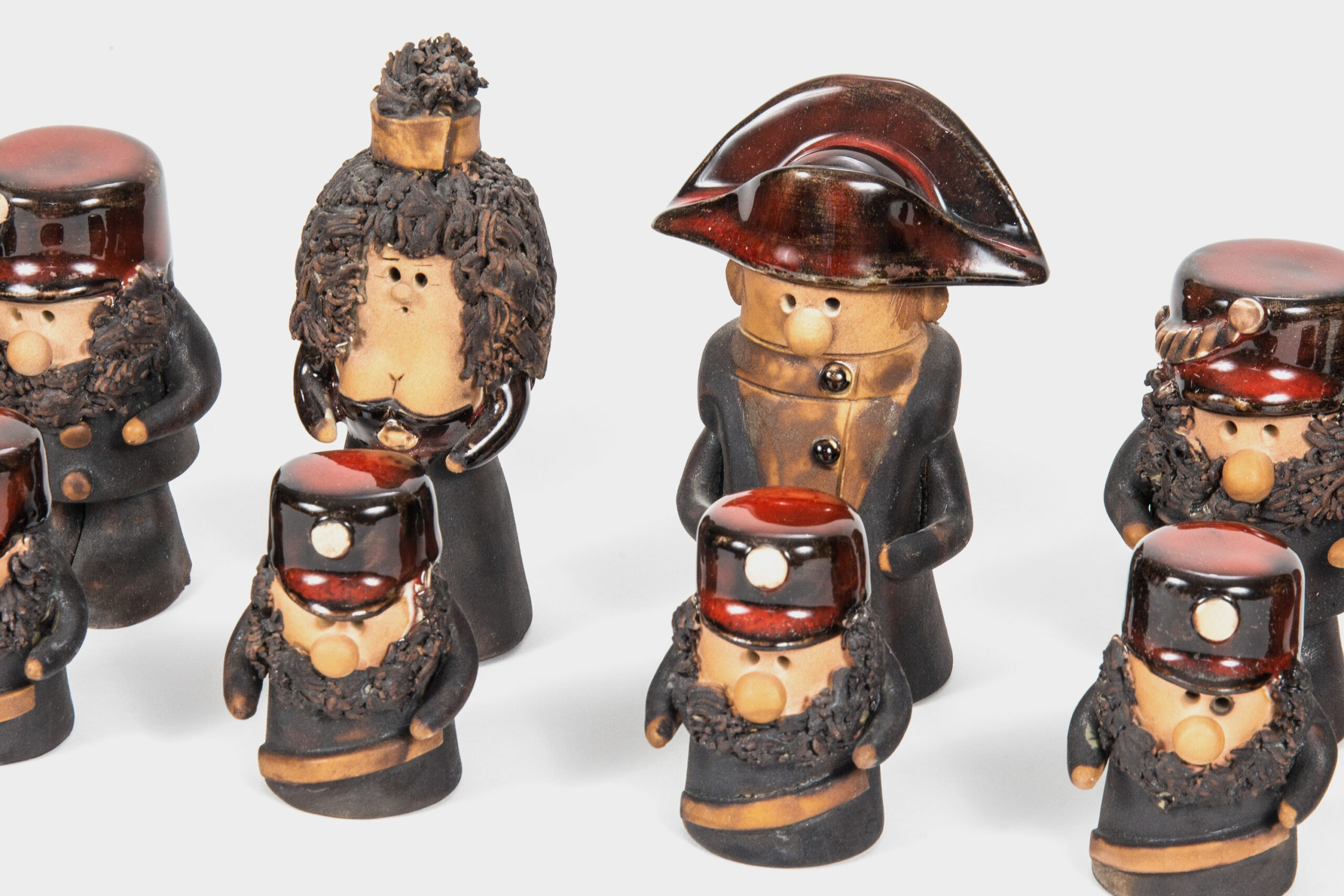
An anonymous artist captures a military rivalry in clay in this month’s featured chess set. Two leaders, wearing bicorne hats, marshal their soldiers to war in this set. The bicorne became popular as part of European military uniforms in the 1790s, and the two leaders in this set demonstrate the two ways the hat was worn.
Featured Chess Set: March 2020

March’s Featured Chess Set is part of the collection of the World Chess Hall of Fame (WCHOF). Since its creation in 1986, the WCHOF has endeavored to highlight the history and cultural significance of the game of chess. The WCHOF’s collection is diverse and includes sets once owned by legendary players, mass-produced sets with lively pop culture themes, antique ivory sets, travel sets, as well as chess computers. Through these artifacts, the WCHOF illustrates how chess has evolved through its over 1500-year history. This set is part of a generous donation from Gregory Thompson.

Zukunft Chess Set, 2019

Gregory Thompson

Zukunft Chess Set

2019

King size: 1 ½ in.

3D printed plastic

Collection of the World Chess Hall of Fame, gift of Gregory Thompson

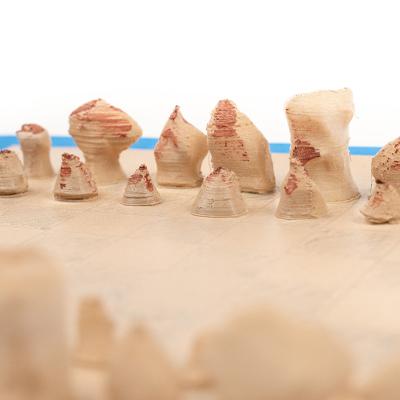
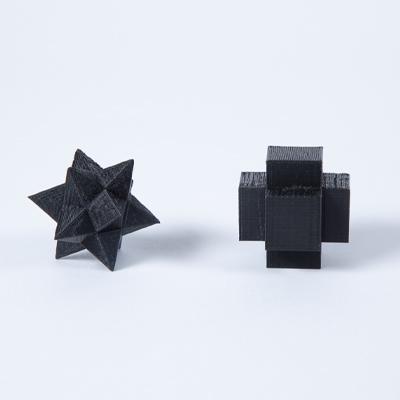
In 1849, Nathaniel Cooke created the Staunton chess set, which is today the familiar standard for tournament play. Since the set was created, many designers have imagined alternatives to the set, including the 20th-century artist Man Ray, who created a chess set based upon geometric shapes. Gregory Thompson’s design is a response to both of these famous sets. Called the Zukunft (future) Chess Set, it blends the simplicity of Man Ray’s set with the Staunton set’s interest in historical iconography. The queen and king are geometric shapes which evoke the coronet and cross atop the queen and king in the Staunton style set, while the knight is topped by triangular shapes reminiscent of a horse’s ears. Thompson manufactured the set with a 3D printer at the University City Public Library.

Featured Chess Set: February 2020

February’s Featured Chess Set is part of the collection of the World Chess Hall of Fame (WCHOF). Since its creation in 1986, the WCHOF has endeavored to highlight the history and cultural significance of the game of chess. The WCHOF’s collection is diverse and includes sets once owned by legendary players, mass-produced sets with lively pop culture themes, antique ivory sets, travel sets, as well as chess computers. Through these artifacts, the WCHOF illustrates how chess has evolved through its over 1500-year history. This set is part of a generous donation from Carol Ruth Silver to the collection of the WCHOF.

Freedom Rider Replica Chess Set

Carol Ruth Silver

Freedom Rider Replica Chess Set

2018-2019

King size: 1 in.; Board: 9 ½ x 9 ½ in.

Case: 9 ¾ x 9 ¾ x 9 ¾ in.

3D printed plastic and paper

Collection of the World Chess Hall of Fame, gift of Carol Ruth Silver

This 3d-printed chess set is a replica of a set created by Freedom Rider Carol Ruth Silver. The original, which she donated to the archives of Tougaloo College during the Freedom Riders’ 40th anniversary reunion, is now on view at the Mississippi Civil Rights Museum in Jackson, Mississippi. In 1961, the Congress of Racial Equality (CORE) organized Freedom Rides, in which civil rights activists intended to test the enforcement of Boynton v. Virginia (1960), a Supreme Court ruling that stated that racial segregation in interstate bus and rail travel and stations was unconstitutional.

The Freedom Riders faced violence from mobs opposed to desegregation, who were often in collaboration with local police. Many, like Silver, were arrested when they attempted to enter segregated facilities. Silver and other Freedom Riders were sent to the Mississippi State Penitentiary (also known as Parchman Farm), where she served 40 days. She created a chess set from saliva and bread to help pass the time. The dark pieces were colored with blood, and the board was made from a page in a prison-issued Bible. In her book The Freedom Rider Diary: Smuggled Notes From Parchman Prison (2014), Silver described playing chess with an inmate in another cell by shouting the notation for their moves to each other.