Chess in Literature: Don Quixote
Featured Chess
News
Published on: March 2, 2026
Explore the March 2026 Featured Chess Set—a Don Quixote-inspired set gifted by Jordan Aibel from the Harvey and Teddi Robbins collection, celebrating the first modern novel.
March 2026 Featured Chess Set
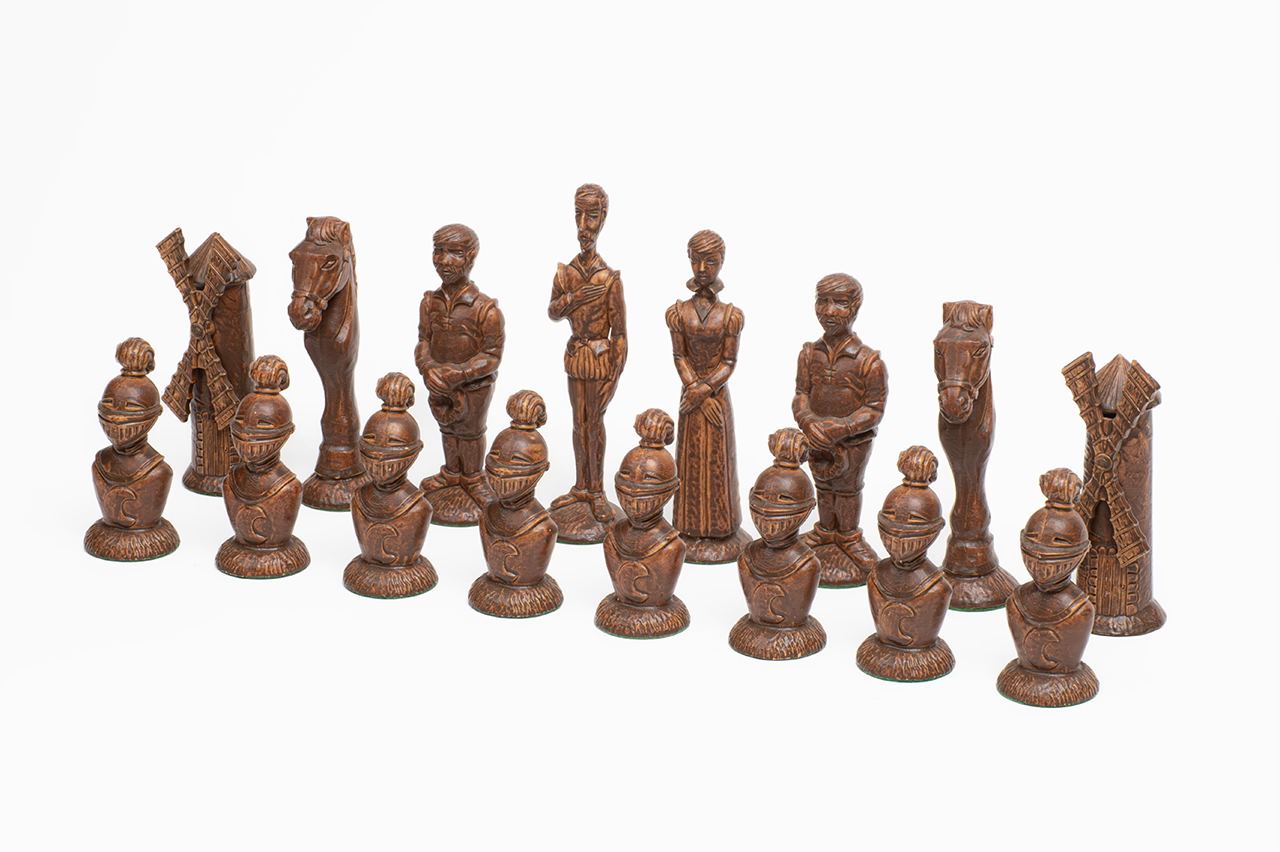
During March 2026, the World Chess Hall of Fame & Galleries (WCHOF) is highlighting a set from a significant donation to the collection—a Don Quixote-inspired chess set, gifted by Jordan Aibel. Part of the WCHOF’s Featured Chess Set project, it is on view outside the museum’s third-floor gallery next to a display of the plaques for the World Chess Hall of Fame and United States Chess Hall of Fame 2025 inductees.
The WCHOF’s Featured Set program features beautiful, offbeat, and unique chess sets from the museum’s collection. It also offers visitors from the Saint Louis area the opportunity to display special sets from their own collections for a month, highlighting collectors and the stories of how chess has played a role in their lives.
The Story of Don Quixote
This chess set depicts characters and important parts of the famous 17th-century novel, The Ingenious Gentleman Don Quixote of La Mancha by Miguel de Cervantes. The book is considered a classic today and is regarded as the first modern novel. It was published in two parts: the first in 1605, the second in 1615. Today, one can read both parts as one novel.
The story follows a man in the lower nobility of Spain named Alonso Quijano, who, after reading many chivalric romances, decides to become a knight-errant and revive medieval chivalry under the name of Don Quixote de la Mancha. He recruits a farm laborer to be his squire, named Sancho Panza, and uses an old workhorse he names Rosinante. Don Quixote and Sancho Panza set out on “adventures” around Spain to save the woman he transforms into his love interest, Dulcinea de Toboso.
As Don Quixote and Sancho Panza traverse the country, Don gets himself into trouble with these fantastical chivalric deeds. He famously fights windmills, which he views as giants, and friars whom he believes have kidnapped a lady. Many more “adventures” ensue, as Don Quixote and Sancho Panza continue along the way.
Don Quixote Chess Set
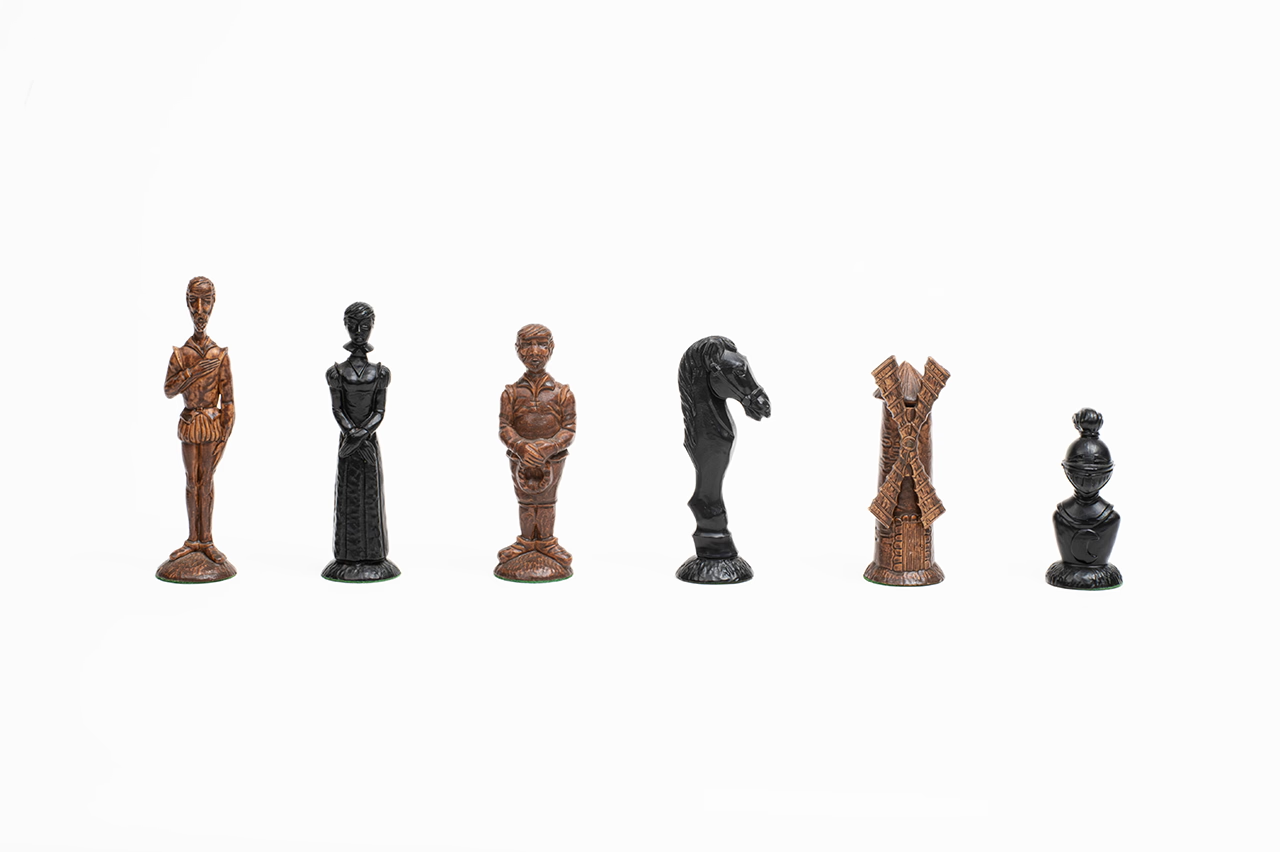
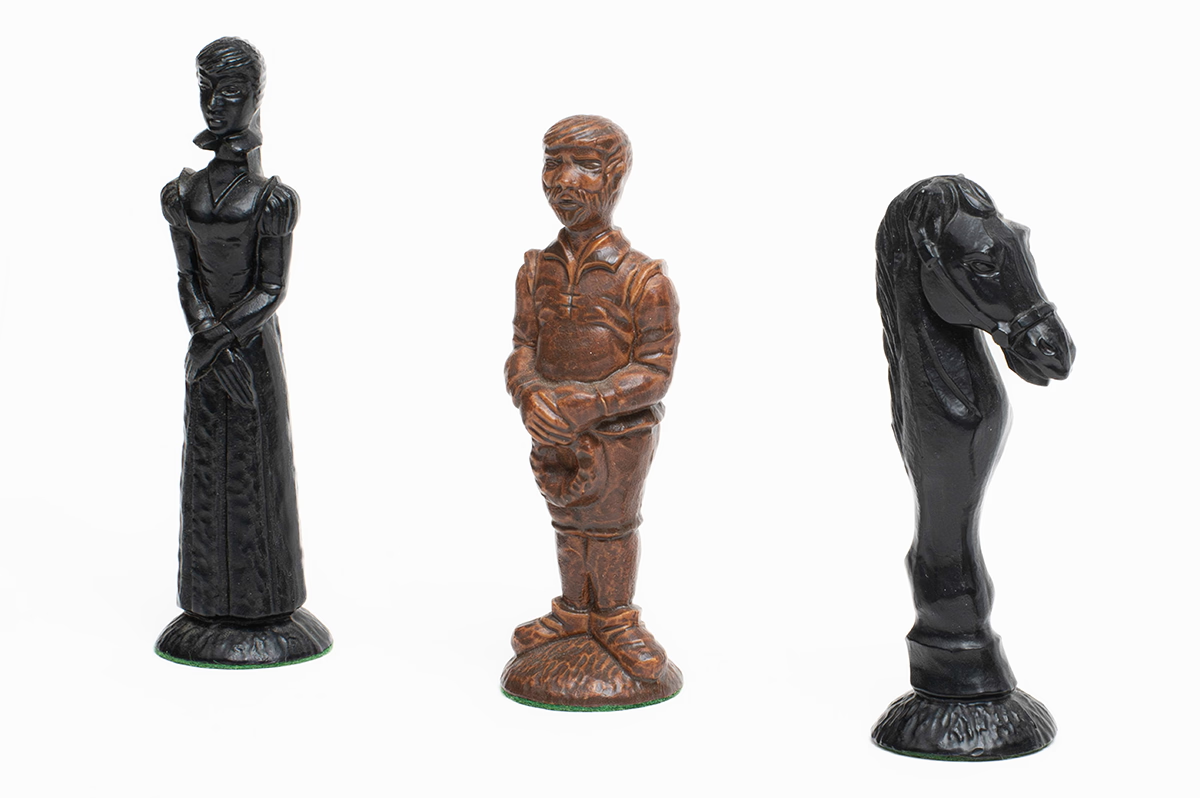
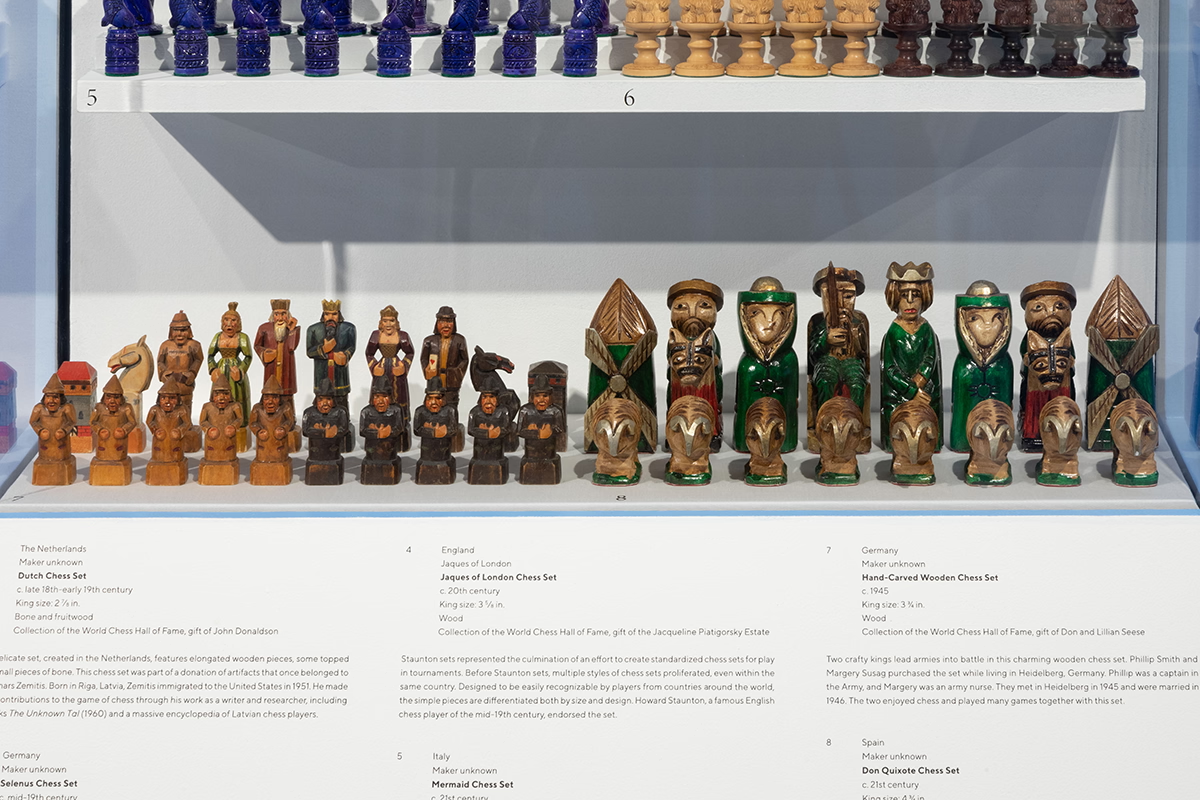
Although the pieces are made of plastic, their color and texture evoke a sense of being in the story. The black-and-brown textured pieces appear to be carved from wood, giving the characters a more natural look.
The pawns represent Don Quixote’s trusty squire, Sancho Panza, who accompanies him on his chivalric quests around Spain. The rooks are windmills, which Don Quixote famously believes to be giants, “slaying” them all over the country. Don Quixote himself is the king, towering over the others. The queen is Don Quixote’s betrothed, Dulcinea de Tobosa. The knights represent Don Quixote’s horse, Rocinante, while the bishops portray the priests Don Quixote meets along the way. Many artists have transformed the characters of this classic tale into chess pieces throughout the years, and the WCHOF has several sets inspired by this tale in its collection.
About the donor: Jordan Aibel
Jordan Aibel is the grandson of Harvey and Teddi Robbins, chess set collectors who had hundreds of chess sets in their home. He donated over 200 of the chess sets from his grandparents’ collection to the World Chess Hall of Fame & Galleries in 2018, one of the largest donations in the institution’s history.
Aibel remembers his grandparents’ house, chess sets nearly everywhere. There were sets on shelves, under the bed, and behind clothes. He fondly recalls his memories of the house and his grandfather’s unending creativity.
Harvey and Teddi Robbins
Harvey Robbins first encountered chess while stationed in Japan during World War II. He would play with his fellow Marines to pass the time and fell in love with the intellectual beauty. After the war, Harvey began collecting chess sets from around the world. Many of these sets were from countries he frequently visited, including Mexico, New Zealand, and Israel.
Harvey and Teddi Robbins were not only chess set collectors. Harvey Robbins also loved working on crafts and doing things with his hands. Some of the chess sets from their collection, donated to the World Chess Hall of Fame & Galleries, were made from “found objects” that Harvey would craft into chess sets. He and Teddi would also paint pieces in unique colors to make them one-of-a-kind.
Connect with our Collections and Past Exhibitions!
To check out other previously exhibited sets inspired by Don Quixote or other literary works, visit our website. Also, visit the World Chess Hall of Fame & Galleries before April 12th to see Reading Between the Lines: Chess & Literature for more chess and literary content.
Another Don Quixote set was displayed at the WCHOF in a 2021 exhibit, Pawns & Passports: Chess Sets from Around the Globe. This set was made in Spain and features colorful pieces in vibrant shades of red, green, and gold. As in this month’s featured set, rooks are the windmills Don Quixote mistakes for giants, and the king piece is the title character. In this set, the pawns are not busts of suits of armor representing Sancho Panza, but knights’ helmets. Both sets give life to the timeless story of Don Quixote and allow the viewer to glimpse what the novel is about, even if they have not read the book.
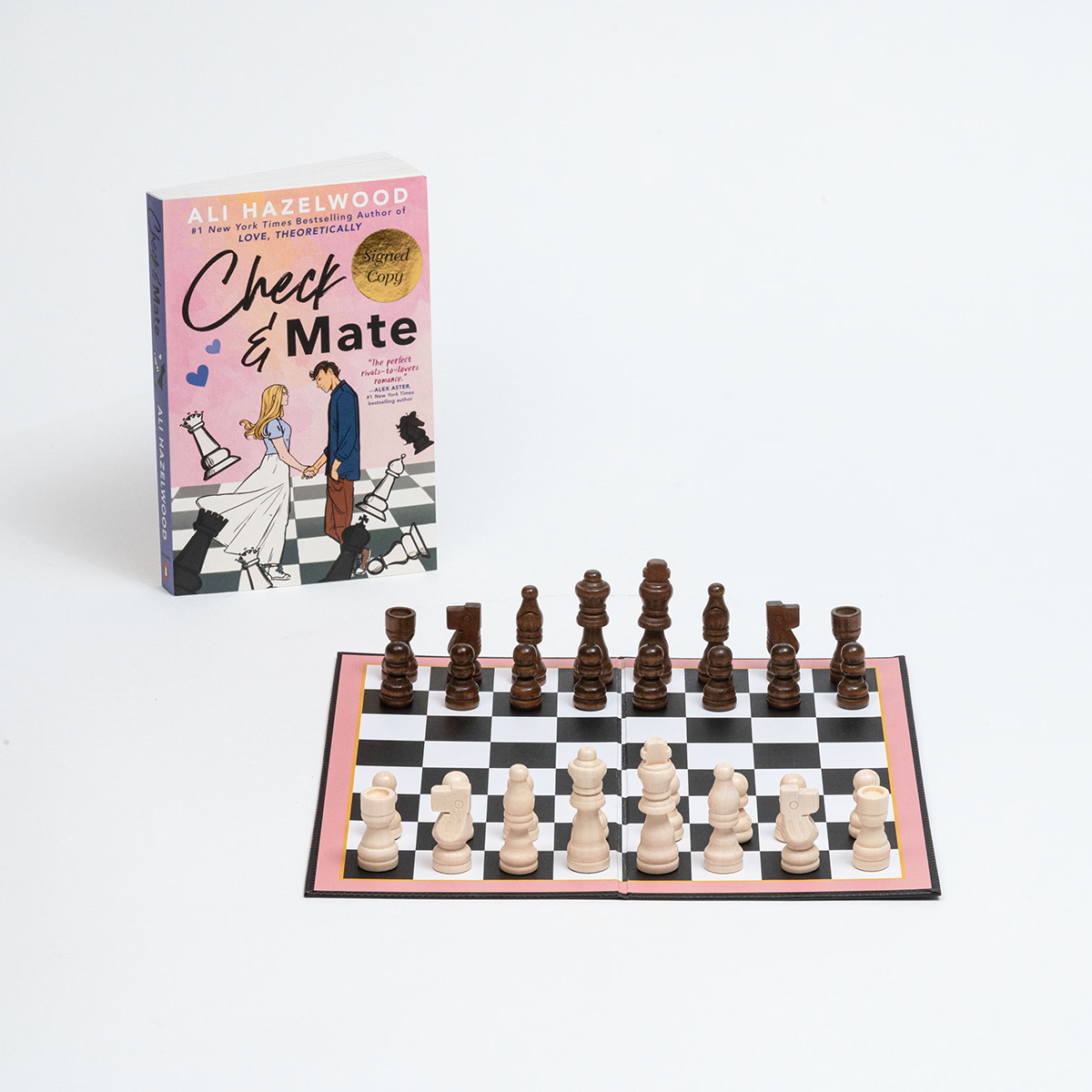
Another literature-inspired chess set that was recently in our Featured Chess Set program is the Love and Chess Chess Set, or Mallory Greenleaf’s Chess Set. Featured in February 2025, this set was inspired by the young adult fiction book, Check & Mate by Ali Hazelwood. Mallory Greenleaf is the main character, and the book follows her life as she rekindles her love of chess with the help of a former chess prodigy, Nolan Sawyer. This set has traditional wood pieces, while the board’s edges are tinged with the same gradient the cover of the book uses.
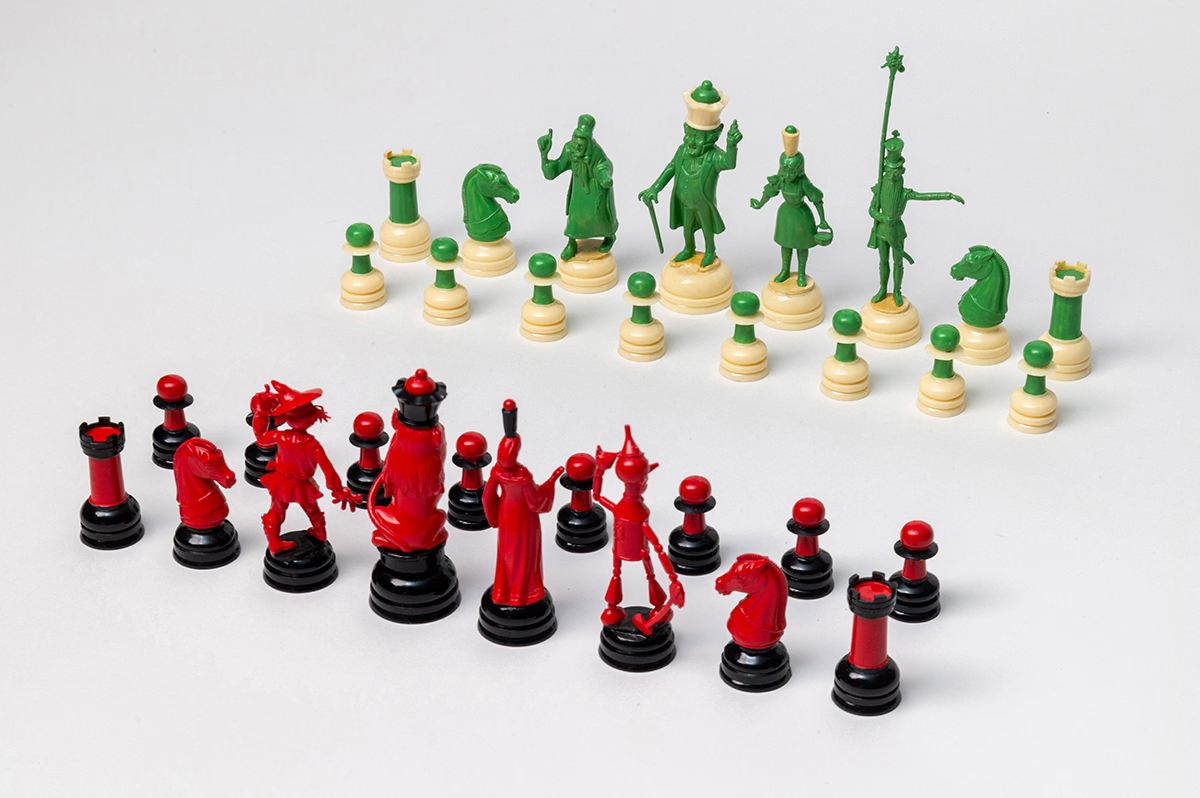
The WCHOF’s collection includes sets inspired by numerous stories, from Through the Looking-Glass, and What Alice Found There to Moby-Dick. The following set was included in the WCHOF’s Featured Chess Set program in 2020, and is currently in the World Chess Hall of Fame & Galleries’ second-floor exhibit, Reading Between the Lines: Chess & Literature. This set takes the classic fiction of L. Frank Baum’s The Wizard of Oz, and places it on a chessboard. The set features figures based on W.W. Denslow’s illustrations of the story, detailing all the important characters from the book. Learn more about this set and others in person at the WCHOF before April 12th!
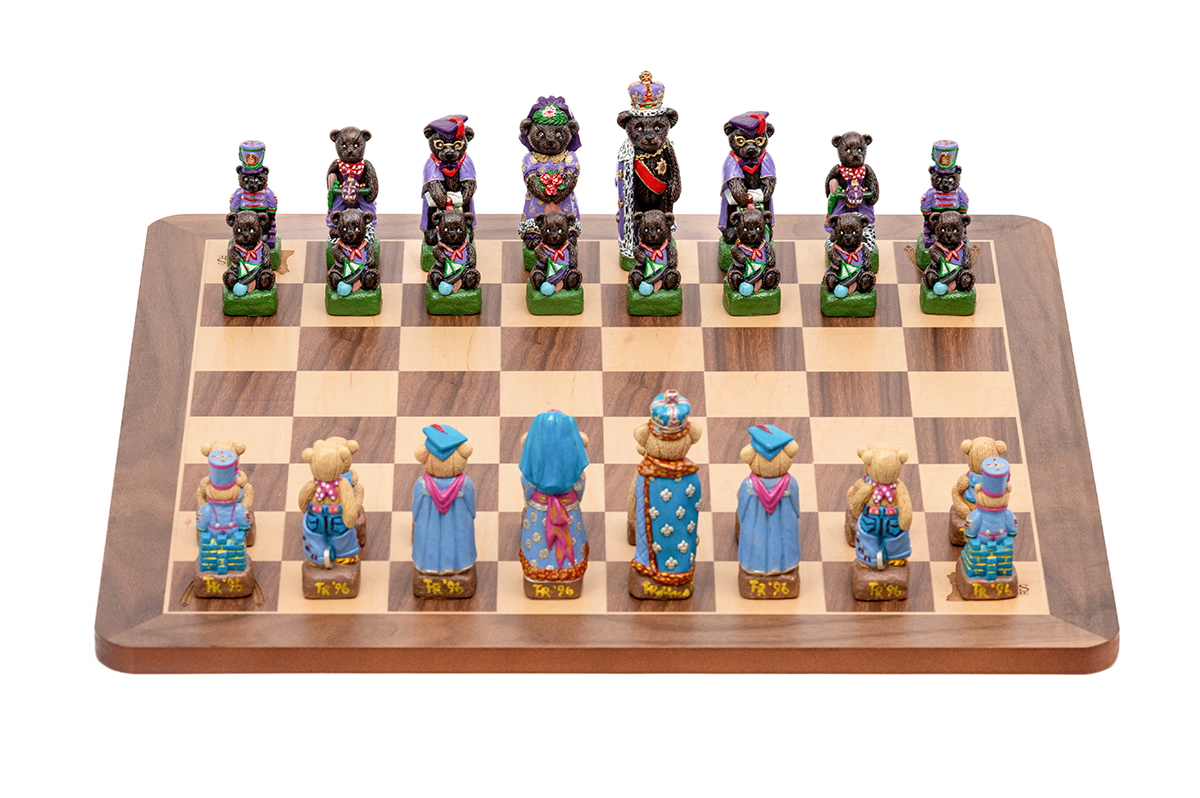
This next chess set is from the same donation as this month’s featured set. It is one that was hand-painted by Harvey and Teddi Robbins themselves, the Teddy Bear Chess Set. This set was part of the Featured Chess Set program in June 2024. One can see the care and effort put into painting this set, and can imagine the other sets they hand-painted throughout their lives. The purple and blue sides feature numerous colorful accents, painstakingly painted to make this set pop.
Written by Carrie Harper, Graduate Research Assistant
FAQs:
How can I participate in the Featured Chess Set Project?
Saint Louis area residents can email WCHOF curator Emily Allred at [email protected] or call at 314.243.1543 if they are interested in participating in the Featured Chess Set project. Please include photos as well as a brief description of the set you would like to loan. Each set will be displayed on the third floor of the WCHOF and will be highlighted in the WCHOF’s monthly newsletter, website, and social media.
How can I see this month’s featured set?
Visit the WCHOF to see the sets in this rotating display yourself. From 3D-printed chess sets to one-of-a-kind artistic creations, the Featured Set Project shows how the ancient game has inspired artists and creators for centuries. Each set is only on view for a month at a time, so visit often to see a new set!
How can I donate chess sets to the WCHOF?
Our generous donors help us preserve chess history! From mass-produced sets with pop culture themes to rare and historical pieces and sets used by everyday players, the WCHOF seeks to obtain artifacts that show the impact that the game has had on history, art, and culture. For more information about donations, email [email protected].
More From Beyond the Board
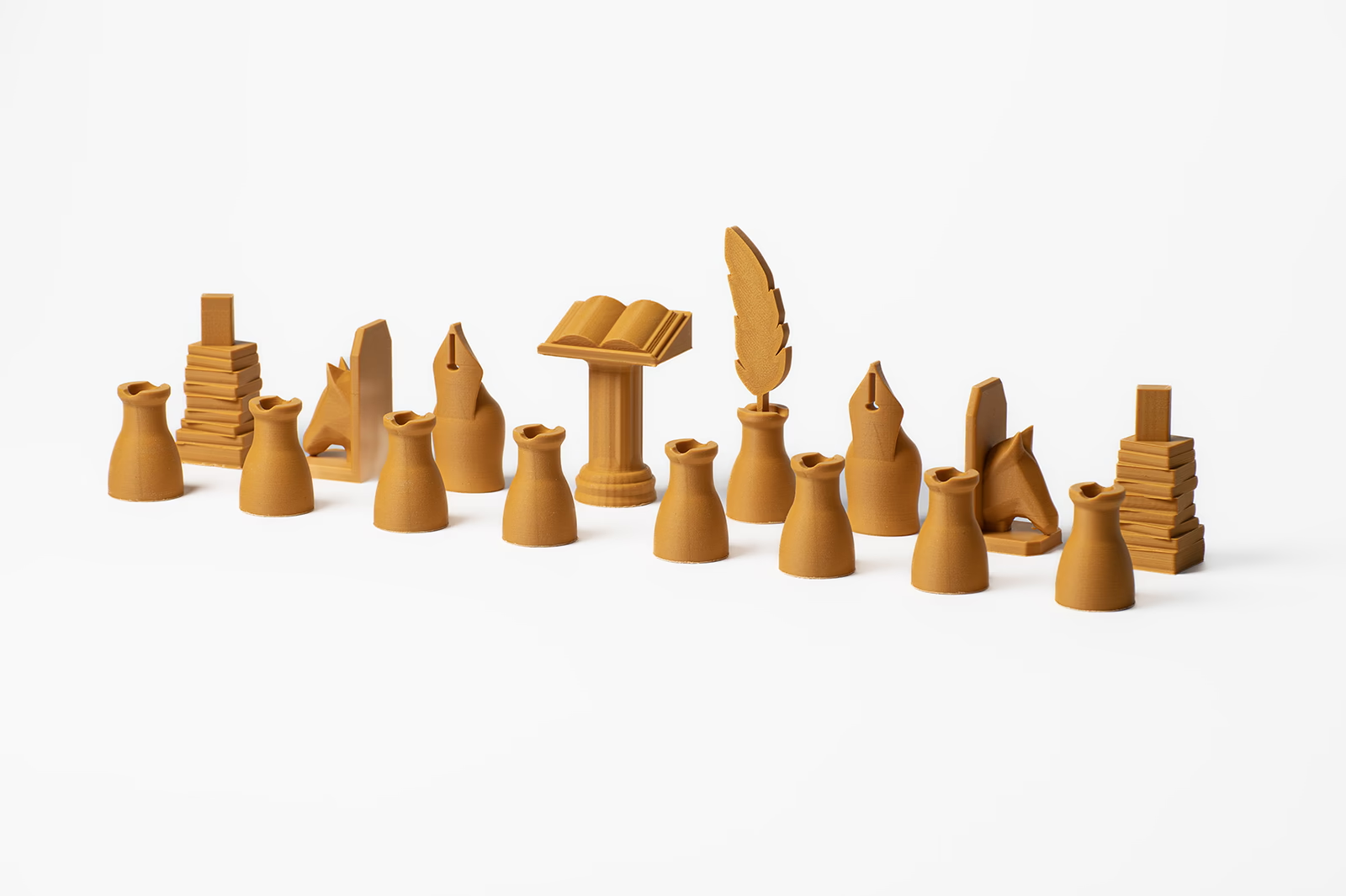
Two Timeless Pursuits: Chess and Reading
Chess in Literature: Don Quixote
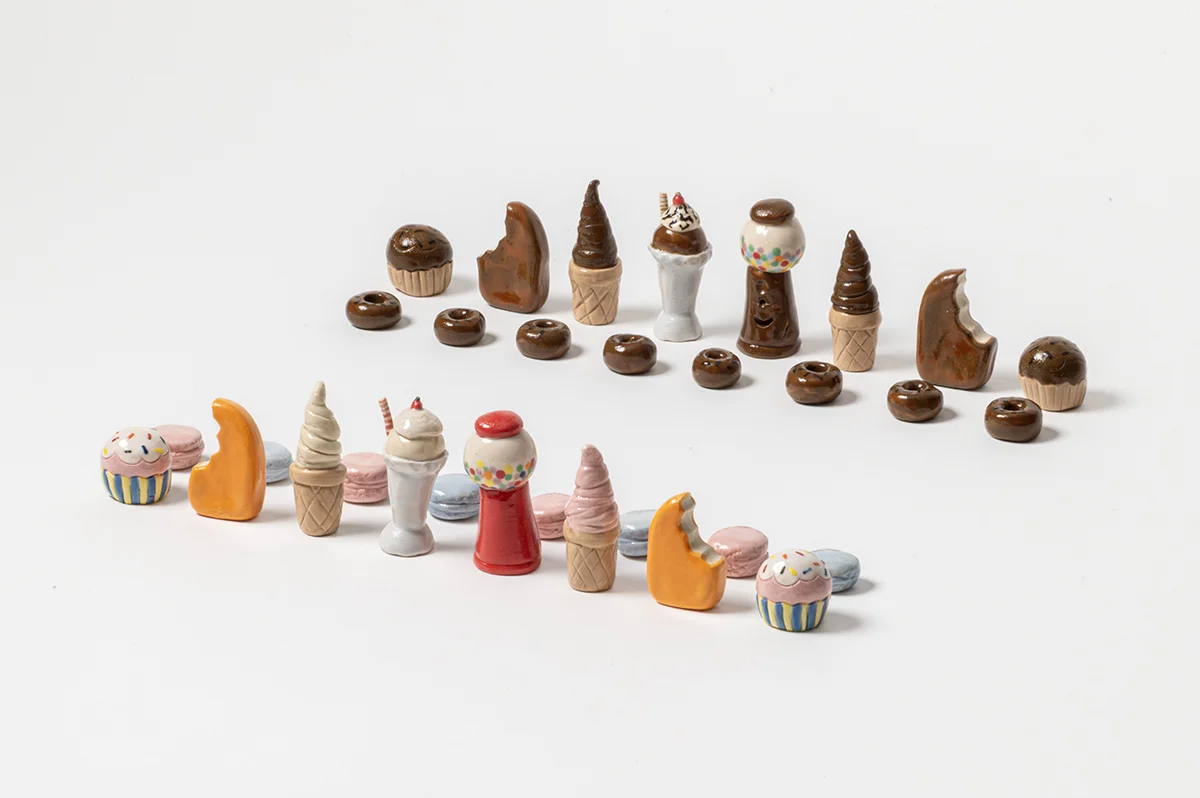
“You’re Sweet” Chess Set — February 2026 Featured Chess Set
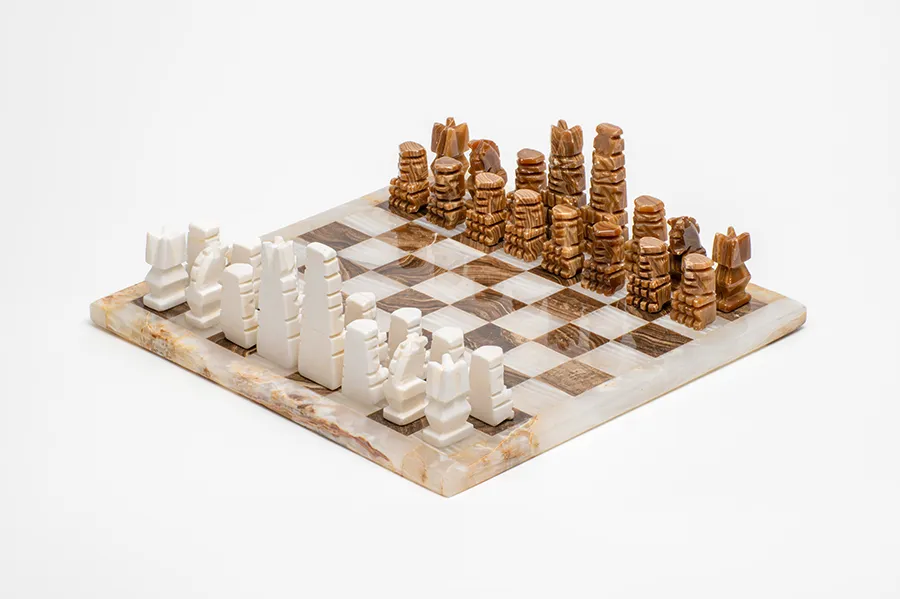
Etched in Stone: Mexican Cultural Heritage in Chess

World Chess Hall of Fame & Galleries Announces New Exhibition: Reading Between the Lines: Chess & Literature
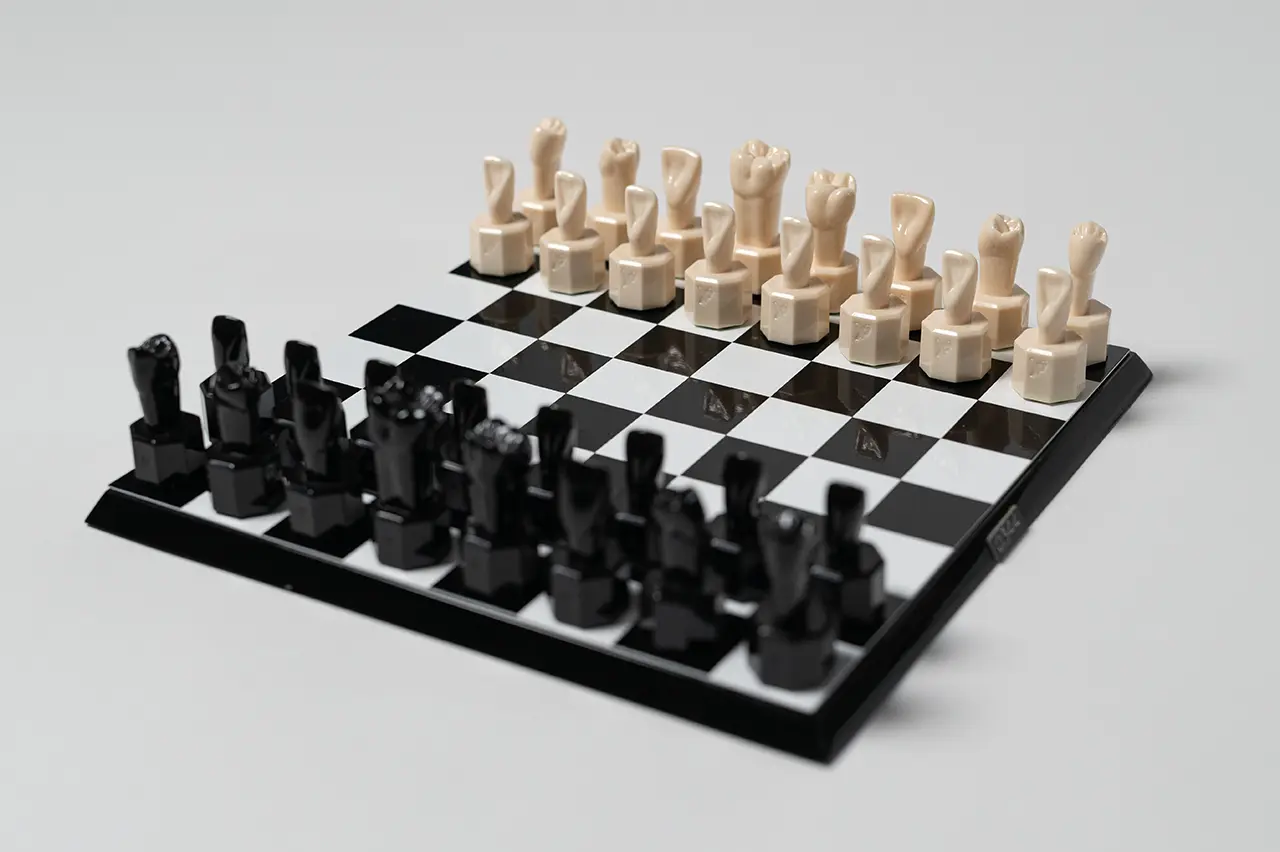
The Teeth Chess Set: A Unique Blend of Dentistry and Strategy
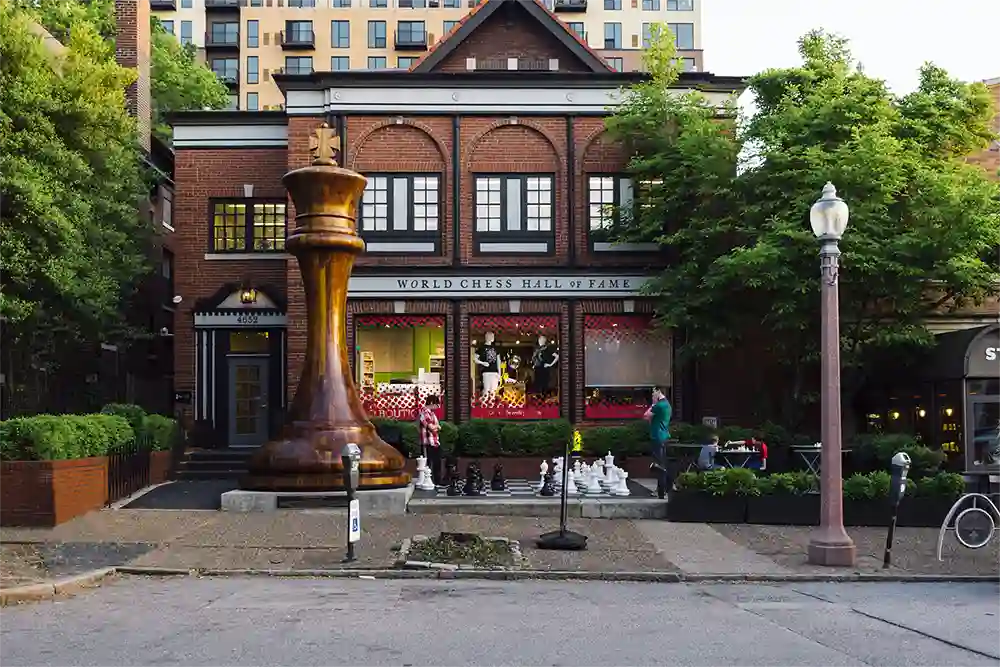
Chess Legends to be Inducted into the 2025 U.S. and World Chess Halls of Fame in Saint Louis This October

World Chess Hall of Fame & Galleries to Open Interactive Exhibition Celebrating Chess Variants Through Time and Culture

Saint Louis Chess Club, World Chess Hall of Fame & Galleries and Grand Chess Tour Launch $150,000 Matching Donation Campaign for Saint Louis Tornado Relief
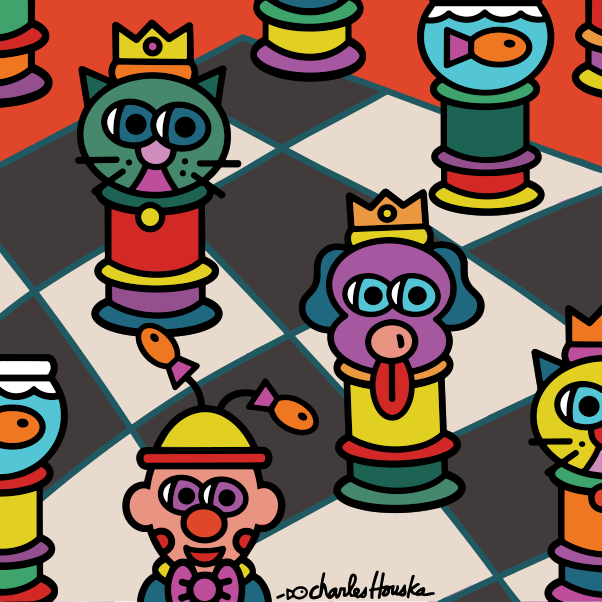
World Chess Hall of Fame & Galleries Presents “Charles Houska: Master of Play”
Learn to Read and Write Chess

Janet Evra performs at World Chess Hall of Fame for ‘Love and Its Many Languages’!