
Etched in Stone: Mexican Cultural Heritage in Chess
Featured Chess
News
Published on: January 20, 2026
Explore the January 2026 Featured Chess Set at the WCHOF—a hand-carved Mexican onyx set donated by retired Judge David Noce, blending Aztec artistry with traditional stone craftsmanship.
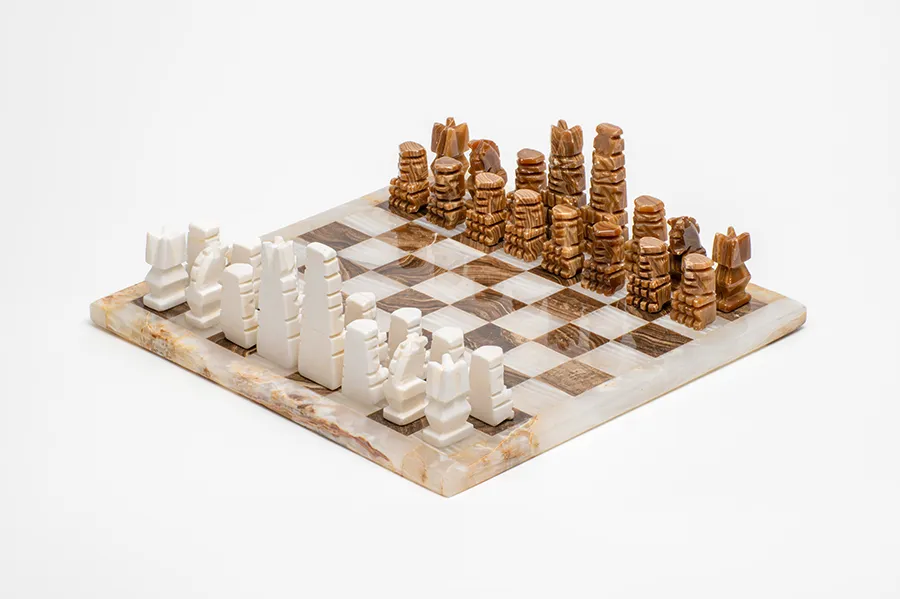
This January, the World Chess Hall of Fame & Galleries features a hand-carved Mexican onyx chess set donated by retired Judge David Noce, celebrating the fusion of Aztec artistry and traditional stone craftsmanship.
During January 2026, the World Chess Hall of Fame & Galleries (WCHOF) is highlighting a brand-new donation to the museum’s collection—an onyx Mexican chess set, donated by David Noce. Part of the WCHOF’s Featured Chess Set project, it is on view outside the museum’s third-floor gallery next to a display of the plaques for the World Chess Hall of Fame and United States Chess Hall of Fame 2025 inductees. The WCHOF’s Featured Set program features beautiful, offbeat, and unique chess sets from the museum’s collection. It also offers visitors from the Saint Louis area the opportunity to display special sets from their own collections for a month, highlighting collectors and the stories of how chess has played a role in their lives.
Hand-Carved Mexican Chess Set
Made of onyx, sardonyx, and marble, this Mexican chess set displays the natural beauty of materials and culture native to its country of origin. This set, which features intricately carved pieces, is a popular souvenir of travels to Mexico. One appeal of this Aztec-inspired carving style is the synthesis of ancient and modern design. The Aztec people lived in parts of what is now central Mexico until 1521, when Spanish conquistadors overthrew the Empire. Today, citizens of Mexico are very proud of this heritage, partly shown through the amount of carvings done in this style. The artists may have incorporated influences of Aztec buildings and monuments from archeological sites during the carving process in order to pay homage to their heritage.
Materials
Each hand-carved onyx and sardonyx piece is unique, with its banding throughout the rock used. Sardonyx, another name for white-and-brown-layered onyx, is typically paired with white onyx to create a contrast in shades of each side. The onyx used in these sets is likely mined in Mexico and hand-carved by artisans to be made into such beautiful chess sets. Such carvers make other carvings to sell, such as bookends and statuettes.
About the Donor: David D. Noce
David D. Noce is a retired United States Magistrate Judge for the Eastern District of Missouri. After many years in this position—he began as a Magistrate Judge on October 1, 1976 (holding the record for longest-serving active service Magistrate Judge in the country), he officially retired in late April 2023.
In school, Noce originally wanted to be a clergy member in the Catholic Church, then pivoted to law after taking a political science class at Saint Louis University. There, he met Rex Sinquefield, the co-founder of the Saint Louis Chess Campus. He studied law at the University of Missouri-Columbia School of Law. Noce served in the Army as an attorney advisor for the Department of Defense until being released from active duty. Right out of the Army, David Noce began clerking for two U.S. District judges in the St. Louis area. David Noce has also served as an adjunct professor at Saint Louis University’s School of Law, teaching Jury Instructions and the Trial Process since 1996. In his retirement, he continues to teach and periodically serves in the courts when the need arises.
David Noce and Chess
This Mexican chess set came into David Noce’s possession as a gift from a good friend of his, Richard Donahue, after Donahue was told about Noce’s love for the game. Noce even mentioned chess when asked about what he will be doing during his retirement in an interview with the Bar Association of Metropolitan St. Louis, where he responds, “Chess or golf, anyone?”
In 2025, Noce generously donated three chess sets to the WCHOF. He donated the two other sets, which have pieces inspired by the Civil War and the children’s book series Harry Potter, as a tribute to his grandkids, who are avid chess players.
Connect with our Collections and Past Exhibitions!
To check out other previously exhibited sets from Mexico or that explore Mexican culture, visit our past exhibitions pages!
Mexican Chess Sets From Past Exhibitions
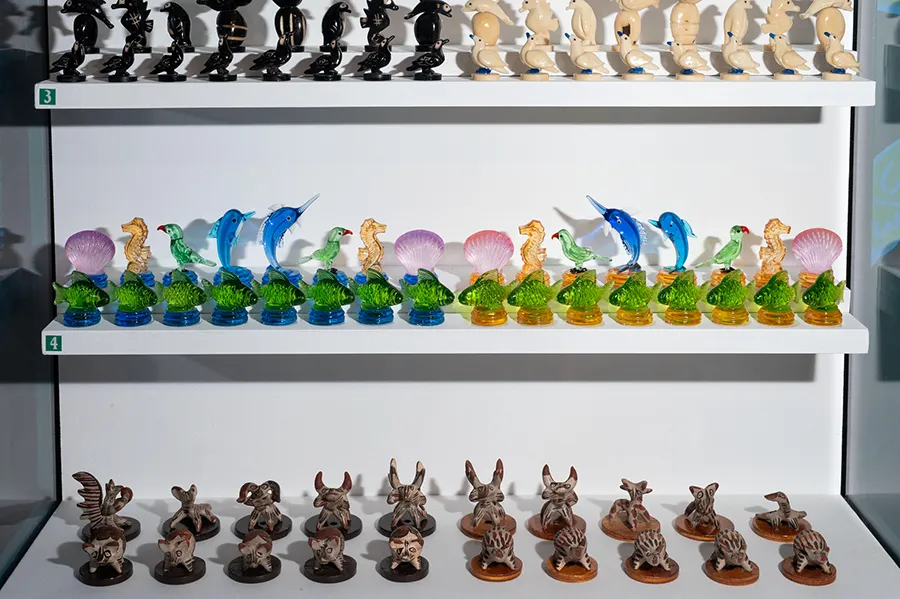
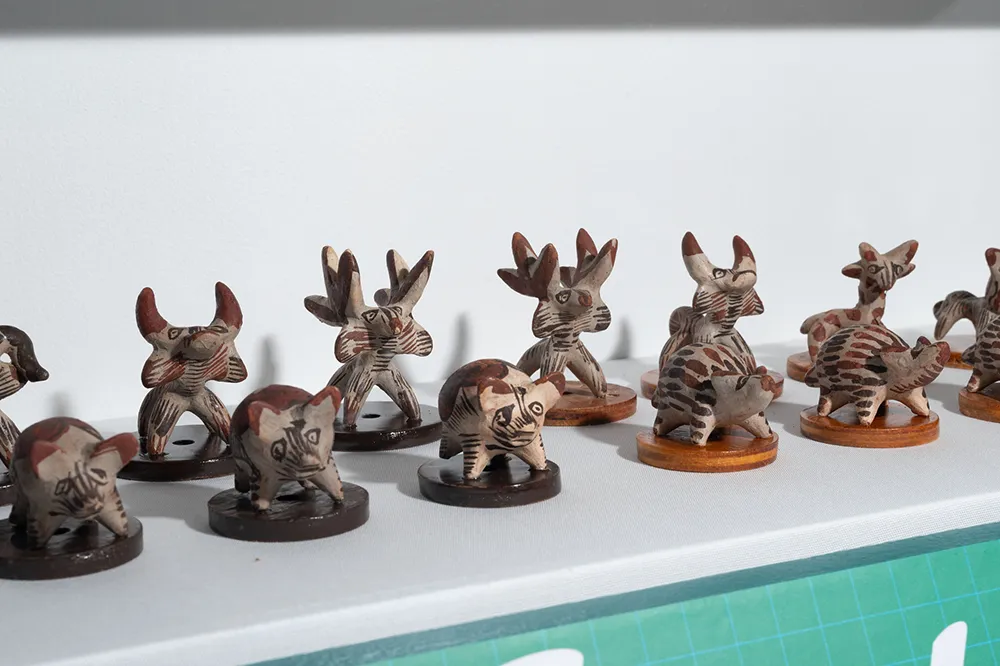
This chess set, donated by David Noce, is not the only chess set from Mexico or exploring Mexican culture that has been exhibited at the WCHOF. Another Mexican set was on view in a recent exhibit, Paws and Pawns: Exploring Animal Chess Sets. This set, which has pieces representing animals native to the Americas, was donated by Edwin and Ann Munger and originated in Chiapas, Mexico. Chiapas is Mexico’s southernmost state and is known for its artisan handicrafts and abundant folk art. Munger, a renowned collector, included the set in his books exploring chess sets from around the world.
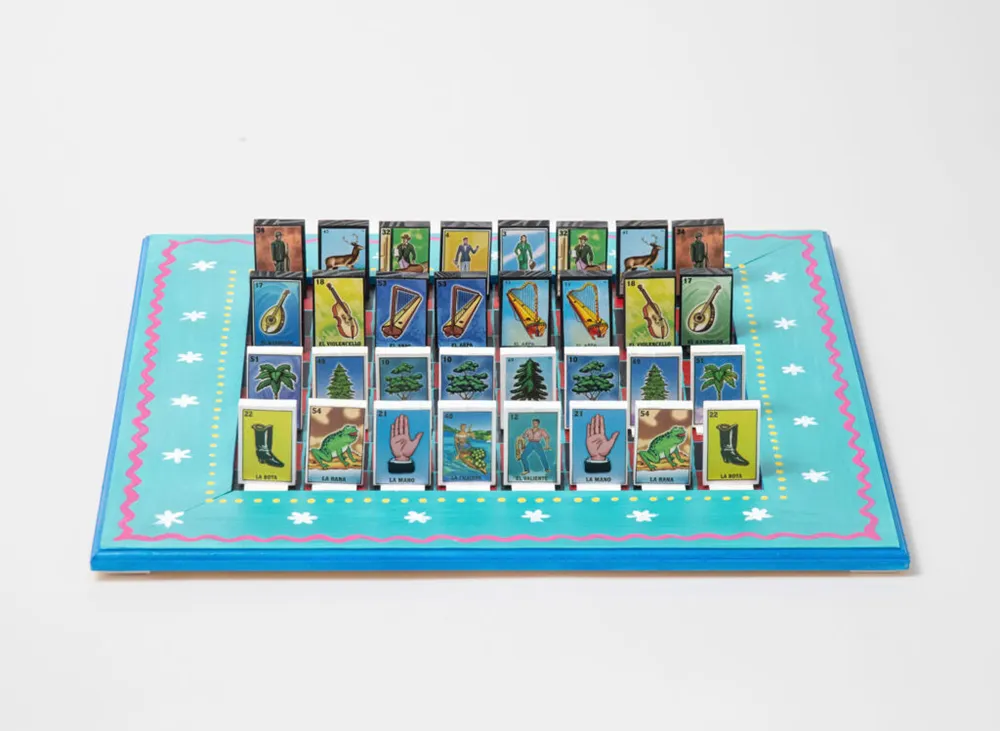
The WCHOF’s collection also includes a chess set based on the game Loteriá, which is not specifically from Mexico but related to Mexican culture. Loteriá is a game of chance, with similarities to Bingo. The Loteriá Chess Set was created with important figures of the game represented. This set was created by artist Gloria Gurrola-Graciano, who is based in Banning, California, and was exhibited as the Featured Chess Set in May 2023.
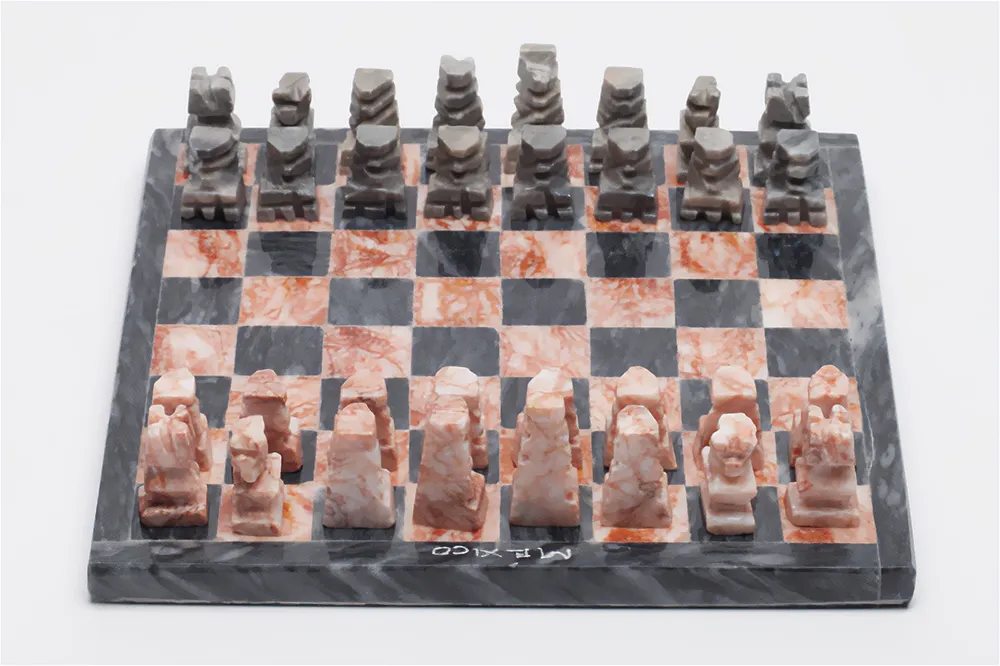
Another Mexican chess set that has been exhibited at the WCHOF is a loan from one of our curators, Emily Allred. It is in a similar style to this month’s Featured Set, but made of pink and gray marble. Like David Noce, Allred received the set as a gift and has added it to her personal collection. On the board of this set is inscribed the country of origin (Mexico). The WCHOF displayed it as the Featured Chess Set for July 2017.
Chess Sets from Around the World
The World Chess Hall of Fame & Galleries has chess sets from all around the globe. While a set from Mexico is being highlighted this month, the WCHOF houses hundreds of chess sets created globally. Each chess set allows us a glimpse of what each culture values and how they live.
Written by Carrie Harper, Graduate Research Assistant
FAQs:
How can I participate in the Featured Chess Set Project?
Saint Louis area residents can email WCHOF Curator Emily Allred or call 314.243.1543 if they are interested in participating in the Featured Chess Set project. Please include photos as well as a brief description of the set you would like to loan. Each set will be displayed on the third floor of the WCHOF and will be highlighted in the WCHOF’s monthly newsletter, website, and social media.
How can I see this month’s featured set?
Visit the WCHOF to see the sets in this rotating display yourself. From 3D-printed chess sets to one-of-a-kind artistic creations, the Featured Set Project shows how the ancient game has inspired artists and creators for centuries. Each set is only on view for a month at a time, so visit often to see a new set!
How can I donate chess sets to the WCHOF?
Our generous donors help us preserve chess history! From mass-produced sets with pop culture themes to rare and historical pieces and sets used by everyday players, the WCHOF seeks to obtain artifacts that show the impact that the game has had on history, art, and culture. For more information about donations, email [email protected].
More From Beyond the Board
Chess in Literature: Don Quixote

“You’re Sweet” Chess Set — February 2026 Featured Chess Set
Etched in Stone: Mexican Cultural Heritage in Chess

World Chess Hall of Fame & Galleries Announces New Exhibition: Reading Between the Lines: Chess & Literature
The Teeth Chess Set: A Unique Blend of Dentistry and Strategy
Chess Legends to be Inducted into the 2025 U.S. and World Chess Halls of Fame in Saint Louis This October

World Chess Hall of Fame & Galleries to Open Interactive Exhibition Celebrating Chess Variants Through Time and Culture

Saint Louis Chess Club, World Chess Hall of Fame & Galleries and Grand Chess Tour Launch $150,000 Matching Donation Campaign for Saint Louis Tornado Relief
World Chess Hall of Fame & Galleries Presents “Charles Houska: Master of Play”
Learn to Read and Write Chess

Janet Evra performs at World Chess Hall of Fame for ‘Love and Its Many Languages’!

World Chess Hall of Fame to unveil new exhibition: “Paws and Pawns: Exploring Animal Chess Sets”
Charles Houska: Master of Play